Key points
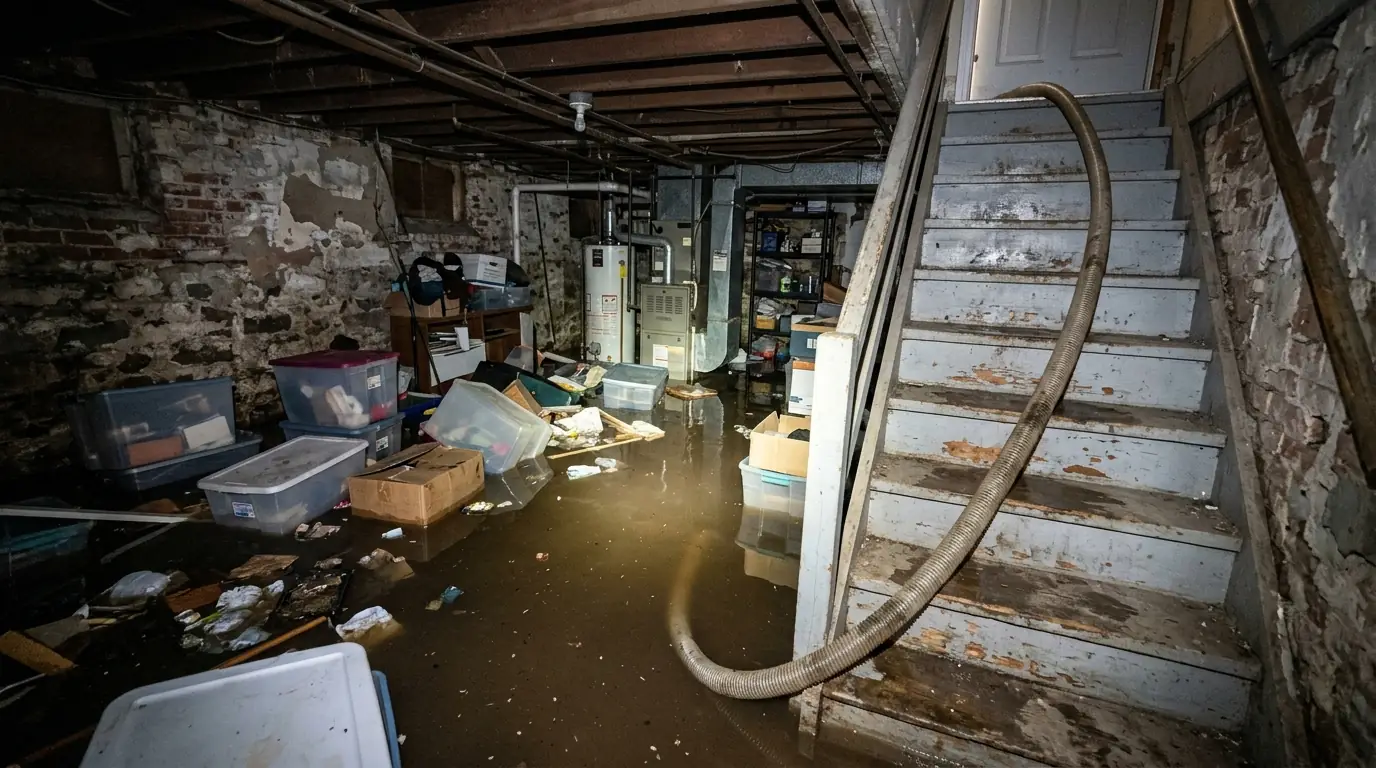
- Don't step into standing water until power to the basement is off and there's no gas smell.
- Photograph and list the damage before you move or throw anything out.
- Pump out steadily, then dry the air; wet drywall and carpet rarely dry in place.
- Find the entry point while the evidence is fresh, and fix it before the next storm.
Before you go down the stairs: power, gas and sewage
Water and electricity share a basement in most Jersey City houses: the panel, the boiler or furnace, the water heater, the washer and a tangle of extension cords. If water has reached outlets or appliances, or you can't tell how deep it is near the panel, don't step into it. Shut power to the basement from a dry spot, or call the electric utility to cut it at the meter. If you smell gas, leave the house and call the gas utility from outside.
Then think about what's in the water. Jersey City and Hoboken are served largely by combined sewers, so water that came up through a floor drain or toilet during a storm is likely mixed with sewage. Treat it that way: rubber boots, gloves, no bare skin, and children and pets kept upstairs. Water that seeped through a wall is usually cleaner, but after a few days in a warm basement, no standing water should be treated as clean.
Anything powered that sat in the water needs a careful look before it runs again. A boiler, furnace or water heater whose controls or burner went under should be checked by a qualified technician before it's restarted, and a washer or freezer that was submerged shouldn't simply be plugged back in. If the main panel itself took on water, the electric utility or an electrician has to clear it before power comes back to the house.
- Power to the basement off before anyone wades in
- No gas smell near the boiler, furnace or water heater
- Boots and gloves on if the water came up through a drain
- A working flashlight, since basement lights may be off
- Stairs checked for slippery silt before carrying anything
Photograph everything before it moves
Whatever your coverage turns out to be, a claim goes more smoothly with clear records, so make them before cleanup starts. Photograph the water level against the walls and stairs, then each damaged item where it sits. Take wide shots of every wall and close shots of anything valuable, with model and serial numbers where you can reach them. A short video walking the room, with the date said out loud, often captures details that still photos miss.
Keep a running list of what was damaged and roughly when it was bought, and save receipts for anything you spend on cleanup, pumps, fans or hauling. If you throw out ruined carpet or drywall before an adjuster sees it, keep a small sample and photos of the rest. Questions about what your policy covers, including whether flood insurance applies, belong with your own insurance agent. We can describe what we found and what we did in plain terms if your file needs it.
Note the timeline too. Write down when you first saw water, how fast it rose, whether it came up through a drain or through a wall, and whether the power was out at the time. Those details matter to an adjuster, and they matter to whoever traces the cause later, because a basement that floods during an outage points somewhere very different from one that seeps slowly for days after the rain has stopped.
Pumping the water out without hurting the walls
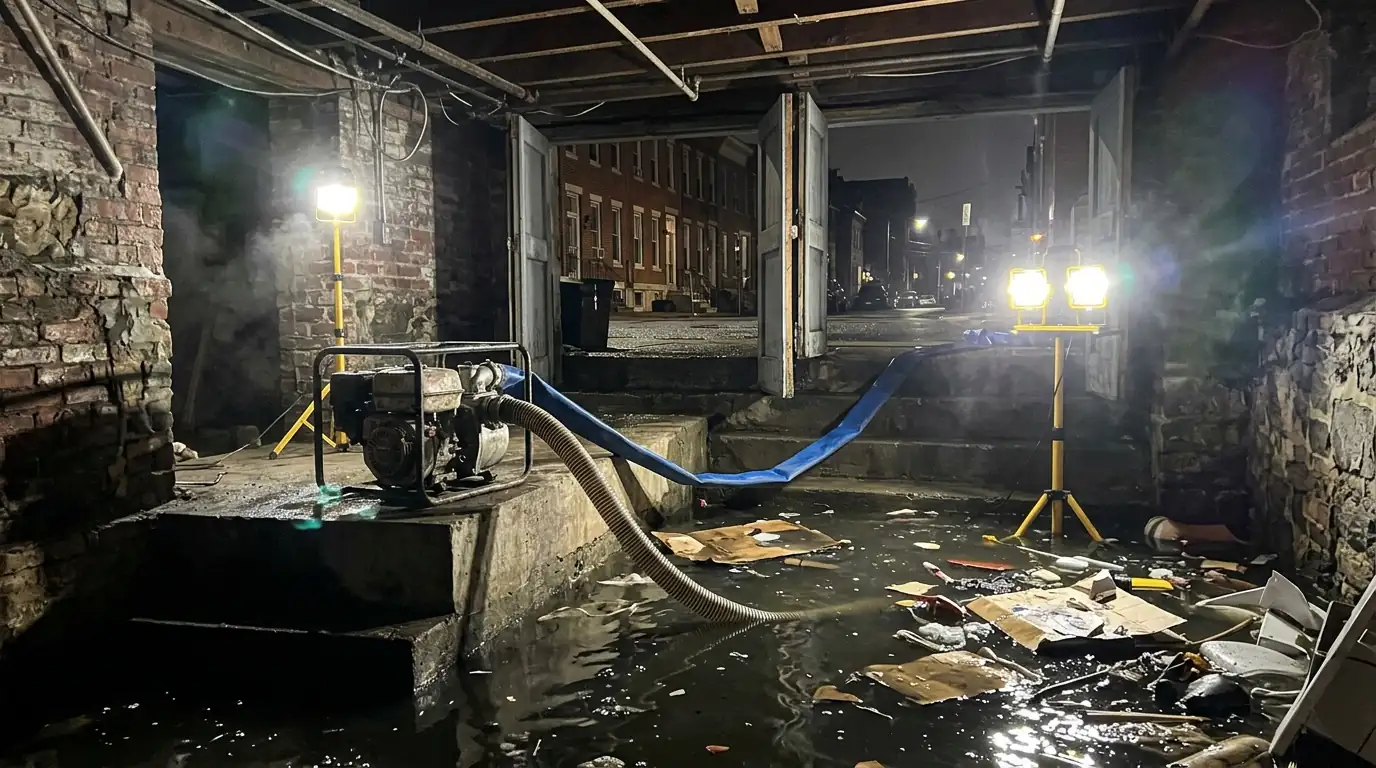
Once the room is safe, get the water moving out. A working sump pump handles a lot on its own once power is back. For deeper water, a portable submersible pump with a hose run out a window or up the stairs does the heavy work, and a wet vacuum takes care of the last inch. Send the discharge well away from the house, never onto the ground right beside the foundation, where it soaks straight back down to the same wall.
If the water is deep and the ground outside is still saturated, pump it down in stages rather than all at once. Soil full of water pushes hard on basement walls, and the water inside is pushing back. Taking it all out in one go can let that outside pressure crack or shift an older wall. When the depth or the wall condition is beyond a household pump, a flooded basement pump-out with commercial equipment is the safer route, and an emergency crew can be sent the same night when one is free.
Drying the room so mold doesn't move in
Getting the water out is only half the job. Concrete, block, stone and wood hold moisture for a long time, and a basement that still feels clammy a week later is feeding mold. Run fans across the wet surfaces, and keep windows closed while a dehumidifier runs, because humid summer air slows drying. Aim to bring the air down toward 45 to 55 percent relative humidity, and hold it there for weeks, not days.
Wet drywall, insulation and carpet pad rarely dry well in place. Cut drywall above the water line, pull out wet insulation, and lift carpet and pad. Furniture, boxes and stored papers should come out to dry or go to the curb. For basements that stay damp long after the flood, a permanent basement dehumidifier on a drain line keeps humidity in check without anyone emptying a bucket twice a day.
Check progress with an inexpensive hygrometer rather than by feel. If a musty smell lingers after two or three weeks, something is still wet: the underside of a stair tread, a wall cavity, a stack of cardboard in a corner. Find it and dry it or remove it before you put anything back. Hold off on new drywall, flooring or paint until the walls and slab read dry and the entry point has been dealt with, or you may end up cutting out the same finishes after the next storm.
Reading the clues: where did the water get in?
The flood leaves evidence, and it fades as the room dries. Look at where the water was deepest, where the silt lines are heaviest and which walls stayed wet longest. Note whether water rose from the floor or ran down a wall. The answer decides the fix, and guessing wrong is how owners end up paying for a system that misses the real source. These patterns point to the usual suspects:
During the remnants of Ida in 2021, many north Jersey basements flooded within hours through drains, window wells and walls, sometimes all three at once. Finding more than one entry point is common, so check every wall and opening, not only the one that ran hardest. Take photos of the silt lines and wet patches as you go. Once the walls dry, those marks fade, and they're the best clues anyone will have when it's time to decide on a repair.
- Water around the floor drain or toilet: a sewer backup on a combined system
- A wet line where wall meets floor: cove joint seepage under groundwater pressure
- A stream below one window: a clogged or missing window well drain
- A wet stripe on poured concrete: a wall crack or tie-rod holes
- Dampness across a stone wall: washed-out mortar joints
- Water at the front of a rowhouse: a blocked areaway drain
- Rising water and a silent pump: a failed sump or a power outage
Fix the cause before the next storm
Cleanup feels like the end, but the next nor'easter or summer downpour will test the same weak spot. If water came up through a floor drain, a backwater valve lets water leave and blocks sewage from coming back; our guide to sewer backups and backwater valves explains how they work. If the sump failed, look at its age, the check valve and whether there's a battery backup, all covered in our guide to sump pumps and backups.
Window wells that filled need a working drain and often a cover, and window well waterproofing deals with both. Downspouts that dump next to the foundation should be extended or tied into an underground line. Seepage at the cove joint or through cracks points toward injection or an interior drain. If you'd like one of our technicians to trace the entry point and lay out the options, we answer (201) 578-5199 day and night, including the night the water comes in.
Owner Guides Editor at Waterproofing Services Carteret. Writes the owner guides from the questions our crews hear in Jersey City basements and on its roofs every week.