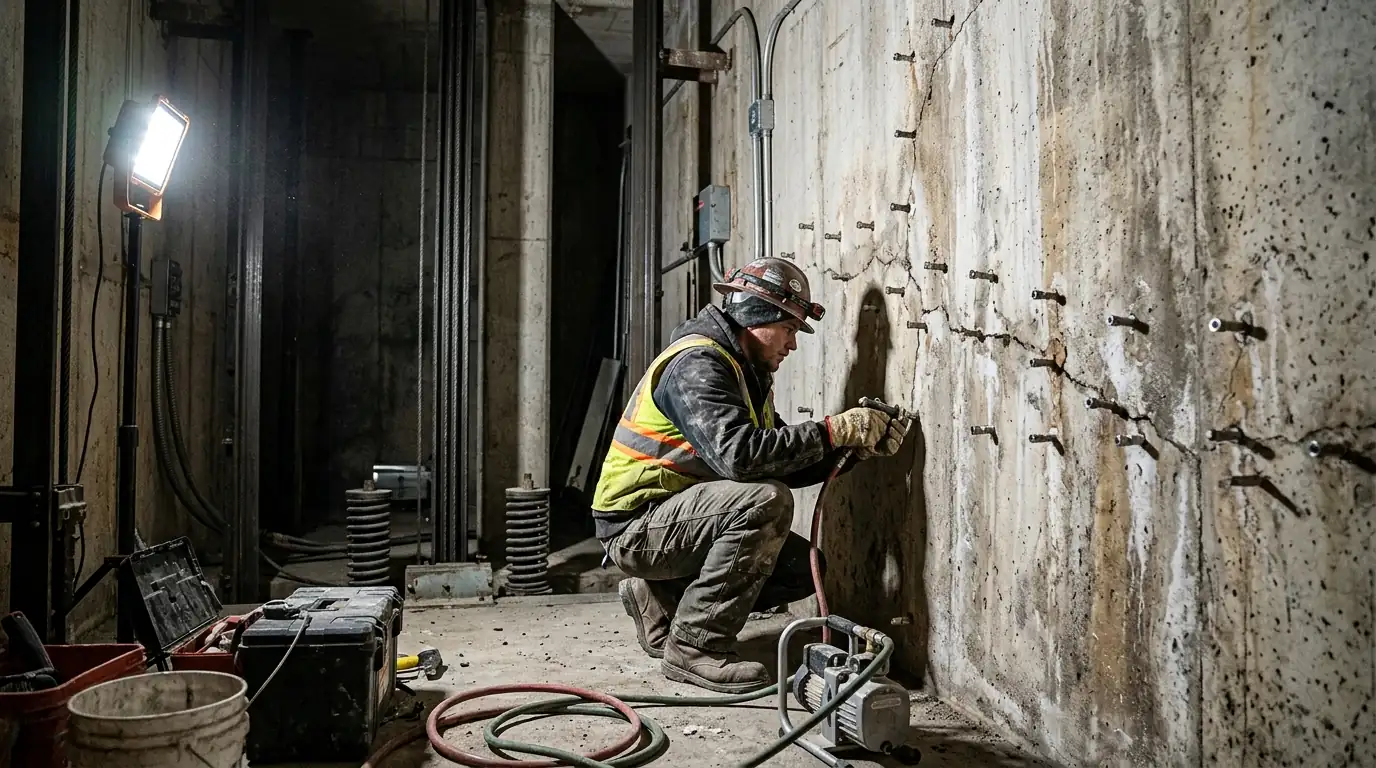
Elevator Pit Waterproofing
Water in an elevator pit is more than a nuisance: it rusts equipment, can take a car out of service and tends to show up on inspection reports.
DetailsBergen County town
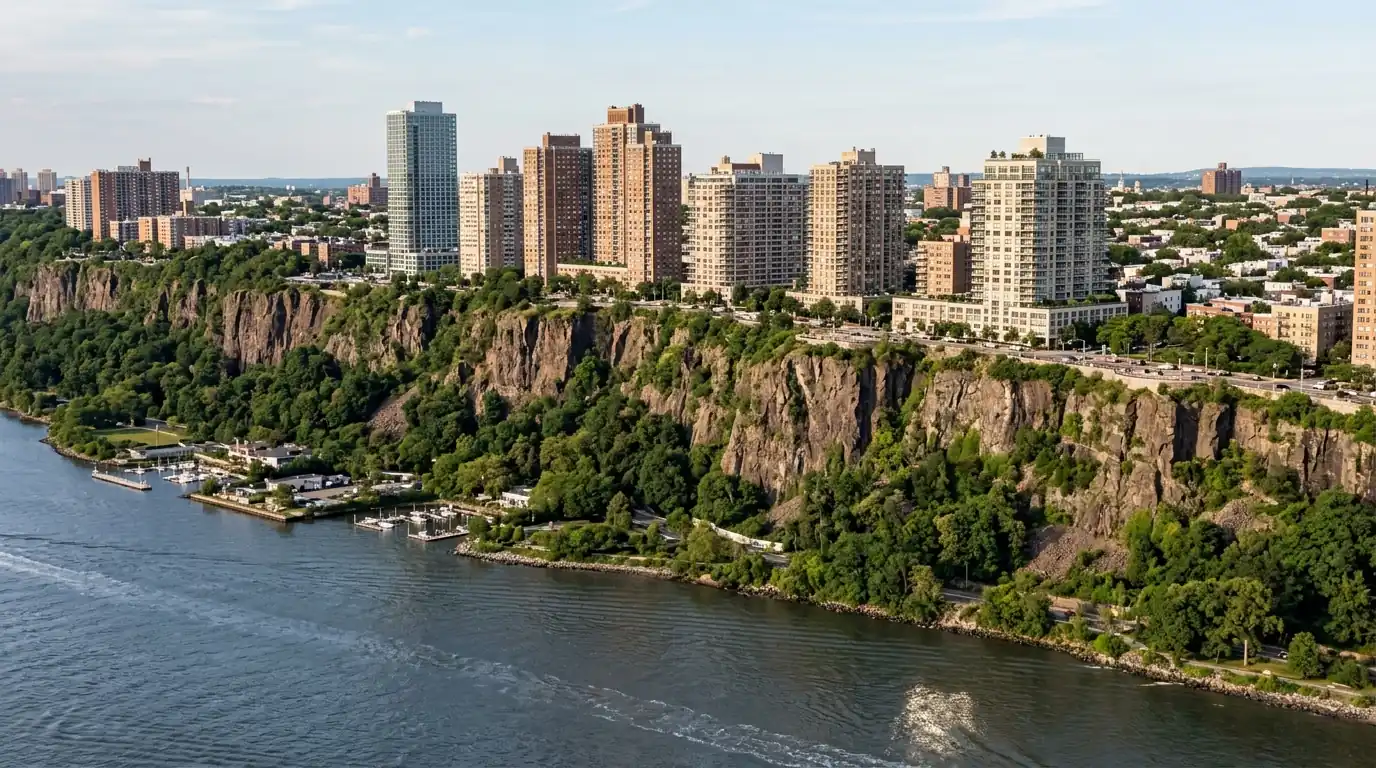
Cliffside Park pairs tall buildings on the Palisades cliffs with attached houses along the streets behind Anderson Avenue, and each type leaks in its own way, from wet elevator pits to cracked terrace membranes and worn parapet caps.
In Cliffside Park, we seal elevator pits, waterproof terraces and balconies, rebuild parapet caps and fix leaking window perimeters on high-rises, and handle basement and wall leaks on the attached houses nearby. We work alongside building management on tower jobs. Call (201) 578-5199 day or night to explain the leak, and we'll describe how we'd find it and what access we need.
The tall buildings along the cliffs give many Cliffside Park residents river views, and they also give building managers a long list of places water can enter. Elevator pits sit at the very bottom, set into rock that carries groundwater after storms. Terraces and balconies project from every floor, each one a membrane that has to stay sealed at its edges, drains and door sills. Parapets at the roof edge take the full force of the weather. A failure at any of these points can show up floors away from its source. Finding that source takes patience, a ladder and a methodical water test.
Behind Anderson Avenue, the streets are lined with attached houses, and their problems are closer to the ground. Shared walls mean water can cross from one property to the next. Basements take seepage through cracks where water follows the rock, and rear walls get wet from leaders and short yards. These homes need the same care with fewer moving parts: basement waterproofing that works from inside, cracks sealed where they actually leak, and roof water carried away from the foundation instead of dumped against it. Sealing the right crack is usually far cheaper than treating every wall in the basement at once. We point out which cracks matter.
Tower jobs start with the building's manager and its elevator contractor. Pit work requires the car to be locked out, so we schedule around inspections and resident needs, then pump the pit, clean it and inject the active cracks. Terrace repairs mean entering units, which management arranges with owners. Our crews protect hallways and elevators, carry materials in through service entrances and keep work areas closed to residents. Every step gets a short written plan so board members and owners know what to expect on each day. Daily cleanup leaves the halls, the elevator and the service areas the way we found them.
Attached houses come with their own access limits. There's little side yard, parking is tight, and work on one wall can affect the neighbor. We plan staging on the sidewalk side, protect shared fences and walks, and talk through anything that crosses the property line before we start. When a terrace or balcony on a house leaks, balcony and terrace waterproofing follows the same steps as on a tower, at a smaller scale. Owners in Fort Lee face the same mix of buildings a short way north. Many of the same repairs that work on the towers scale down well to a single attached house.
Based on the buildings here, these are the calls we expect from Cliffside Park. Every other service on our list is available too.
Water in an elevator pit is more than a nuisance: it rusts equipment, can take a car out of service and tends to show up on inspection reports.
DetailsWater from a terrace or balcony is showing up in the unit below, at the door frame, or as rust stains on the concrete.
DetailsWater is reaching the top-floor walls, or even a floor or two lower, while the roof surface looks fine.
DetailsWhen the wall below a window stays damp after storms, the sealant joint around the frame has usually let go, and rain is running behind the trim.
DetailsDrips onto parked cars, rust stains on the ceiling and water reaching the storage rooms or shops below a garage deck all mean water is getting.
DetailsWater on the basement floor after every hard rain usually means pressure from outside the wall, not a plumbing leak.
DetailsBuildings on the cliff edge stand fully exposed. A nor'easter drives rain sideways into terraces, window frames and the faces of parapets, and the water gets pushed into joints that would stay dry in calmer spots. Freeze-thaw cycles then widen any crack the rain found. That's why terrace leaks here often begin at the door threshold or the joint where the deck meets the wall, and why parapet caps and coping joints need closer attention than they would on a sheltered building. Window perimeters on the exposed faces fail the same way, as old sealant shrinks and pulls away from the frame. We reseal them in the same pass.
For parapets, we rebuild or reseal the coping, repair the through-wall flashing and fix the base flashing where the roof membrane meets the wall. Our parapet wall waterproofing work keeps water from entering the top of the wall and running down inside. On terraces, we remove failed coatings, repair the substrate and apply a liquid-applied membrane tied into the drains and thresholds. The guide on parapet walls as a leak source explains why the top of a wall so often causes stains far below. We finish by testing the drains on each repaired terrace so standing water has a clear way off the deck.
It depends on how many leaks the pit has and how wet it is. Simple crack injection can be done within a short lockout, while a full crystalline treatment needs the concrete to be prepared and the material to cure. We set the schedule with the manager and elevator contractor in advance, so residents get notice and the outage is planned rather than open-ended.
Wind-driven rain is pushed into joints that ordinary rain never reaches: door thresholds, the seam where the deck meets the wall, and cracks in the coping. On a cliff-edge building, those storms hit hard. A water test with pressure aimed at the suspect joint usually reproduces the leak. Repairs then focus on that threshold, wall joint or membrane edge.
Yes. Attached houses here often take water through foundation cracks where groundwater runs along the rock, and through rear walls where leaders empty close to the house. We inject active cracks, add interior drainage where needed, and reroute leaders. Work happens mostly from inside, which keeps shared walls and narrow yards undisturbed.
Call (201) 578-5199 any time. Tell us the address and what you're seeing, and we'll take it from there.