Brick Repointing
Rain driven sideways by a nor'easter finds every open mortar joint on a brick wall, then shows up as stained plaster, peeling paint or a damp closet.
DetailsMiddlesex County town
Perth Amboy's older brick and frame houses face weather straight off Raritan Bay, so water arrives sideways through mortar joints and window edges as often as it rises into the basement from below.
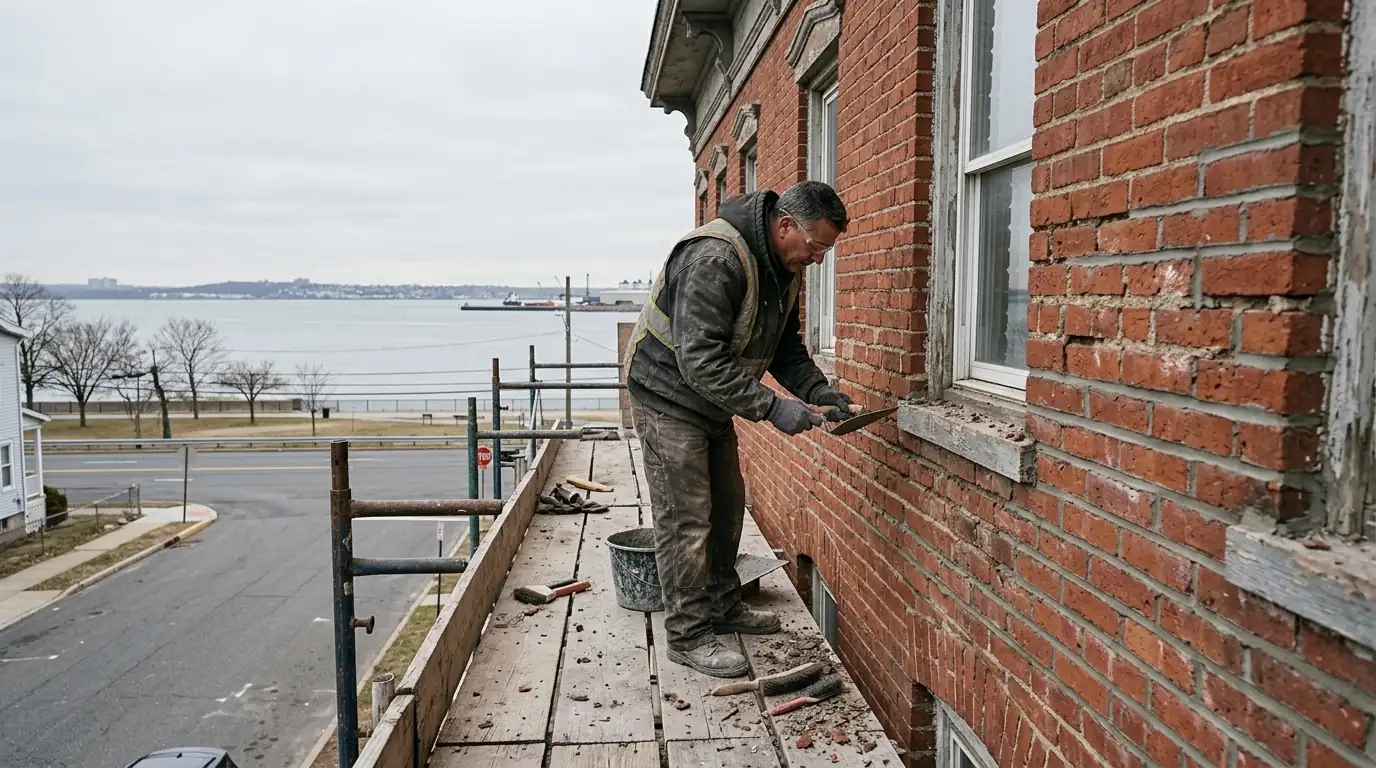
For leaking brick walls and damp basements in Perth Amboy, our crew repoints worn mortar, applies breathable sealers, reseals window and door perimeters and waterproofs older foundations. We check the whole wall from cornice to cellar, since wind-driven rain off Raritan Bay often enters high and shows up low. Reach us at (201) 578-5199 around the clock to talk through the leak you're seeing.
Much of Perth Amboy's housing is older frame and brick construction, and age shows first in the masonry. Mortar joints erode a little every year, and freeze-thaw cycles pop the face off soft bricks. Once the joints are recessed and cracked, rain soaks into the wall instead of shedding off it. Inside, you might see stained plaster under a window, peeling paint on an exterior wall, or a damp patch that appears only during storms from one direction. That last clue is the giveaway that the water is entering through the wall, not the roof. Outside, the same wall usually shows darker, softer joints.
Frame houses here have their own weak points: window and door trim where the caulk has dried out, siding seams, and the joint where a porch roof meets the wall. Basements under both kinds of houses are often older masonry, sometimes stone, with mortar that has washed out near the floor. Efflorescence, flaking parging and a musty smell are common. A stone and brick foundation repair starts by repointing those joints and then decides whether a drain is needed, since solid mortar alone stops a surprising amount of seepage. We'd rather close the walls first than sell a drain that's catching mortar.
Smith Street is Perth Amboy's main commercial corridor, and buildings there often share walls and sit right at the sidewalk line. Wall work on these buildings means ladders or scaffolding over the walk, so we plan sidewalk protection, keep a clear path for pedestrians, and stage materials to avoid blocking doorways. On side streets with houses, access is usually easier, but we still protect plantings and neighboring walls from mortar dust and sealer overspray. Every job starts with a careful walk around the building to see which faces take the weather. Debris and old mortar go out in bags, never down a storm drain.
We test before we treat. A spray test on a suspect section of wall, run for a set time while someone watches inside, tells us whether the problem is the brick, the mortar, a window joint or a flashing above. That saves you from paying to seal an entire facade when one window head is the leak. Window and door perimeter sealing is often the fastest win. For larger areas, our crew will repoint and then apply a breathable silane or siloxane sealer so the wall can dry out between storms. Sealers wear over time, so we tell you what reapplication looks like for your wall.
Based on the buildings here, these are the calls we expect from Perth Amboy. Every other service on our list is available too.
Rain driven sideways by a nor'easter finds every open mortar joint on a brick wall, then shows up as stained plaster, peeling paint or a damp closet.
DetailsRain is getting through the brick on an upper floor, usually after a storm with strong wind behind it.
DetailsWhen the wall below a window stays damp after storms, the sealant joint around the frame has usually let go, and rain is running behind the trim.
DetailsThe rubble-stone and brick walls under 19th-century rowhouses weep differently from poured concrete.
DetailsWater is running down the wall beside the chimney or staining the ceiling around it.
DetailsWater on the basement floor after every hard rain usually means pressure from outside the wall, not a plumbing leak.
DetailsThe weather that hurts these buildings comes from the water. Nor'easters push rain sideways across Raritan Bay and into the east-facing walls, and salt air speeds the wear on mortar, metal flashing and sealants. A wall that stays dry in a calm summer shower can leak badly in a three-day coastal storm. That's why we pay close attention to which side of the house faces the bay, how much protection the neighbors give, and where water has already stained the masonry on the outside. Those outside stains often map the inside leaks almost exactly, which makes the repair plan easier to build. Photos go in the scope.
Our usual sequence starts with repointing the worn joints in a mortar that matches the original strength, since hard modern mortar can crack soft old brick. Then come flashing repairs at windows, chimneys and wall caps, followed by a clear water-repellent sealer where the brick needs it. Chimneys are a frequent leak source on these houses, so we often add a chimney leak repair to the scope. Neighbors in Woodbridge see less of this wall-driven water, but basement issues there are similar. Once the walls stop taking water, interior plaster and paint can finally be repaired without the stain returning. That's usually the moment owners notice the difference.

Wind-driven rain off Raritan Bay hits one face of the house far harder than the others. Water is pushed into worn mortar joints, cracked window caulk and old flashing, and it only gets through when the wind sets up that pressure. Calm rain doesn't do it. We spray-test the exposed wall to find the exact entry point before recommending repairs.
Repointing comes first in almost every case. A sealer can't bridge open or crumbling mortar joints, and water will keep entering through them. Once the joints are rebuilt with a mortar suited to the old brick, a breathable silane or siloxane sealer can reduce how much water the masonry absorbs. Sealing over bad joints often traps moisture and makes spalling worse.
It can usually be made much drier. We start by repointing the loose and missing mortar inside, which closes a lot of the seepage paths. If water still comes in during heavy rain, we add an interior drain at the base of the wall that carries water to a sump. A dimple membrane on the wall directs any remaining seepage down into that drain.
Call (201) 578-5199 any time. Tell us the address and what you're seeing, and we'll take it from there.