Basement Waterproofing
Water on the basement floor after every hard rain usually means pressure from outside the wall, not a plumbing leak.
DetailsNew Jersey county
Hudson County packs rowhouses, walk-ups and towers into the most densely populated county in New Jersey, and the ground beneath them changes from marsh fill by the river to solid rock on the Palisades within a short walk.
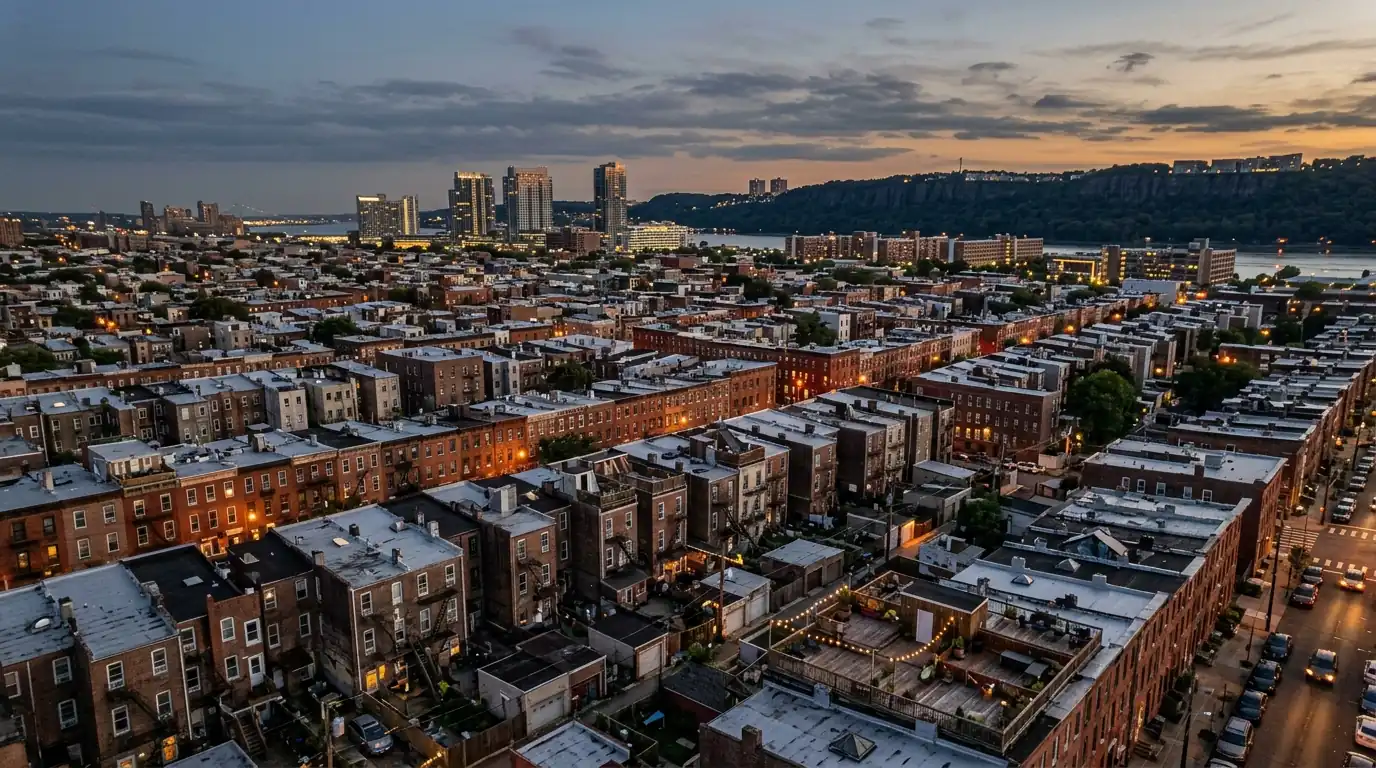
Across Hudson County, our waterproofing crews fix wet basements, sewer backups, leaking terraces and roof decks, from Bayonne to North Bergen. We work out of downtown Jersey City and adjust the fix to the ground each building sits on, since low filled blocks and ridge-top streets leak for different reasons. Call (201) 578-5199 any time, and we'll tell you what we'd check first.
Hudson County is twelve municipalities squeezed between the Hudson and the Hackensack, and the way basements leak depends heavily on where a building sits. Much of downtown Jersey City and Hoboken was built on old marsh and fill, and that low ground near the rivers holds a high water table. Basements there take groundwater pressure after long rains, with seepage at the cove joint and through old masonry. In Hoboken, with its brownstones and low streets, the problem is especially familiar to anyone with a below-grade apartment or storage room. Seepage there tends to come back every wet season until the pressure has somewhere to go.
Climb the Palisades into the Heights, Union City, West New York and North Bergen, and the picture changes. Rock sits close to the surface, so water runs along it and enters through foundation cracks and joints rather than rising evenly from below. West of the ridge, the Meadowlands side around Secaucus and Kearny brings large commercial flat roofs and low, flat land. Each area calls for a different starting point. We don't apply the same system everywhere; we read the ground and the building, then decide where the water is coming from. That reading often takes a single visit and saves owners from paying for the wrong fix.
Our Jersey City office at 218 Newark Avenue, downtown near the Grove Street PATH station, is where most of our Hudson County work is planned. From there our crews reach the rowhouse blocks of downtown, the walk-ups around Journal Square, the frame houses of Greenville and the towers along the waterfront. Narrow streets, permit parking and shared walls are a normal part of the day here. We plan staging, sidewalk protection and debris removal before arriving, so the block keeps moving while we work inside or on the roof. Neighbors get a heads-up when work touches a shared wall or a common roof.
Building types change from block to block, and so does access. A brownstone basement is reached through a front areaway or a low cellar door. A walk-up roof is reached through an interior hatch. A tower garage needs a schedule set with the property manager. We answer (201) 578-5199 around the clock, and when an emergency crew is free, one can be sent out the same night. For planned work, our Jersey City service pages break down how each neighborhood's buildings tend to fail and what we usually recommend first. Each of those pages is written around the buildings on that particular stretch of streets.
Based on the buildings here, these are the calls we expect from Hudson County. Every other service on our list is available too.
Water on the basement floor after every hard rain usually means pressure from outside the wall, not a plumbing leak.
DetailsWhen a heavy storm sends dark, foul water up through your basement floor drain, the problem is the sewer, not groundwater.
DetailsWater is coming through the ceiling under your rooftop deck, and nobody can see the membrane because the deck sits on top of it.
DetailsThe rubble-stone and brick walls under 19th-century rowhouses weep differently from poured concrete.
DetailsDrips onto parked cars, rust stains on the ceiling and water reaching the storage rooms or shops below a garage deck all mean water is getting.
DetailsWater is coming through the top-floor ceiling from a flat roof leaking at a seam, a blister, a parapet base or a clogged drain.
DetailsJersey City and Hoboken are served largely by combined sewer systems, where storm water and sewage share the same pipes. During heavy rain those pipes can run full, and sewer water backs up into basement floor drains and fixtures. Sandy in 2012 and the remnants of Ida in 2021 both left many Hudson County basements under water, through surge downtown and through overloaded drains across north Jersey. A backwater valve lets water leave your building but stops it from coming back, and we coordinate any permit the sewer side requires. Floor drains, laundry tubs and basement toilets all get checked, since any of them can be the entry point.
Above ground, the county's roofs are mostly flat, often hidden behind parapets and topped with decks. Rooftop decks built over the roof membrane are a common leak source, since pedestals, sleepers and planters wear through the layers underneath. Roof deck waterproofing means lifting or working around the deck, repairing the membrane and flashing, and protecting it from the deck's weight. Parapets leak at coping joints and failed flashing. Our guide on why local basements leak covers the ground-level side of these problems in more detail. On a typical rowhouse, we check the roof drains and leaders at the same time as the basement, since the two are connected.
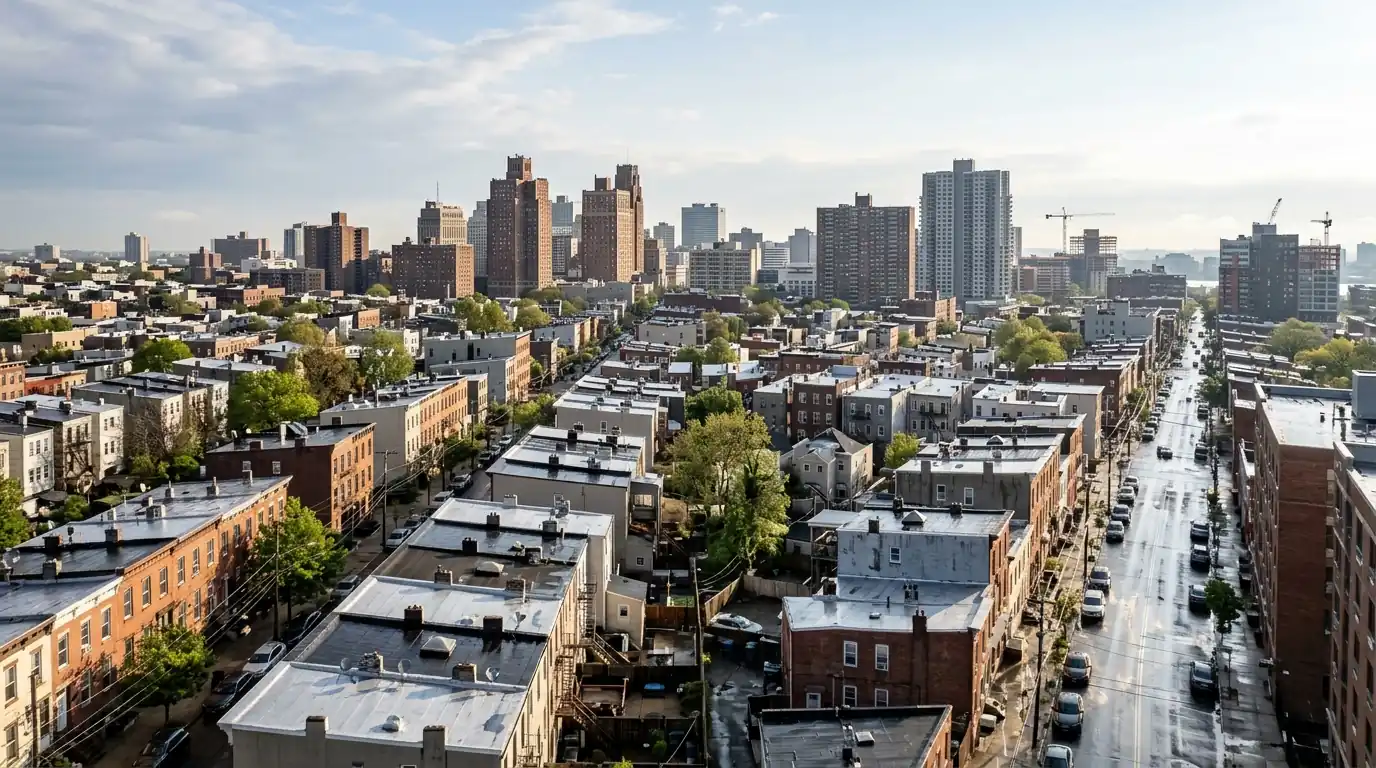
We also take calls from other Hudson County towns not listed here. Call (201) 578-5199 to check.
It mostly comes down to the ground. Low, filled land near the rivers, including much of downtown Jersey City and Hoboken, has a high water table, so basements take pressure from below. Up on the Palisades, rock sits close to the surface and water enters through cracks instead. Building age matters too, since older lime mortar foundations seep more than poured concrete.
Often they do. A backwater valve goes on your building sewer line, and sewer-side work falls under local plumbing code and the sewer utility. Requirements vary by town and by the scope of the job. We tell you up front when a permit or a plumber is needed for your building and coordinate that step so the valve is installed correctly.
Our Jersey City office is at 218 Newark Avenue, Jersey City, NJ 07302, in the downtown area. From there our crews cover Jersey City and its neighborhoods along with Hoboken, Bayonne, Union City, West New York, North Bergen, Weehawken, Secaucus, Kearny, Harrison and Guttenberg. Call (201) 578-5199 at any hour to talk about your building.
Call (201) 578-5199 any time. Tell us the address and what you're seeing, and we'll take it from there.