Basement Waterproofing
Water on the basement floor after every hard rain usually means pressure from outside the wall, not a plumbing leak.
DetailsNew Jersey county
Essex County runs from Newark's dense blocks and flat-roof buildings out to older suburbs with pitched roofs and full basements, so a leak near Branch Brook Park may have little in common with one a few towns west.
Throughout Essex County, we repair wet basements, cracked and bowing foundation walls, sewer backups and flat-roof leaks, from Newark's rowhouses and apartment buildings to older suburban homes. Our technicians figure out where the water enters before proposing any system. Call (201) 578-5199 day or night to describe what's happening, and we'll explain the likely cause and the first step.
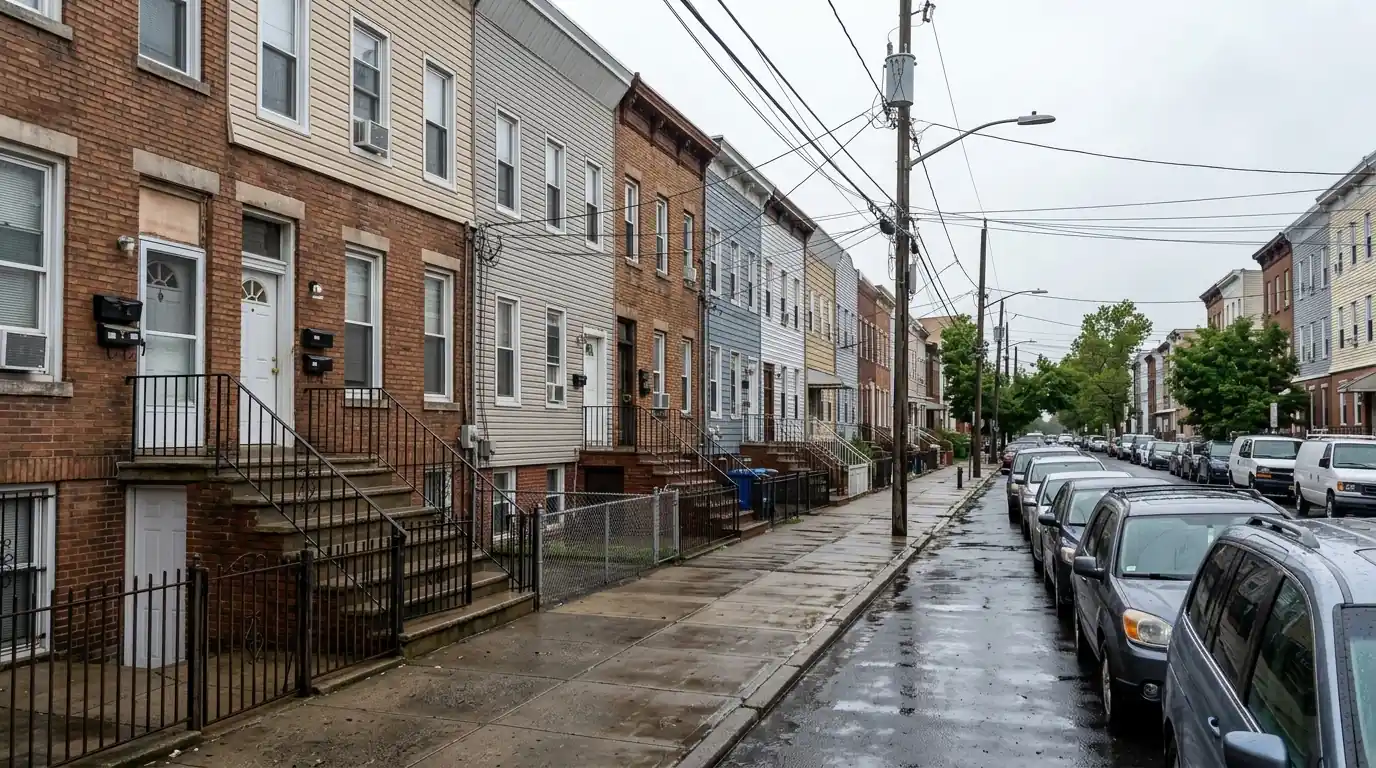
Newark is the county seat and the largest city in New Jersey, and its building stock sets the tone in the eastern part of the county. The Ironbound is full of rowhouses and two-family homes, often on brick or stone foundations with lime mortar that washes out over time. Broad Street and the blocks around it hold flat-roof apartment and commercial buildings with poured concrete basements. Water gets into these buildings through old mortar joints, cove joints, tie-rod holes and, during heavy storms, back up through floor drains connected to the sewer. Each path leaves a different mark on the wall. We read those marks first.
Move west into the older suburbs and the houses spread out. Pitched roofs replace flat ones, and full basements under detached houses become the norm. Here the common culprits are gutters and leaders emptying at the foundation, soil that has settled toward the house, and walls stressed by decades of freeze-thaw and wet clay pressing from outside. The leaks look different, the access is easier, and the fixes often move outside the house. Owners in Newark and in the suburbs both benefit from the same first step: finding the actual entry point. Guessing at the source usually means paying for the repair twice.
In Newark, we usually work from inside. Attached houses and buildings at the sidewalk line rarely leave room to dig, so interior drains, crack injection and repointing do most of the job. We plan around street parking, protect sidewalks and keep debris contained. When the problem is a sewer backup, a backwater valve installation is coordinated with the right permit. Flat roofs on apartment buildings get checked for clogged drains and failed flashing, since water that enters at the top can show up in the basement too. We trace that path before blaming the foundation for a stain that started three floors up.
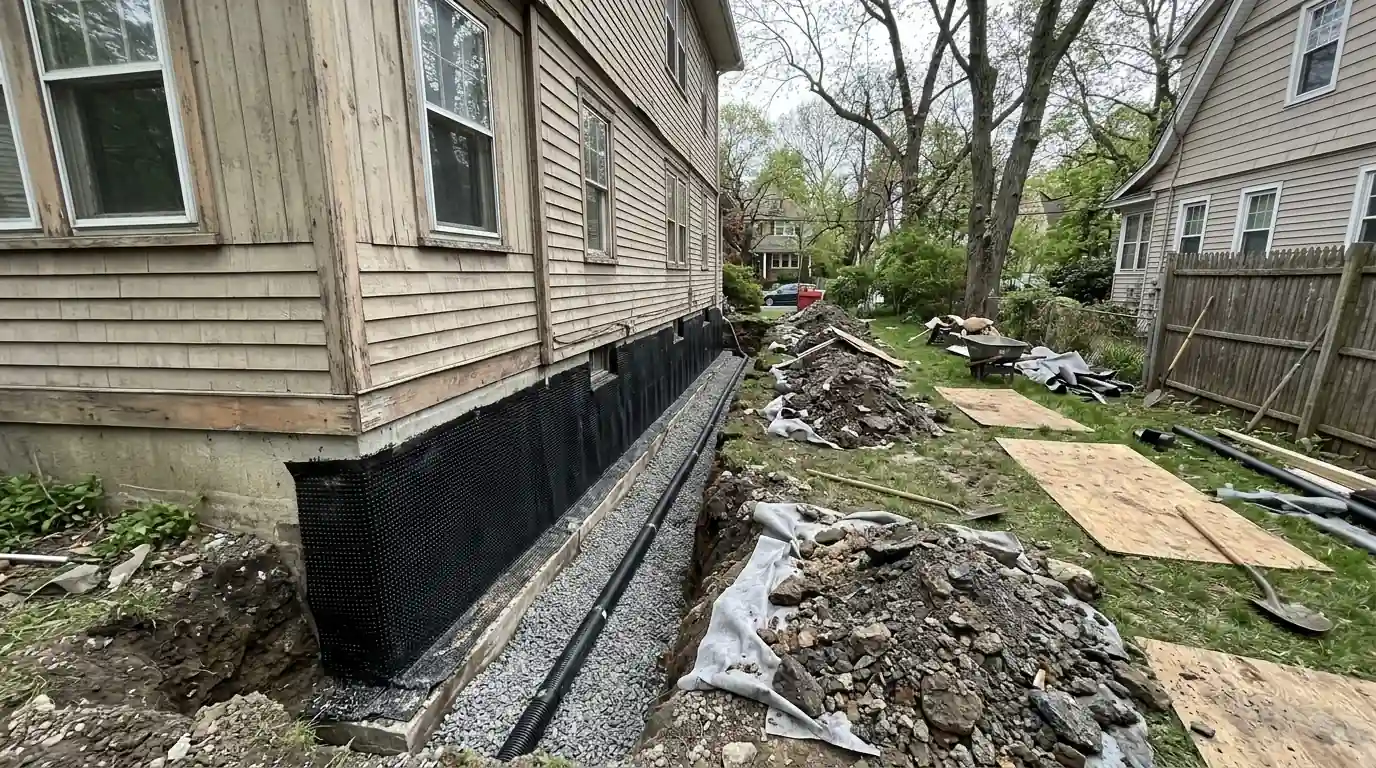
In the suburbs, driveways and yards give us room to work outside the foundation when that's the better answer. We can excavate along a wall, clean and repair it, then apply a membrane with a drain at the footing. Exterior foundation waterproofing stops water before it reaches the wall, which suits finished basements that owners don't want opened up. Where the yard slopes toward the house, regrading or a French drain comes first. Each job starts with a walk around the outside, checking gutters, leaders and grade before stepping inside. That outside check often explains the inside stain before we even open the basement door.
Based on the buildings here, these are the calls we expect from Essex County. Every other service on our list is available too.
Water on the basement floor after every hard rain usually means pressure from outside the wall, not a plumbing leak.
DetailsA single crack running down a poured basement wall can soak a corner of the floor every time it rains.
DetailsA horizontal crack or a wall leaning into your basement means soil and water are pushing harder than the wall can hold.
DetailsIf you want water stopped at the outside face of the wall, before it ever touches the masonry, the wall has to be dug out.
DetailsWhen a heavy storm sends dark, foul water up through your basement floor drain, the problem is the sewer, not groundwater.
DetailsWater is coming through the top-floor ceiling from a flat roof leaking at a seam, a blister, a parapet base or a clogged drain.
DetailsMany Essex County homes have poured concrete or block foundations that have been working against soil pressure for generations. Saturated soil pushes hardest after long wet spells, and freeze-thaw cycles add to the strain each winter. Hairline vertical cracks are common and usually just need sealing. Horizontal cracks, stair-step cracks in block, or a wall that leans inward are different: they show the wall is moving, and sealing alone won't hold it. Those signs mean the wall needs structural support before any waterproofing goes on. We measure the movement and photograph it, so you can see the change for yourself. Small movement may only need monitoring.
For moving walls, our bowing basement wall repair uses wall anchors or carbon fiber straps to stop the movement, chosen by how far the wall has shifted and what's on the other side. For simple leaking cracks, polyurethane or epoxy crack injection fills the crack through the full wall thickness. We also deal with the outside water causing the pressure, rerouting leaders and fixing grade. The cost guide shows how wall length, access and repair type affect what owners typically spend. Stabilized walls can then be waterproofed with an interior drain, so the support and the water control work together rather than separately. Both get one plan.
We also take calls from other Essex County towns not listed here. Call (201) 578-5199 to check.
It can be. Horizontal cracks, especially with the wall bowing inward, usually mean soil pressure is pushing the wall. Sealing the crack won't stop that movement. We measure how far the wall has moved and recommend anchors or carbon fiber straps to stabilize it, then deal with the water. Vertical hairline cracks are far more common and usually just need sealing.
It depends on the house and the lot. Suburban homes with room to dig and badly damaged walls can benefit from exterior membranes and footing drains. City buildings and finished basements usually do better with interior drains and crack injection, which avoid excavation. We walk the property, explain both options for your situation, and tell you which we'd choose.
When the sewer line under the street fills during a heavy storm, water can flow back into the lowest drain in your house. That's a sewer backup, not wall seepage, and it needs a different fix. A backwater valve on your building sewer closes when water reverses direction. We coordinate any permit needed and set the valve where you can reach it.
Call (201) 578-5199 any time. Tell us the address and what you're seeing, and we'll take it from there.