Recurring tenant complaints
The same stores or units report leaks or musty smells after every heavy rain.
Commercial & inspections · Jersey City, NJ
A leak in a commercial building costs more than the repair: damaged stock, closed storefronts, unhappy tenants and an anxious board. We find where water is entering and fix it on a schedule the building can live with.
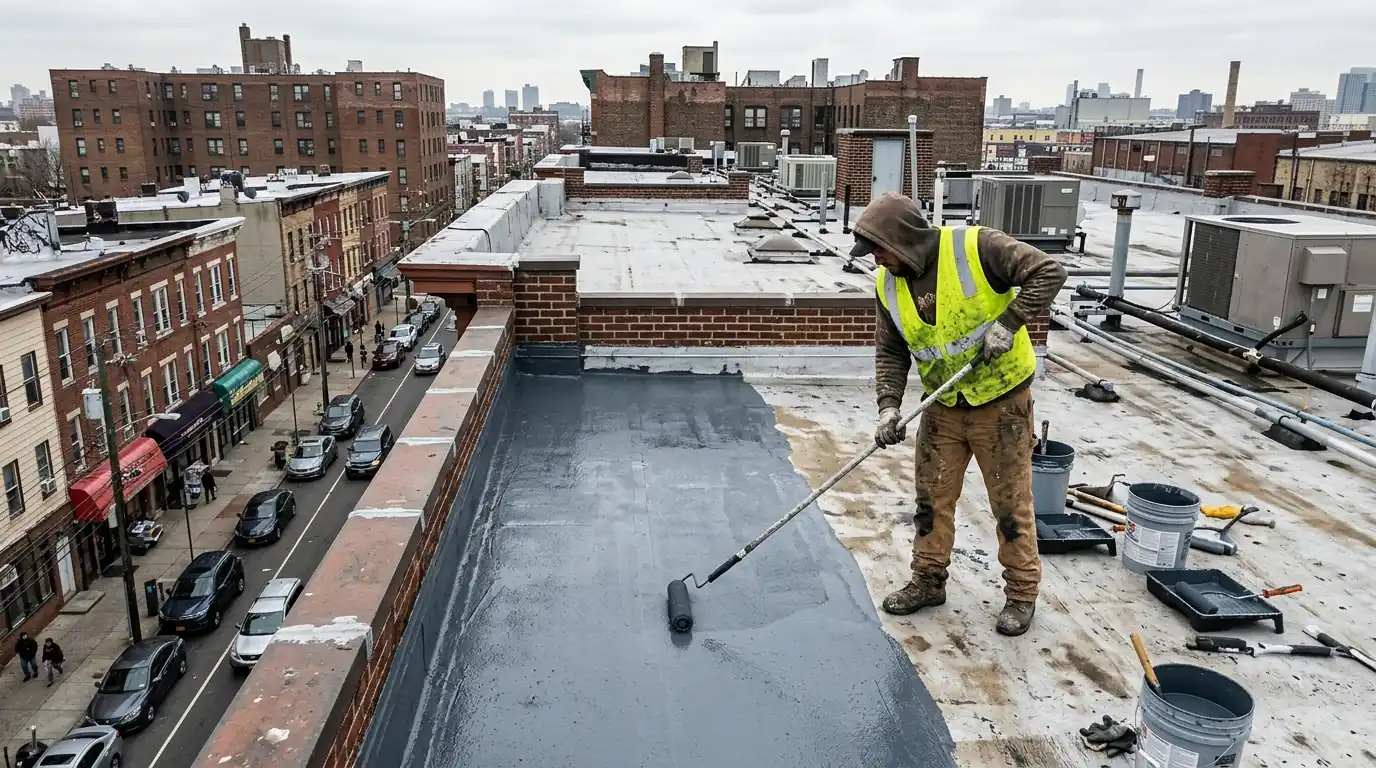
For mixed-use buildings, stores, warehouses, and condo or rental buildings in Jersey City and across Hudson County, we handle waterproofing from below grade to the roof: foundation and cellar leaks, sump and drainage systems, masonry walls, terraces, garage decks and flat roofs. We phase the work around tenants and business hours and give managers and boards a written report with photos. Call (201) 578-5199, any hour.
In a commercial building the hardest part is rarely the waterproofing itself. It's doing the work without shutting down a ground-floor store, blocking a loading dock or disturbing residents upstairs. Before we start, we sit down with the owner or property manager and map out what has to stay open: entrances, fire exits, parking, deliveries and quiet hours in residential floors. Then we build a sequence around those limits instead of asking the building to bend around us.
On a mixed-use building along Central Avenue or Newark Avenue, that might mean cutting a cellar drain trench early in the morning before the shop opens, then switching to roof work while customers are inside. In a warehouse, it usually means working one bay at a time and staying clear of forklift traffic. We keep dust and odor under control, mark off work areas, and clean up at the end of each shift so the space is usable when tenants come back.
Residential floors bring their own limits. In a condo or rental building above shops, we agree on start times, keep noisy cutting and drilling to set hours, and plan any work that passes through units by floor or line. Materials with a strong odor are scheduled when ventilation can run and fewer people are home. Small details like these decide whether a job feels like a minor inconvenience or a crisis for the people living and working there.
The same stores or units report leaks or musty smells after every heavy rain.
Damp walls, puddles or efflorescence in a basement used for stock, mechanicals or tenant storage.
Water, rust stains or white mineral deposits dripping from a garage deck onto parked cars.
Standing water in an elevator pit, often flagged during an elevator inspection.
Large areas of standing water days after rain on a warehouse or apartment building roof.
Sewer water coming up through basement floor drains during big storms.
Many Hudson County commercial buildings sit on low, filled ground near the Hudson, the Hackensack River or Newark Bay, where the water table is high and groundwater presses against the foundation after long rains. Parts of downtown Jersey City, Hoboken and Secaucus also fall within FEMA flood zones. Below-grade work there starts with understanding where water is coming from: through wall cracks and tie-rod holes, up through the cove joint, or back up through floor drains from the combined sewer system.
Typical below-grade fixes include crack injection, interior perimeter drainage to a sump, crystalline treatments on concrete, and backwater valves on drain lines where sewer backup is the threat. In condo and rental towers we also handle parking garage decks and elevator pits that take on groundwater. Where sewer-side work needs a permit or a plumber under the local plumbing code, we tell you up front and coordinate it as part of the job.
Below-grade work in commercial spaces also means dealing with what's stored down there. Stock, records, mechanical equipment and tenant storage often sit right against the leaking wall. We plan with management to clear a working strip along the affected walls, protect anything that can't move, and work in sections so the whole cellar never has to be emptied at once.
We meet the owner or manager, review the leak history and look at the problem areas. We also note access rules, business hours and tenant limits.
Our technicians take moisture readings, trace leaks with water testing where needed and photograph every finding. Below-grade and roof areas are checked together, since leaks often have more than one source.
You get a report with photos, causes and recommended repairs ranked by urgency. Repairs come with typical pricing; full systems are priced building by building.
We build a schedule around tenants, deliveries and parking. Each phase has clear start and finish points so residents and businesses can plan.
Our crews do the work in marked-off areas and clean up at the end of each shift. Managers get updates as each phase wraps up.
We add before and after photos to the report for the building's records. That makes the next board meeting or tenant question much easier.
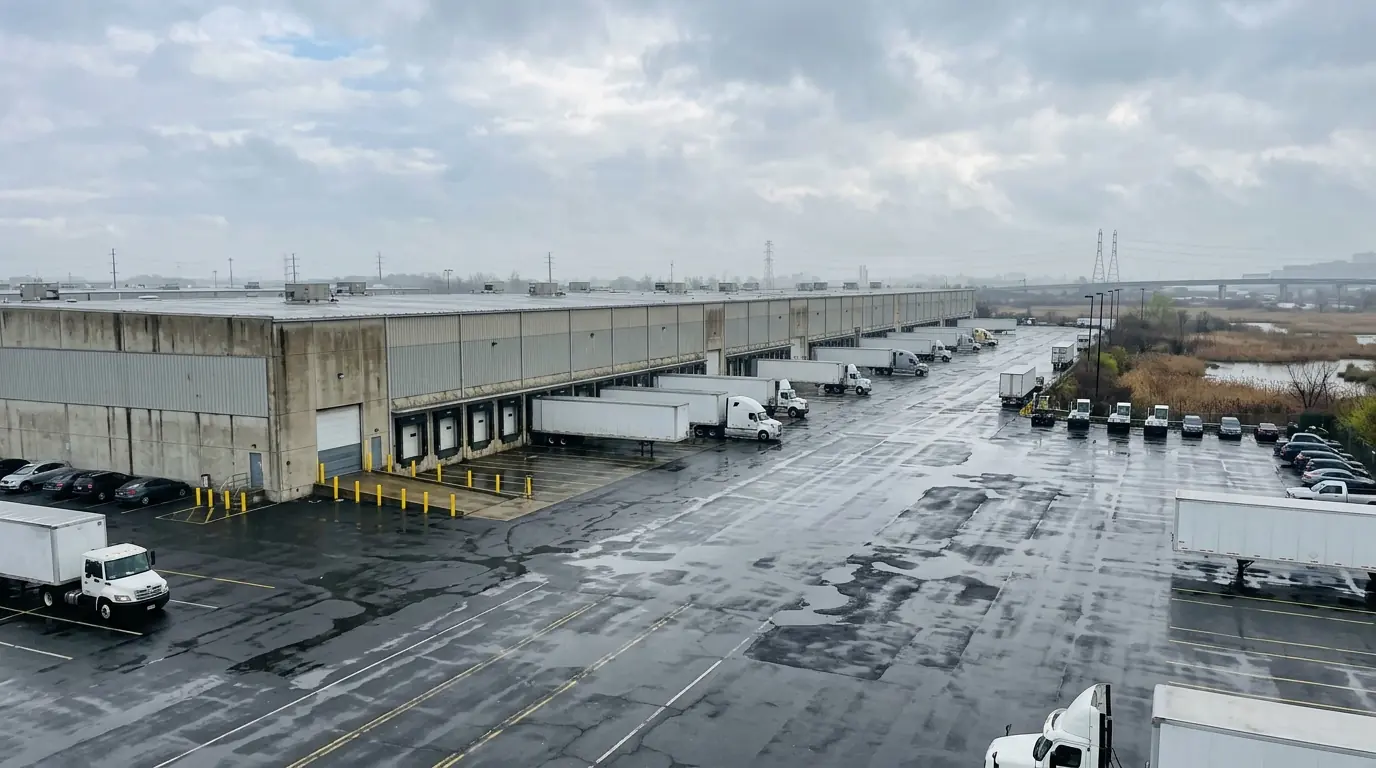
Above grade, commercial buildings leak in the same places homes do, just at a larger scale. Pre-war brick apartment buildings around Journal Square need repointing and parapet repairs. Mixed-use buildings lose sealant at storefront frames and upper windows. Waterfront towers leak at terraces and amenity decks built over the roof membrane. And the big flat roofs on Meadowlands warehouses in Secaucus and industrial South Kearny collect ponding water, split at seams and fail at rooftop unit curbs.
We work on all of these, from repointing and exterior wall treatments to roof coatings and flat-roof leak repair. If a warehouse membrane is too far gone to hold a coating, we'll say so plainly rather than coat it anyway. Where the membrane still has life, a targeted repair or a coating can extend it considerably for a fraction of the cost.
Commercial clients need more than a verbal summary. After an investigation we put together a written report: where water is entering, photos of each problem area, moisture readings, what we recommend, and a suggested priority order. Boards use it to plan budgets and vote on work. Managers use it to answer tenant complaints and keep records. For larger buildings we can break the work into phases, so an urgent garage leak gets handled this season and a slower wall problem can wait for next year's budget.
We keep the report readable. A board member who has never been on the roof should understand what's wrong, why it matters, and what happens if it waits. When the work is done, we add a closing set of photos so the building's records show what was repaired and where. If you'd like that kind of look before committing to anything, start with a whole-building water inspection.
| Problem area | Typical system | Notes |
|---|---|---|
| Cellar wall cracks and tie-rod holes | Polyurethane or epoxy injection | Fast, little disruption to tenants |
| Cove joint seepage under pressure | Interior perimeter drain to a sump | Relieves hydrostatic pressure |
| Sewer backup at floor drains | Backwater valve | Permits handled where required |
| Garage deck leaks | Traffic coating and joint repair | Phased to keep parking open |
| Elevator pit water | Injection and crystalline treatment | Done with the elevator contractor |
| Brick walls of pre-war buildings | Repointing and breathable repellent | Lime mortar on old brick |
| Warehouse flat roof leaks | Seam repair or roof coating | Only where the membrane has life left |
$940 to $7,600
per repair, typical range
Targeted commercial repairs typically land between $940 and $7,600. Full below-grade or roof programs depend so heavily on the building that we price them per building after an investigation.
Not listed? See every area we serve or call (201) 578-5199.
Membranes, sealers, pumps and dehumidifiers we work with come from makers such as
Usually, yes. We schedule noisy or messy steps before opening hours or after closing, keep entrances clear and work in sections so the sales floor stays open. Some jobs, like sealing a cellar floor or coating a section of roof over the store, need a short window where a specific area is off limits. We tell you exactly when and how long.
We include where water is entering, photos of each problem area, moisture readings, likely causes, recommended repairs ranked by priority and typical cost ranges. The goal is a document board members can read without a contractor in the room. After the work is finished we add closeout photos, so the building's records show what was repaired.
Yes. We repair warehouse flat roofs, seal leaking walls and loading dock areas, and handle below-grade seepage in buildings across the Meadowlands, Secaucus and South Kearny. We work around shipping schedules and forklift traffic, one bay or roof section at a time.
We give management a clear schedule with dates, areas affected and any limits on access, parking or noise, so notices can go out in advance. If we need to enter units, we set those visits by floor or line. Our crews keep work areas marked and clean up at the end of each day.
Call (201) 578-5199 and tell us what you're seeing. We'll set up a visit and give you a typical range before any work starts.