Drips onto cars
Water landing on parked cars or the floor below, especially after rain or snowmelt.
Commercial & inspections · Jersey City, NJ
Drips onto parked cars, rust stains on the ceiling and water reaching the storage rooms or shops below a garage deck all mean water is getting through the concrete. We seal the deck, joints and drains while keeping most of the garage open.
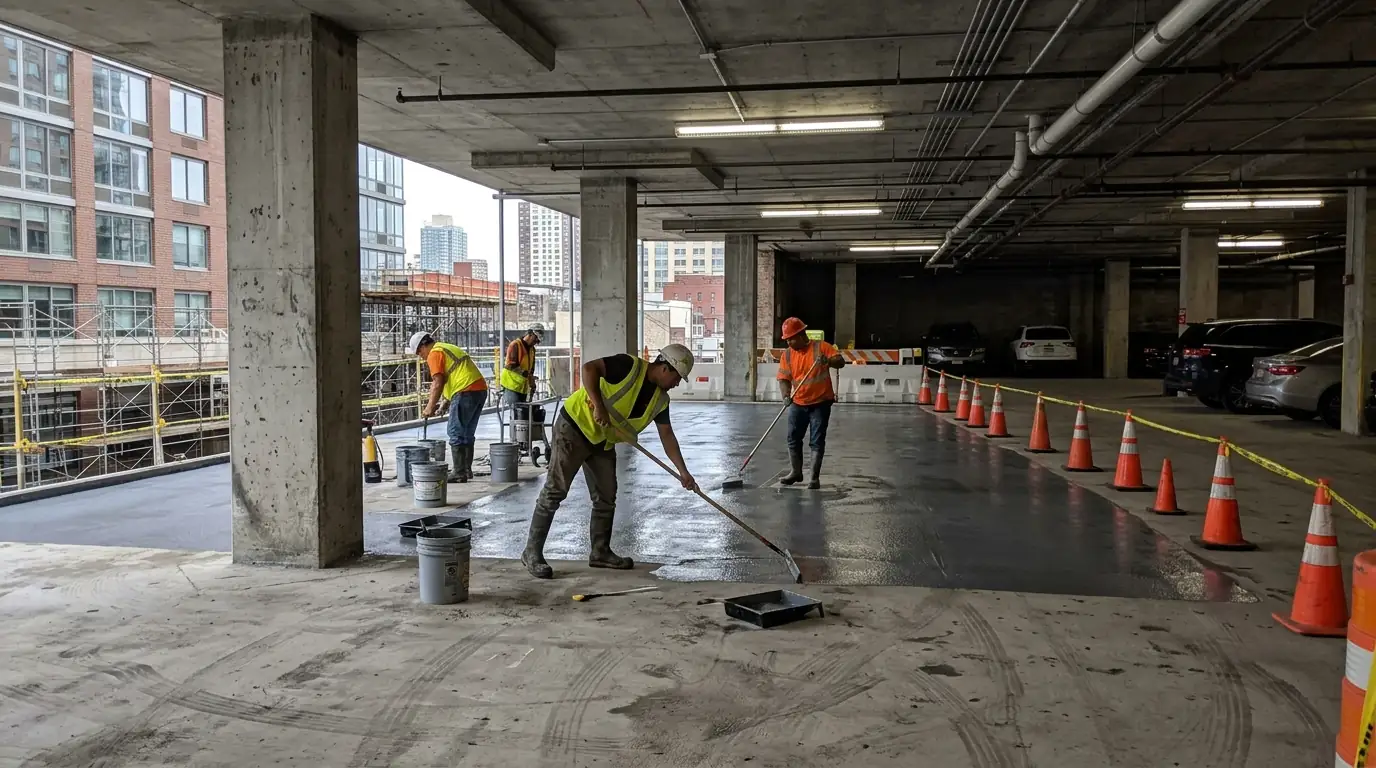
We waterproof below-grade and podium parking garages under Jersey City condo and rental towers. Our crews repair cracks, rebuild failed expansion joints, clear and reseal drains and apply traffic coatings that keep water and road salt out of the deck. Work runs in phases so most parking stays available. Call (201) 578-5199 at any hour to have a technician look at the deck.
A garage deck takes a beating most building owners never see. Cars carry in rain and snow all winter, along with road salt from Jersey City streets. That brine sits on the concrete, works into hairline cracks and reaches the steel reinforcing inside the slab. Once the steel starts to rust, it swells, cracks the concrete around it and opens more paths for water. The result is the familiar picture: stalactites of white mineral deposit on the ceiling below, rust stains, and drips landing on cars.
On a podium garage, where the parking level sits over retail, storage or another garage level, a leak doesn't stay in the garage. It drips into storage cages, onto shop ceilings or into mechanical rooms. Below-grade garages near the waterfront face the opposite problem too: groundwater pushing up through floor cracks and walls. Many towers along the Newport and Exchange Place waterfront have both kinds of exposure at once.
Salt is the slow part of the problem. Even a deck that doesn't drip yet can be taking in brine every winter, and the damage to the steel builds quietly until concrete starts flaking off the ceiling below. Catching it early, while the work is still sealing and coating rather than concrete repair, keeps the cost of every later phase down and keeps more of the garage in service.
Water landing on parked cars or the floor below, especially after rain or snowmelt.
Crusty white deposits or small stalactites forming on the ceiling below the deck.
Brown streaks or concrete flaking off the ceiling or deck surface, a sign reinforcing steel is corroding.
Joint seals that are split, hardened, sagging or missing pieces across the deck.
Puddles that linger days after rain, often around clogged drains or low spots.
Damp boxes in storage cages or stains on a store ceiling under a podium deck.
A traffic coating is a liquid-applied membrane built for vehicles. It usually goes down in layers: a primer, a flexible base coat that bridges cracks, then a wear coat with aggregate broadcast into it for grip. The base coat does the waterproofing, the wear coat takes the tires. In drive aisles and turning areas the wear coat goes on heavier. The coating stops brine from reaching the concrete, which slows corrosion of the steel inside.
Expansion joints are often the biggest single source of garage leaks. They let the structure move with temperature, and the seals in them eventually tear, harden or pull loose. We cut out failed joint seals and install new ones sized for the joint's movement. Cracks get routed and sealed or injected, depending on whether they're moving and whether water is coming through under pressure. On below-grade walls, polyurethane injection stops active leaks; on the deck, cracks are sealed before the coating goes over them.
Not every garage needs a full coating on day one. If the deck is in reasonable shape, sealing cracks, replacing torn joint seals and clearing drains can stop most leaks for a fraction of the cost, with coating planned first over the areas above storage or retail. Where an existing coating is worn but still firmly attached, a fresh wear coat over the sound base can extend it. We lay out these choices in the survey so the board can match the work to its budget.
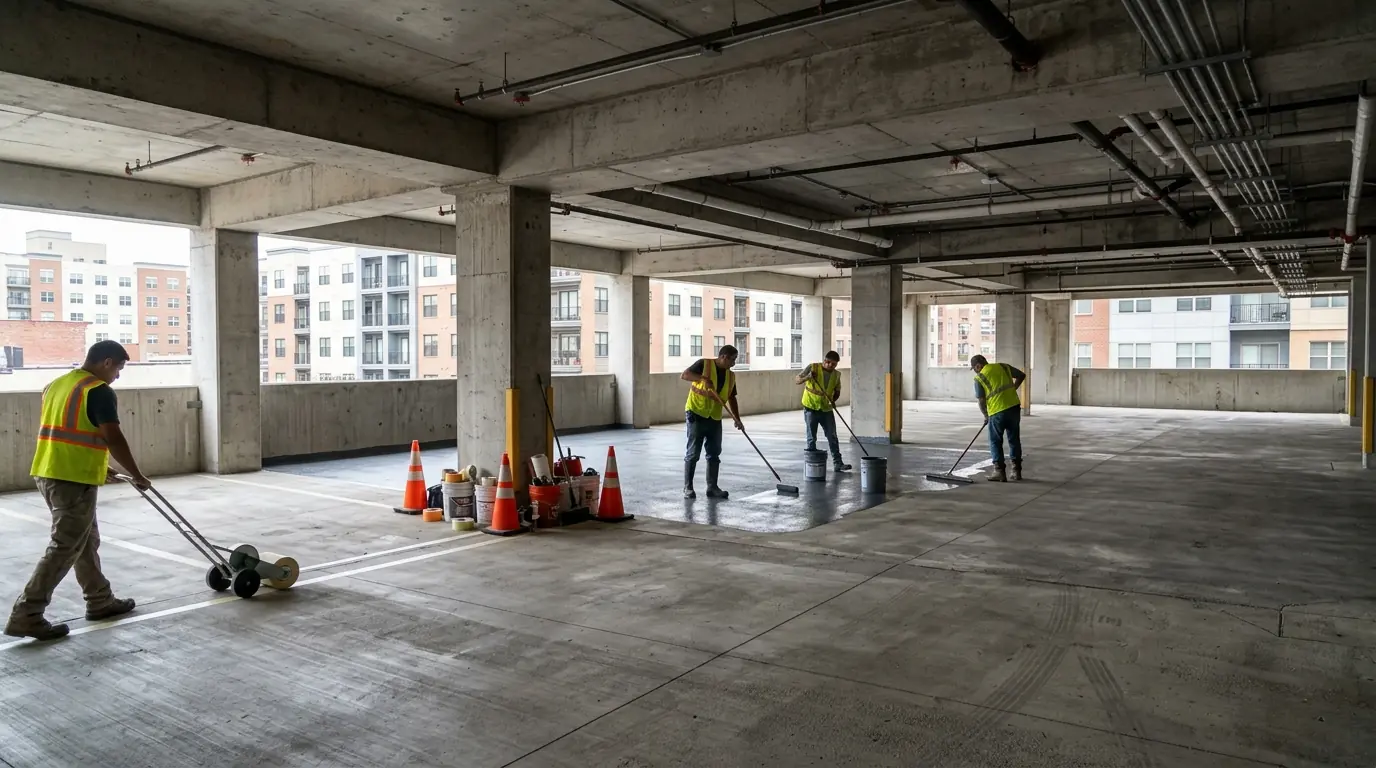
We walk the deck and the level below, mapping cracks, joints, drains, stains and spalled areas. Photos and notes go into a report for management and the board.
We divide the garage into work sections and set a schedule that keeps ramps, entrances and most spaces open. Residents get notice before each phase.
Each section is cleaned and mechanically prepared so the coating bonds. Loose or spalled concrete is noted for repair.
We replace failed expansion joint seals, seal or inject cracks and reseal the joints around drains. Clogged drains are cleared and tested.
We apply primer, base coat and an aggregate wear coat, heavier in drive lanes and turns. Each section cures before cars return.
Stripes and markings go back on the finished section. We move to the next phase and add closeout photos to the report.
Every garage deck is supposed to slope toward drains. Over time drains clog with grit, salt crust and debris, and the area around each drain body is a classic leak point where the coating or concrete has cracked. Water that can't drain sits on the deck, finds every weakness and freezes in winter. Part of every garage job is clearing drains, checking that water actually reaches them, and resealing the joint between the drain and the deck.
Where low spots hold water far from any drain, we'll show you. Sometimes a small amount of regrading at a ponding spot solves it; other times the answer is a trench drain or an added drain line, which needs coordination with the building's engineer or plumber. Below-grade garages also depend on sump pits and pumps to move groundwater and runoff out. If those pumps are struggling, pump repair and battery backup belongs on the list alongside the deck work.
Closing a whole garage is rarely an option for a condo or rental tower. We split the deck into sections and work through them one at a time, with barriers, signs and a planned traffic route that keeps ramps and entrances open. Coatings need time to cure before cars return, so each section's schedule includes that wait. Management gets a calendar showing which spaces are affected and when, so residents can be told well ahead.
Odor and noise matter in an occupied building. We pick materials and work hours with that in mind and keep ventilation running while coatings cure. Garage work often ties into other below-grade problems, so we look at the whole picture: elevator pits that flood from the same groundwater, storage rooms under the deck and foundation wall cracks at the garage perimeter. For the full set of building issues, see our commercial waterproofing work.
| Problem | Typical repair | When it fits |
|---|---|---|
| Leaks along a line across the deck | Expansion joint seal replacement | Joint seal torn, hard or loose |
| Scattered drips and white deposits | Crack sealing plus traffic coating | Many fine cracks over occupied space |
| Active leak through a below-grade wall | Polyurethane crack injection | Groundwater pushing through cracks |
| Puddles around drains | Drain clearing and resealing | Drain body cracked or clogged |
| Worn coating in drive lanes | New wear coat over sound base | Base coat still firmly attached |
$4.60 to $11.90
per sq ft, typical range
Most parking garage waterproofing lands between $4.60 and $11.90 per square foot. That's a typical range; we price a specific garage after walking the deck and the level beneath it.
Not listed? See every area we serve or call (201) 578-5199.
Membranes, sealers, pumps and dehumidifiers we work with come from makers such as
It depends on traffic and how well the coating is maintained. Drive aisles, ramps and turning areas wear fastest, while parking stalls last much longer. A common approach is to recoat the wear layer in heavy traffic areas when it thins, before the base membrane is exposed. That costs far less than letting the base fail and starting over.
In most cases, mostly yes. We divide the garage into sections and close one at a time while keeping ramps, entrances and most spaces in use. Each section needs time to cure before cars return. Management gets a schedule in advance so residents know which spaces to avoid and when.
On a podium deck or upper garage level, water usually comes through cracks, failed expansion joints or the joint around a drain. Road salt makes it worse by attacking the concrete and steel. We trace the drip to its source on the deck above, then seal the joint or crack and, where needed, coat the area so the leak doesn't move to the next crack.
Not by themselves. Those deposits are minerals left behind as water moves through concrete. They do mean water is getting in, and over time that water can rust the reinforcing steel. If you also see rust stains or concrete flaking off, the building's engineer should look at the structure. Our job is to stop the water; we'll flag anything that needs an engineer's eye.
Call (201) 578-5199 and tell us what you're seeing. We'll set up a visit and give you a typical range before any work starts.