Stone & Brick Foundation Waterproofing
The rubble-stone and brick walls under 19th-century rowhouses weep differently from poured concrete.
DetailsJersey City neighborhood
Brownstones and brick rowhouses along Jersey Avenue and around Van Vorst Park leak in layers: old foundation joints at the bottom, bay window seams in the middle, parapets and cornices at the top. We find which layer is letting your water in.
For leaking brownstone basements, damp party walls and bay window leaks around Van Vorst Park, call (201) 578-5199, which is answered 24/7. We come over from our Newark Avenue office, trace the water from the roof edge down to the foundation, then explain whether the fix is repointing, drainage, sealing or flashing, along with the typical cost range.
Start at the bottom. The foundations here are brick or rubble stone in lime mortar, often with a vault under the stoop. Groundwater on this filled downtown ground pushes through the softest joints, leaving efflorescence and sandy piles along the base of the wall. Next, the middle: projecting bay windows have small roofs and seams where the bay meets the main wall. When those seams open, water runs inside the masonry and can surface as a damp spot in the basement directly below the bay, which confuses a lot of owners. Owners often blame the foundation for all of it, when the bay is doing half the damage.
Then the top. Flat roofs sit behind cornices and parapets, and a split cornice seam or a failed coping joint lets rain into the front wall during every nor'easter. Wind-driven rain is the worst case because it reaches places that normal rain never touches. We do not guess which layer is at fault. We test the obvious one first, usually with a hose and a moisture meter, and work our way through the rest so you only pay for the repairs your house actually needs, in the order that matters. A leak that appears only in east wind, for example, points straight at the facade rather than the ground.
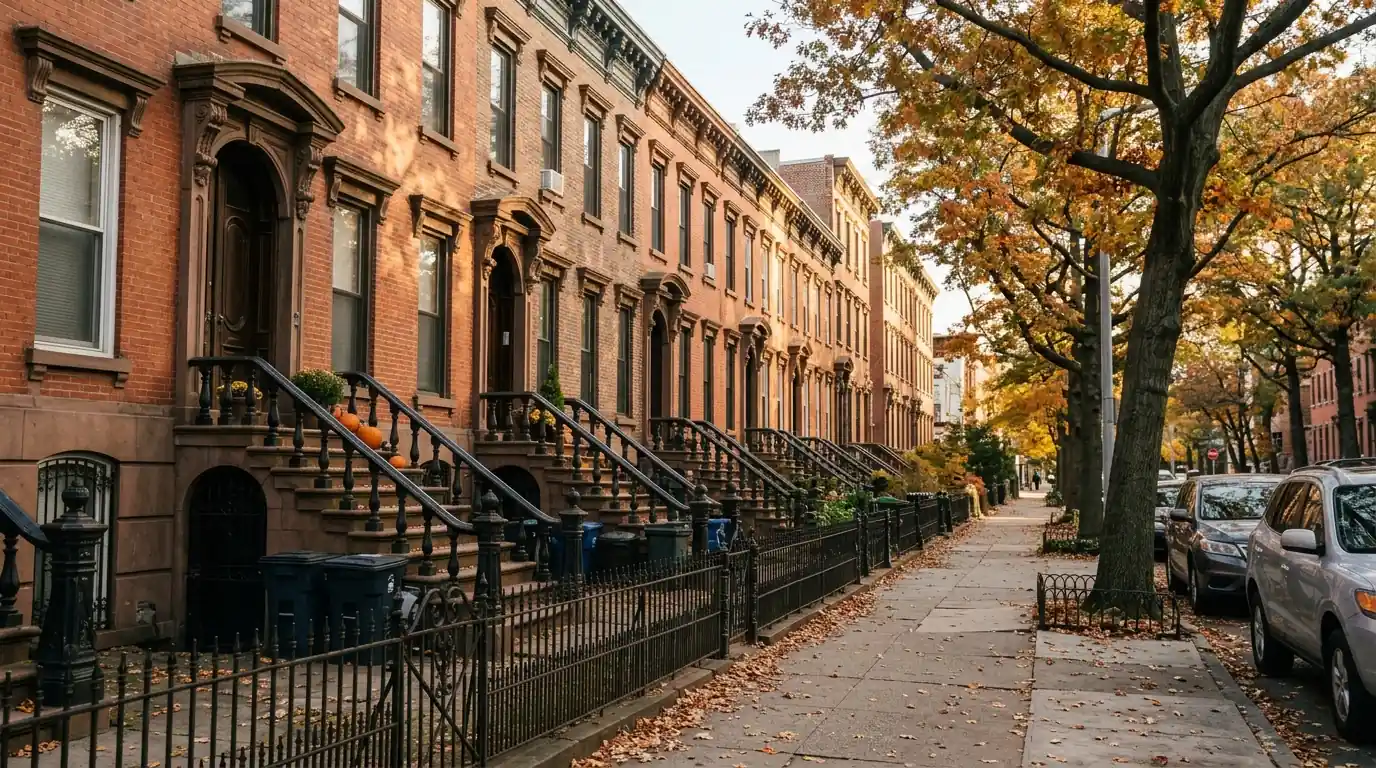
Van Vorst Park blocks have tall stoops, iron railings and narrow sidewalks, and most basements are reached through the areaway under the stoop. We bring work in by hand through that door, lay protection over the stoop and steps, and keep the sidewalk open for neighbors. Parking near Jersey Avenue is permit-only on many blocks, so we arrange staging ahead and keep the truck stop short. When a job needs work above the parlor floor, like bay window flashing or cornice sealing, we use ladders or rooftop access through the hatch rather than blocking the street.
Shared party walls are the rule here. If your basement is wet along a party wall, the water may be coming from next door: a neighbor's clogged areaway, a broken leader or a yard that slopes toward your foundation. We check what we can see from your property, explain where we believe the water starts, and seal your side regardless. A brick repointing job on a party wall stays on your side of the line, and we never open a neighbor's wall without their say. Party walls also get damp from inside, so we check for plumbing leaks along the shared wall before blaming the weather.
Based on the buildings here, these are the calls we expect from Van Vorst Park. Every other service on our list is available too.
The rubble-stone and brick walls under 19th-century rowhouses weep differently from poured concrete.
DetailsRain driven sideways by a nor'easter finds every open mortar joint on a brick wall, then shows up as stained plaster, peeling paint or a damp closet.
DetailsWhen the wall below a window stays damp after storms, the sealant joint around the frame has usually let go, and rain is running behind the trim.
DetailsIf water pools in the sunken entry under your front stoop and slides under the basement door, the areaway drain or the stoop above it has failed.
DetailsWater is reaching the top-floor walls, or even a floor or two lower, while the roof surface looks fine.
DetailsRain is getting through the brick on an upper floor, usually after a storm with strong wind behind it.
DetailsVan Vorst Park is a designated historic district, so exterior changes can go to the Historic Preservation Commission. Resealing a bay window, repointing the front facade or reworking the stoop may fall under that review. We tell you early when a job will likely need it and plan materials to match the original brownstone and brick. Interior basement work rarely changes the street face, so it usually moves ahead on its own schedule while any exterior piece waits its turn. We also keep a short record of the existing condition with photos, which helps if a review asks what the wall looked like before the work.
Bay windows deserve special attention here. Water that gets in at a bay roof or side seam runs down inside the wall, and by the time it shows in the basement the source is two floors up. Our window and door perimeter sealing and small-roof flashing repairs stop it at the top. When the basement still seeps after that, we look at stone foundation waterproofing for the walls below. Owners in nearby Paulus Hook and downtown Jersey City see the same pattern on their bays.
Yes, and it happens more than people expect. Water that enters at the bay roof or its side seams runs down inside the masonry and can show up in the basement right below the bay. We test the bay first when a basement leak lines up with it, then reseal the seams or flashing before touching the foundation.
We seal and drain your side of the foundation so the water stops reaching your basement, using repointing, an interior drain or a sump as needed. We also show you where the water is coming from so you can raise it with your neighbor. We never work on a neighbor's property without their permission.
If you use it for storage or it leaks into the basement, yes. Stoop vaults usually leak at the ceiling joint below the sidewalk or stoop, and the water then runs into the basement. We seal the ceiling joint, clear any drain, and waterproof the stoop surface where the water starts.
Call (201) 578-5199 any time. Tell us the address and what you're seeing, and we'll take it from there.