Backwater Valve Installation
When a heavy storm sends dark, foul water up through your basement floor drain, the problem is the sewer, not groundwater.
DetailsJersey City neighborhood
Pre-war walk-ups around Journal Square have deep basements, a floor drain tied straight to the sewer and boilers sitting low. In a hard storm, the water that ruins that basement often comes up through the drain, not the wall.
We handle sewer backups, basement seepage and leaking walls in Journal Square apartment buildings and walk-ups. Call (201) 578-5199 day or night. A technician checks whether water rose through the floor drain or seeped through the foundation, then recommends a backwater valve, crack injection or drainage work, with the typical cost range explained before anything starts.
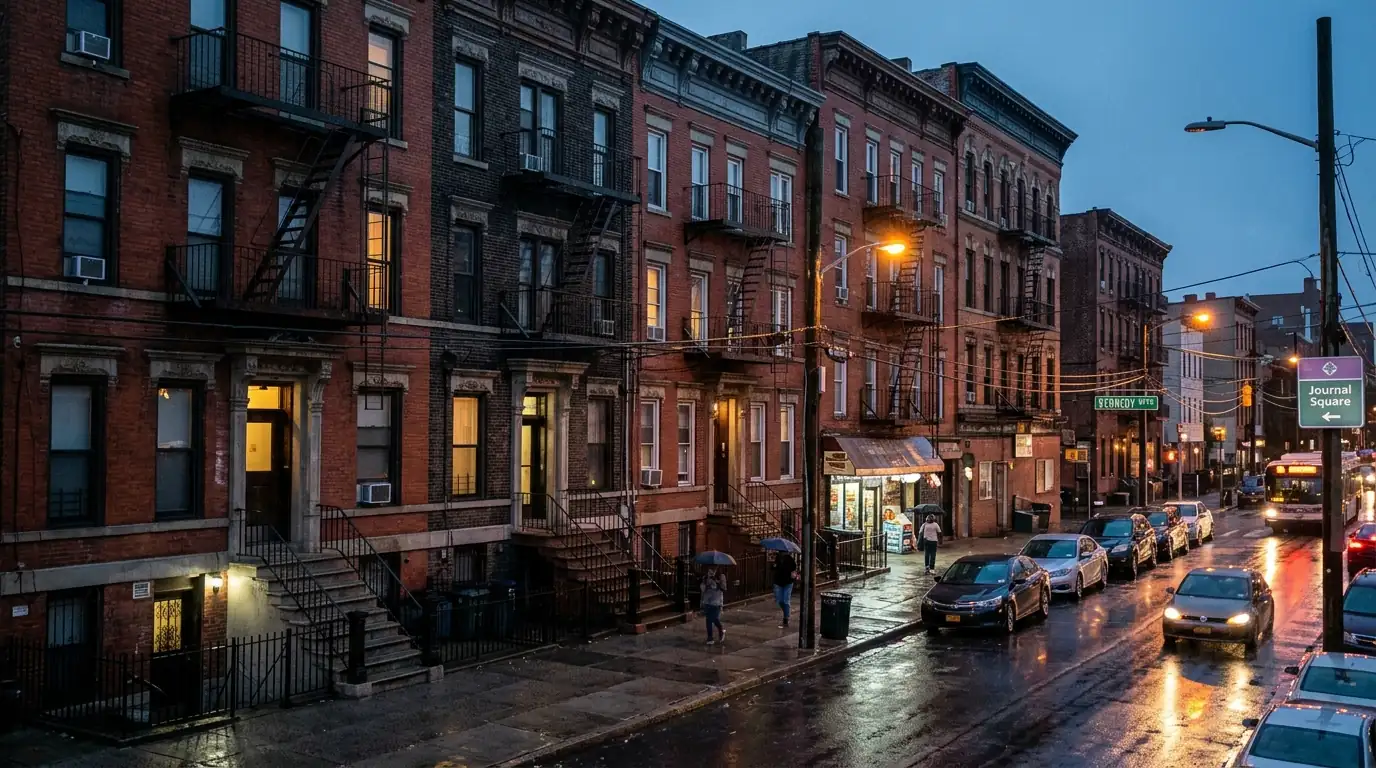
Most of the brick walk-ups along Kennedy Boulevard and the side streets near the Loew's Jersey Theatre were built with a full basement for the boiler, meters and storage. The lowest point in that basement is usually a floor drain connected to the building sewer. Jersey City runs largely on a combined system, so when a storm fills the street pipes, sewer water looks for the lowest open outlet, and that drain is it. Owners describe it the same way almost every time: the water came up from the middle of the floor, not in from the walls.
Not every wet floor is a backup, though. These buildings also have brick foundation walls that seep where mortar has worn, and the newer towers nearby have poured walls with tie-rod holes and a cove joint where seepage starts. We sort it out on the first visit by looking at the stain line, the smell and where the water pooled first. Groundwater is clear and arrives at the walls. Sewer water is gray, smells and arrives at the drain. Each needs a different repair, and telling them apart early keeps you from paying for the wrong one.
Walk-ups are lived in while we work, so we plan around tenants. We set a schedule with the owner or super, post notices if the water has to be shut off for a valve installation, and keep the basement hallway clear for meter readers and boiler service. The job stays inside the basement whenever possible. A backwater valve installation means opening the slab at the main line, setting the valve with an access cover so it can be checked later, and pouring new concrete over the trench once the line is tested.
Traffic around the Journal Square PATH Transportation Center makes street access tough, so we stage small and carry tools in by hand when a curb space is not available. Sewer-side work falls under the local sewer utility and plumbing code; we tell you up front when a permit or a plumber is required and coordinate it so you are not chasing paperwork. If the building also has a flat roof with internal drains, we check those drains too, because a clogged roof drain can overflow into the top-floor units during the same storm that backs up the basement.
Based on the buildings here, these are the calls we expect from Journal Square. Every other service on our list is available too.
When a heavy storm sends dark, foul water up through your basement floor drain, the problem is the sewer, not groundwater.
DetailsIf your basement is under water after a storm or a sewer backup, the first job is keeping everyone safe and the second is getting the water out.
DetailsA single crack running down a poured basement wall can soak a corner of the floor every time it rains.
DetailsIf water keeps showing up in the same corner of your basement after every heavy rain, a properly placed sump pump gives it somewhere to go.
DetailsA basement can be free of leaks and still smell musty, sweat on the pipes and grow mildew on stored boxes.
DetailsWater is coming through the top-floor ceiling from a flat roof leaking at a seam, a blister, a parapet base or a clogged drain.
DetailsA backwater valve stops sewer water from coming back in. It does nothing for groundwater pushing through the walls. A sump pump handles groundwater collected by an interior drain, but it cannot stop a sewer surge. Many walk-ups need one, and a few need both. Our plain-language guide to backwater valves lays out the difference in more detail. In older buildings with a single floor drain and dry walls, the valve alone usually solves the problem. Where walls also weep, we pair it with crack injection or an interior drain along the worst wall.
When a building has already flooded, our crew starts with a pump-out, clears standing water and sets drying equipment before any permanent work. Then we look at what the boiler room and storage space need to stay dry: sealing the walls, closing gaps around pipe penetrations, and adding a basement dehumidifier where summer humidity sits above 60 percent. Owners of McGinley Square buildings a few blocks south face the same mix of problems, so the approach carries over from one walk-up to the next.

Look at where it appeared first and what it looks like. Sewer backups rise from the floor drain or lowest toilet, look gray or dirty, and smell. Groundwater seeps clear along the base of the walls. If the water came up from the drain during heavy rain, a backwater valve is the likely fix. Call and describe it, and we can usually tell over the phone.
In most cases, yes. We set the valve on the main building line inside the basement with an access cover, so it can be cleaned and checked. Older cast iron or clay lines are inspected first, since a cracked line needs repair before a valve goes in. We tell you if the job needs a permit or a plumber and coordinate it.
Yes. Most of our Journal Square jobs happen in occupied buildings. We agree on a schedule with the owner or super, give notice if water service has to be shut off, keep hallways and the boiler room passable, and clean up at the end of each day. Noisy slab cutting is kept to daytime hours so residents are not disturbed at night.
Call (201) 578-5199 any time. Tell us the address and what you're seeing, and we'll take it from there.