Backwater Valve Installation
When a heavy storm sends dark, foul water up through your basement floor drain, the problem is the sewer, not groundwater.
DetailsJersey City neighborhood
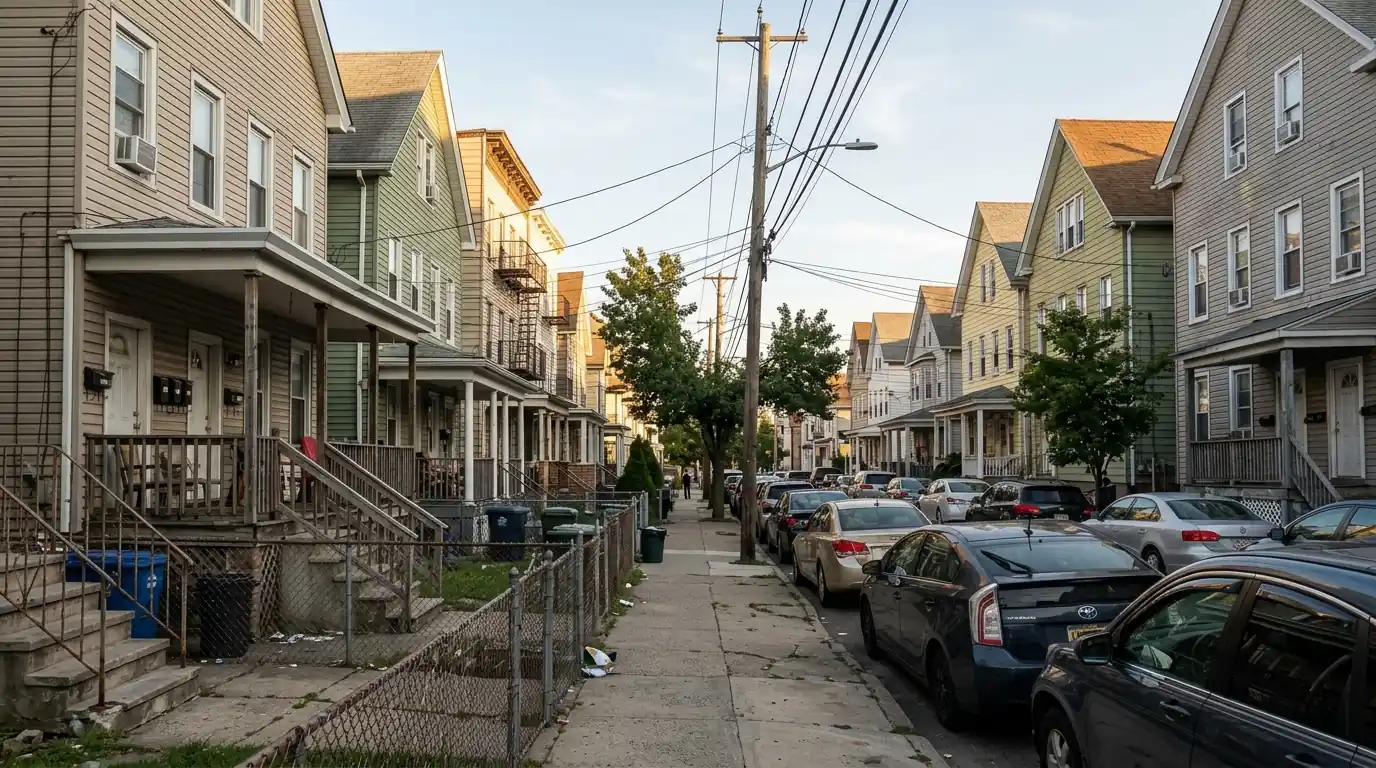
Greenville's one- to three-family frame houses sit on low ground between Danforth Avenue, Ocean Avenue and Newark Bay. Groundwater rises under the floor, the sewer backs up in storms, and bay wind drives rain into the walls.

When a Greenville basement takes water from the floor drain, the slab or the walls, call (201) 578-5199 any time of day or night. We work out whether it is sewer backup, groundwater or wind-driven rain, then install a backwater valve, a sump with battery backup or drainage to match. The typical cost range is explained before any work begins.
Greenville sits in the southern part of the city, with Newark Bay on the west side and lower ground near Route 440. Much of it has a high water table, so after a wet week groundwater presses up against basement floors and walls. At the same time, the area is served by the combined sewer. In a heavy storm the street pipes fill with rain and sewage together, and that mix can push back up through the floor drain, laundry tub or basement toilet. Many owners here have dealt with both, sometimes in the same storm.
Telling them apart is the first job. Groundwater is clear, shows up along the base of the walls or through slab cracks, and often arrives a day after the rain. Sewer water is dirty, smells, and rises from the drain while the storm is still going. A backwater valve stops the second. A sump with an interior drain handles the first. Our sewer backup guide walks through the warning signs in more detail if you want to read up before calling. Smell is the fastest test: groundwater has none, and a backup is unmistakable.
Most Greenville houses are wood-frame with a basement under the main block and a crawl space or slab under a rear addition. The rear roof is often low-slope, draining into a single leader at the back corner. If that leader empties onto the ground, it soaks the soil right where the basement and the addition meet, which is a weak joint to begin with. We often fix the leader before anything else, and we look under the addition for damp soil, wood rot and standing water. Rotted sill plates and damp joists under an addition tell us water has been sitting there for years.
Access is easier than downtown: many houses have a driveway or a side yard, and parking is less strained. We still work carefully in narrow spaces between houses, keep neighbors' paths clear and restore any concrete we cut. Valve installations happen inside the basement at the main line, and we tell you when a permit or plumber is required and coordinate it. Sump work involves cutting the slab, digging a pit, setting a basin and running discharge outside, usually toward the street side rather than the neighbor's yard. Each valve gets an access cover set flush with the floor so it can be inspected and cleaned without breaking concrete again.
Based on the buildings here, these are the calls we expect from Greenville. Every other service on our list is available too.
When a heavy storm sends dark, foul water up through your basement floor drain, the problem is the sewer, not groundwater.
DetailsIf water keeps showing up in the same corner of your basement after every heavy rain, a properly placed sump pump gives it somewhere to go.
DetailsIf your sump pump is humming without moving water, cycling every few seconds or sitting silent while the pit fills, call us now.
DetailsIf the room over your rear addition smells musty or the floor feels cold all winter, the crawl space underneath is probably damp and open to outside.
DetailsIn New Jersey, downspouts are called leaders, and most of them empty right beside the house.
DetailsWhen the wall below a window stays damp after storms, the sealant joint around the frame has usually let go, and rain is running behind the trim.
DetailsStorms reach Greenville straight off Newark Bay, and wind-driven rain gets into frame walls at window corners, siding laps and where the addition meets the house. That water can run down the wall cavity to the sill and show up as a damp basement corner that has nothing to do with groundwater. When the wet spot sits high on the wall, we check window perimeters and the addition joint first. Window and door perimeter sealing is often a quick fix for leaks that only appear in wind.
Crawl spaces under rear additions are the other piece. Exposed soil keeps the space damp all summer, wood framing absorbs that moisture and the musty smell drifts into the house. Crawl space encapsulation seals the floor and walls with a vapor barrier, closes vents and often adds a small dehumidifier. Owners in Bergen-Lafayette and in Bayonne across the line deal with very similar frame houses and bay weather. Basement humidity here often sits above 60 percent in summer, so a dehumidifier set near 45 to 55 percent helps the main basement too.
Some do. A backwater valve blocks sewer water from coming back through the floor drain, while a sump pump removes groundwater collected under the floor. Greenville has both a combined sewer and a high water table in many spots, so we check which problem your house actually has before recommending one, the other or both.
Most crawl spaces under rear additions have bare soil, open vents and a leader dumping nearby. Moist air and ground water keep the space damp and the framing wet. Sealing the soil and walls with a vapor barrier, closing the vents, controlling the leader and adding a dehumidifier usually brings the humidity down.
It can. Wind-driven rain forced into window corners, siding laps or the joint between an addition and the house can run down the wall cavity and show up in the basement. If your leak only appears during windy storms, we check the walls and window perimeters before the foundation.
Call (201) 578-5199 any time. Tell us the address and what you're seeing, and we'll take it from there.