Leaks only in sideways rain
Stains that appear after storms with wind from one direction, not during calm rain.
Walls, terraces & decks · Jersey City, NJ
Rain is getting through the brick on an upper floor, usually after a storm with strong wind behind it. We find where the wall is taking water and seal it without trapping moisture inside the masonry.
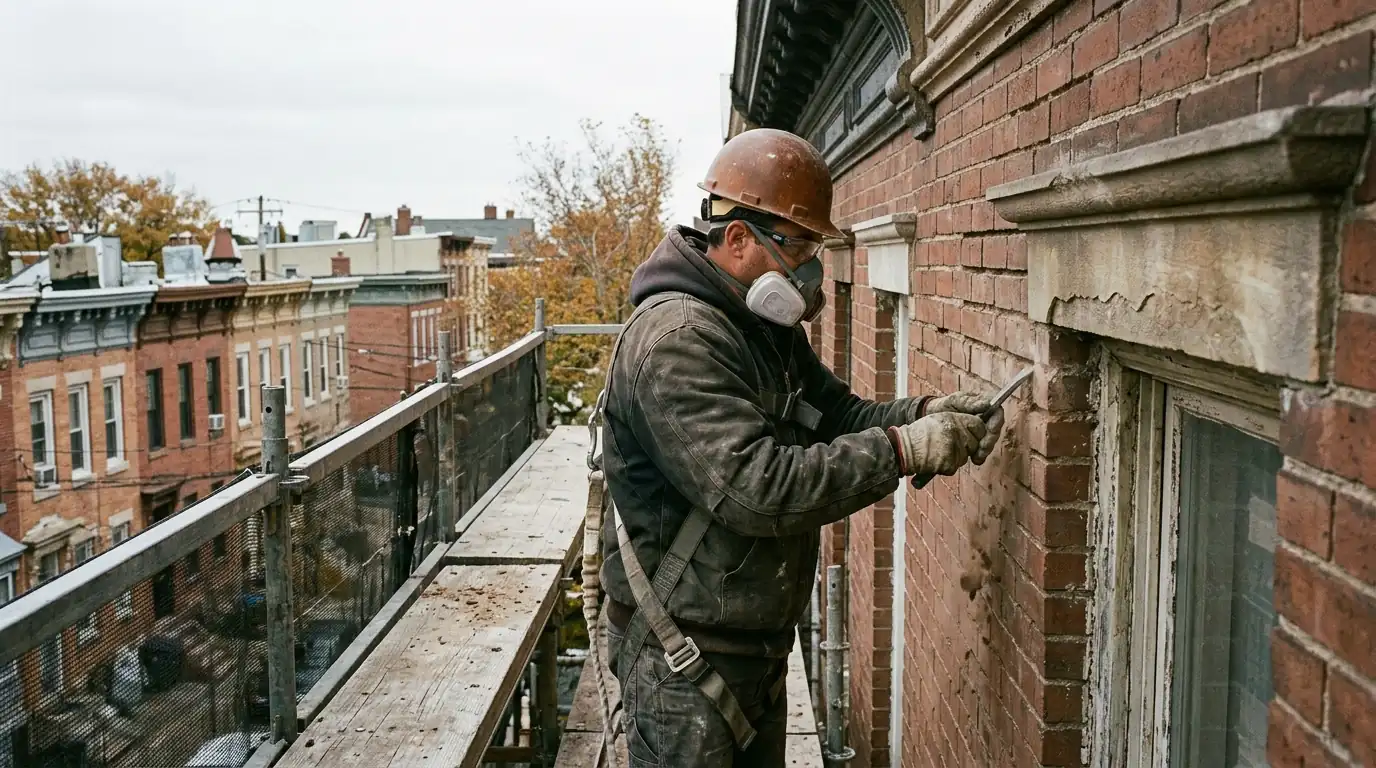
When wind-driven rain comes through a brick wall in Jersey City, the cause is usually failed mortar joints, open window perimeters or rusting lintels. Call (201) 578-5199 and our technicians inspect the facade, repoint the failing areas, seal window and lintel edges, and apply a breathable silane or siloxane water repellent where the brick is sound but thirsty. We check the parapet above and the foundation below too.
Not every top-floor leak comes from above. On Jersey City brick rowhouses and walk-ups, a nor'easter can drive rain sideways into the face of the building hard enough to push it through the masonry. The stain shows up on an outside wall, often near a window or at the corner where the wall meets the ceiling, and it tends to appear only in storms with wind from one direction. That pattern is a strong hint the wall is the source.
We look at the wall as one piece of the whole building, top to bottom. Water entering a leaking parapet can run down inside the wall and appear a floor or two below. At the other end, a facade with open joints near grade feeds water straight into old brick and rubble foundations, and a wall that looks dry upstairs can still be the reason a basement corner seeps. When the trail leads below ground, basement waterproofing becomes part of the same conversation.
Stains that appear after storms with wind from one direction, not during calm rain.
Damp plaster or bubbling paint on the inside of an exterior wall, often near windows.
Joints recessed or crumbling, visible from the street or the roof.
Stair-step cracks rising from the corners of a window, often from a rusting lintel.
Paint or coating blistering off the brick, with crumbled brick behind it.
Efflorescence on the outside face, a sign water is moving through the wall.
Old brick walls in the city were built thick so they could absorb some water in a storm and let it dry out afterward. That system works as long as the mortar joints are intact. Over decades, mortar erodes, freeze-thaw opens cracks along the joints, and side walls that were never meant to be seen get patched with whatever was handy. Once the joints open, wind pushes water deep into the wall faster than it can dry.
Side walls on rowhouses are especially vulnerable. Where a neighboring building was demolished, a party wall built as an interior wall suddenly became an exterior wall, with softer brick and less careful joints facing the weather. Walls in the Heights take wind off the ridge, and buildings near the bay in Bayonne and Greenville take wind and salt air. All of that wears the face of the brick and the joints between.
Windows and lintels are the other big entry point. Sealant around old frames dries and cracks in the sun, and steel lintels over openings rust and expand, cracking the brick above them and opening a gap right over the window. Sills that have lost their slope or drip edge send water back toward the wall instead of off it, so a single window can collect rain from the sill, the frame and the lintel at once.
We map interior stains against the facade, windows and parapet above. Storm direction and timing help narrow it down.
From the roof, ladders or staging, we check joints, brick, lintels and window perimeters. Failed areas are marked and photographed.
Bad mortar is raked out and replaced with a compatible mix. On historic brick, that usually means a softer lime-based mortar.
Old sealant is cut out and replaced, and lintel tops are sealed. Severely rusted lintels are flagged for a mason.
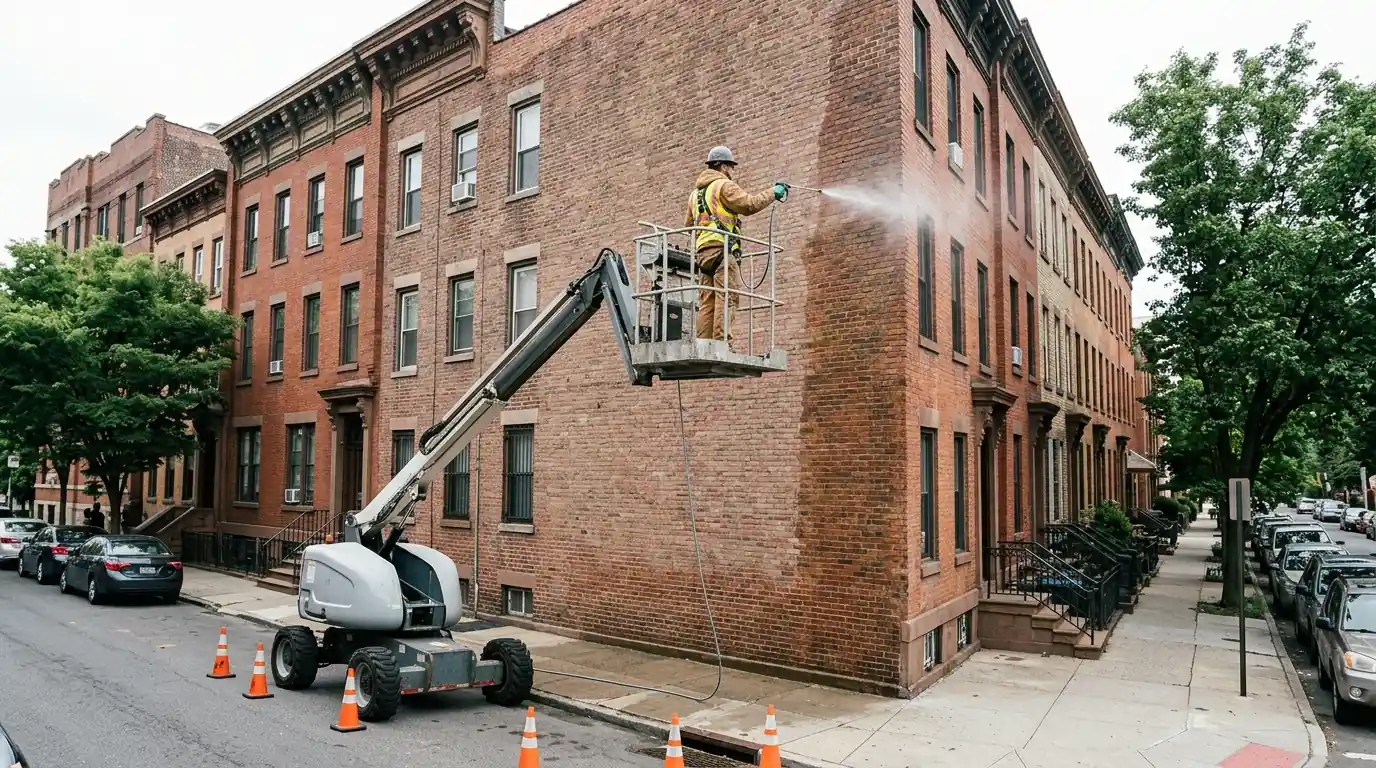
Where the brick is sound but absorbent, we apply a silane or siloxane repellent. The wall sheds rain but can still dry out.
We ask you to watch the interior through the next wind-driven rain. If anything shows, we come back to look.
We start with the joints. In problem areas, failed mortar is raked out to a sound depth and repointed with a mortar compatible with the old brick. On historic buildings that usually means a softer, lime-based mix, because a hard modern mortar can force water and freeze damage into the brick itself. We repoint where the wall is failing rather than the whole facade unless the whole facade needs it; brick repointing covers that work in detail.
Window perimeters and lintels come next. We cut out old sealant, install backer rod and a quality sealant around frames, and seal the top of lintels so water doesn't sit on the steel. Cracked sills get sealed and, where needed, a drip is restored so water falls clear of the brick. Lintels that have rusted badly enough to crack the brick are flagged for a mason, since that's structural repair.
Last, where the brick is sound but absorbing too much water, we apply a breathable silane or siloxane water repellent. These penetrate the masonry and make it shed liquid water while still letting water vapor escape. They barely change the look of the brick and they aren't a film on the surface. We test a small, out-of-the-way patch first so you can see the finish before the whole wall is treated.
A common fix we undo is a thick, non-breathable paint or elastomeric coating rolled over a leaking brick wall. It may stop rain for a season, but brick always takes on some water from inside the building, from the roof, or through a crack in the coating. Once water is behind a film that doesn't breathe, it can't dry out. In winter it freezes, and the face of the brick pops off with the coating attached.
If your wall already has a peeling coating, removing it is often part of the job. It's slow work, and we'll be honest about how much of the wall is affected before you commit. On many buildings the facade work pairs naturally with window and door perimeter sealing and parapet work at the top, so the whole above-grade envelope is sealed at once instead of one storm-season leak at a time.
$3.90 to $9.60
per sq ft of wall, typical range
Most exterior wall waterproofing jobs land between $3.90 and $9.60 per sq ft of wall. That's a typical range, not a quote; access and repointing move it the most.
Not listed? See every area we serve or call (201) 578-5199.
Membranes, sealers, pumps and dehumidifiers we work with come from makers such as
Because wind drives rain into the wall far harder than calm rain does. Failed mortar joints, cracked lintels and open window perimeters let water in only when it's pushed. In gentle rain the brick absorbs a little and dries out. In a nor'easter, water reaches deep enough to come through. That pattern usually points to the facade rather than the roof.
Yes, when the brick and mortar are sound. These repellents soak into the masonry and make it shed liquid water while still letting vapor out, so the wall can dry. They're different from paint or film coatings, which trap moisture. We repoint failed joints first, because a repellent can't bridge an open crack.
We'd advise against it. Non-breathable paints and elastomeric coatings trap water that gets behind them, and in freeze-thaw that pops the face off the brick. Repointing failed joints, sealing windows and lintels, and using a breathable repellent works with the way brick walls are built to dry out.
It can. On rowhouses with brick or rubble-stone foundations, open joints near the bottom of the facade and water running down the face feed straight into the foundation wall. Downspouts emptying against the wall make it worse. We trace the path on both levels, seal the facade, and if the foundation is also seeping, we look at the basement side during the same visit.
Call (201) 578-5199 and tell us what you're seeing. We'll set up a visit and give you a typical range before any work starts.