Pump never shuts off
The motor keeps running long after the rain stops, which points to a stuck float, a failed check valve or an undersized pump.
Sump pumps & drainage · Jersey City, NJ
If your sump pump is humming without moving water, cycling every few seconds or sitting silent while the pit fills, call us now. We answer 24/7 and can often send a crew the same night.
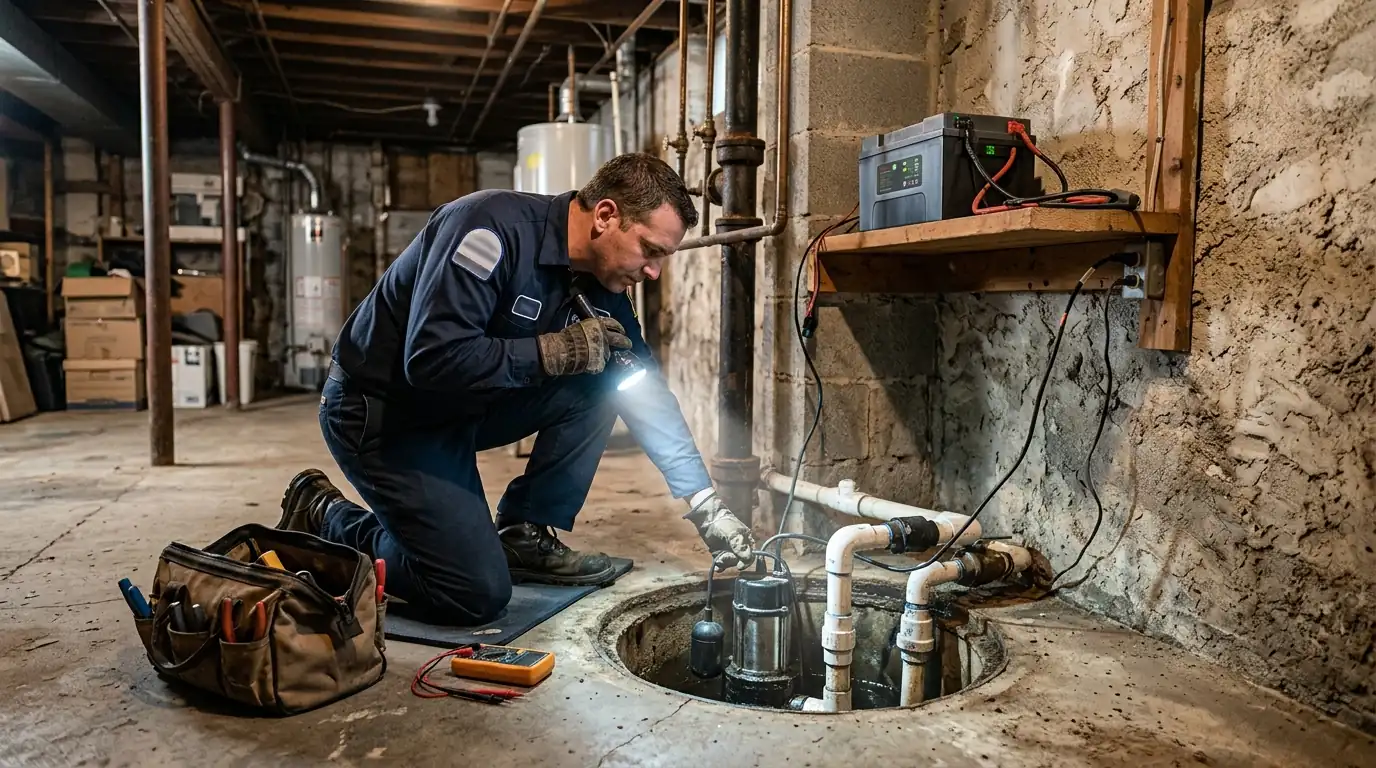
When a sump pump fails in Jersey City, call (201) 578-5199 at any hour. We test the float, check valve, motor and discharge line, fix or replace whatever has failed, and add a battery or water-powered backup so the next outage doesn't flood the basement. If water is already rising, we bring a replacement pump and can start pumping the basement down on the same visit.
The motor keeps running long after the rain stops, which points to a stuck float, a failed check valve or an undersized pump.
The pump starts and stops every few seconds, wearing out the switch and the motor.
The motor runs but the water level stays put, usually a jammed impeller or a broken shaft.
You hear a rush into the pit each time the pump stops, a sign the check valve no longer holds.
Rough noises or rust on the housing mean bearings and seals are wearing out.
If the backup kicks in when the power is on, the primary pump has likely failed.
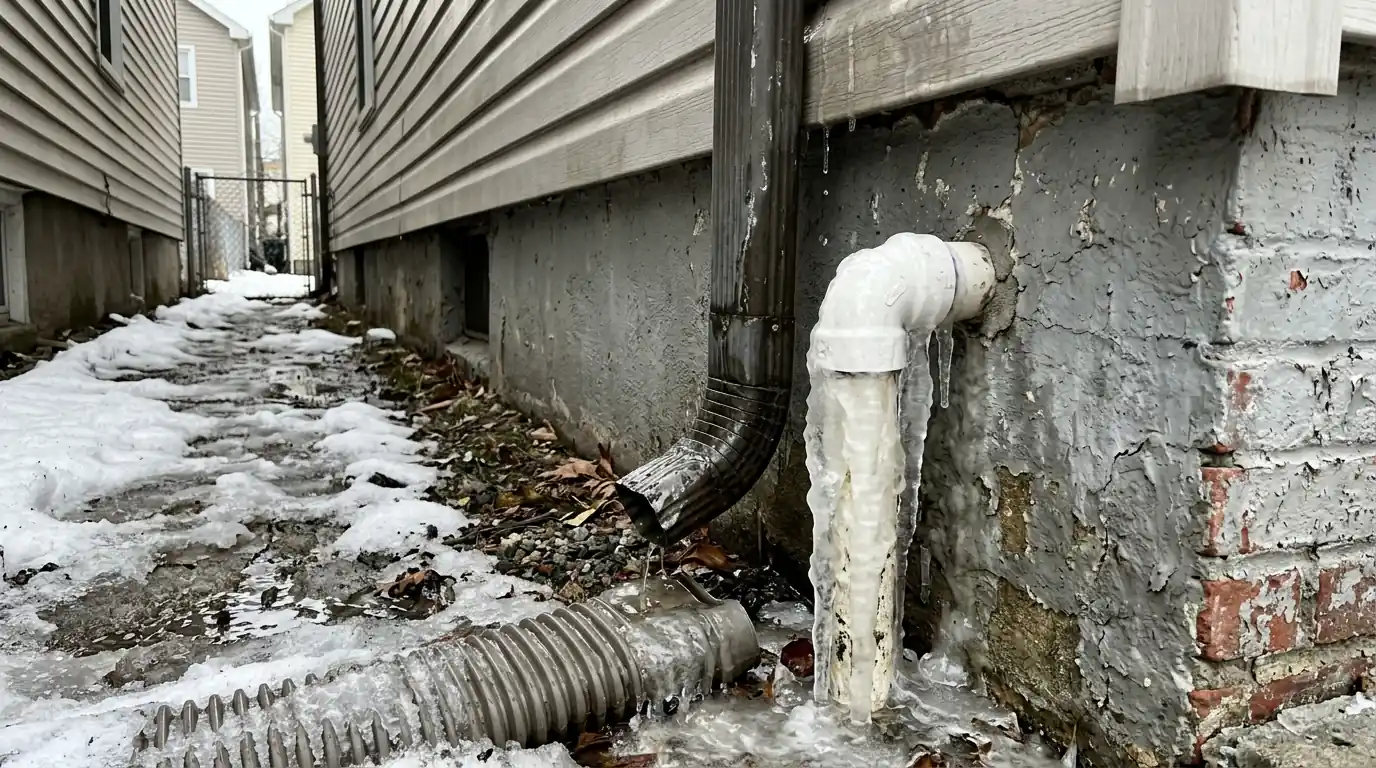
A frozen outlet in winter means the line is blocked and the pump is fighting it.
A pump that runs and runs without stopping usually has one of three problems: the float is hung up on the basin wall or its own cord, the check valve has failed and the same water keeps falling back into the pit, or the pump is simply too small for what's coming in during a long rain. We can usually tell which by watching one cycle and feeling the discharge pipe. A pump that never rests wears out its motor quickly, so this is worth a call early.
Short-cycling, where the pump starts and stops every few seconds, is often a check valve stuck open or a float switch set too tight for the basin. A pump that hums but moves no water may have an impeller jammed with silt or gravel, or a burned motor that has finally given out. Silence while the water rises is the worst case: a tripped breaker, a failed switch or a dead motor. We carry replacement pumps on the truck for exactly that situation.
Old pits cause their own trouble. Clay crocks and unlined holes let silt and gravel wash into the pit, and that grit chews through impellers and jams floats. In older frame houses in Greenville it's common to find a pump sitting directly on dirt at the bottom of a hole. When we see that, we explain whether a new lined basin and pump is worth doing now or can safely wait.
You call (201) 578-5199 and tell us what the pump is doing and how high the water is. If water is rising, we send a crew with a replacement pump as soon as one is free.
We fill the pit and watch the pump start, run and stop. That shows us whether the fault is the float, the check valve, the motor or the line outside.
We free or replace the float, swap the check valve, or install a new pump when the motor has failed. While the pump is out, we clean silt and gravel from the basin.
We clear or rebuild the outdoor line and add freeze protection. The water has to leave the property, not loop back to the foundation.
If you want one, we fit a battery or water-powered backup in the same basin. Its float sits above the main pump so it runs only when needed.
We run the whole system, including a simulated power failure. You hear the alarm and watch the backup take over before we pack up.
Sometimes the pump is fine and the pipe outside is the real problem. In a cold snap, water sitting in an exterior discharge line can freeze into a solid plug, so the pump runs against a blocked pipe and either trips its breaker or burns out. Leaves, ice, soil and even a crushed section under a walkway can do the same thing in other seasons. We trace the line from the pit to its outlet and clear or rebuild whichever section has failed.
When we rebuild a line, we pitch it so it drains empty between cycles and add a freeze relief fitting near the wall that lets water spill out if the pipe downstream ices over. If the line has been dumping water right beside the foundation, we reroute it, because that water simply finds its way back to your pit. Where the yard allows, we tie it into an underground drain that carries it well away from the house.
A battery backup is a second pump in the same basin, set a little higher than the main pump, with its own float and a sealed battery kept charged by a small unit plugged into the wall. When the power fails or the primary pump can't keep up, the backup takes over and an alarm tells you it's running. Storms that knock out power are the same storms that fill your pit, which is why we suggest one in nearly every basement that has flooded before.
A water-powered backup uses city water pressure instead of a battery: water flowing through a venturi fitting pulls water up out of the pit. There's no battery to wear out, but it uses city water while it runs, depends on steady pressure and needs a connection to your water supply. We explain which one suits your house, and our pump and backup guide covers how each one behaves during a long outage.
Most pump failures we see were hiding for months. A float that sticks, a check valve that leaks or a battery that no longer holds a charge won't show itself until the night it matters. Before the fall nor'easter season and again before the spring thaw, pour water into the pit until the float lifts, then watch the pump empty it and shut off cleanly. It takes ten minutes and tells you far more than a glance at the lid.
If anything on the list below fails, call us before the next storm rather than after it. When a basement has already filled, our crew handles the pump-out and cleanup and repairs or replaces the pump on the same visit, so you aren't waiting on a second appointment while the walls stay wet.
$245 to $980
per repair, typical range
Typical repairs run $245 to $980, depending on whether we're replacing a switch, a valve or the whole pump. A battery backup system typically lands between $1,050 and $2,140 installed.
| Feature | Battery backup | Water-powered backup |
|---|---|---|
| Power source | Sealed battery kept charged from an outlet | City water pressure through a venturi fitting |
| Run time | Limited by battery capacity in a long outage | Runs as long as city water pressure holds |
| Upkeep | Battery replacement every few years | Yearly test; no battery to replace |
| Plumbing needed | No water connection | Connection to the house water supply |
| Best fit | Most basements, including houses with weak water pressure | Houses with steady city water pressure |
Not listed? See every area we serve or call (201) 578-5199.
Membranes, sealers, pumps and dehumidifiers we work with come from makers such as
A pump that runs in dry weather usually means the float is stuck in the up position, the check valve is letting water fall back, or groundwater is still draining toward the pit days after a storm. On low, filled ground near the Hudson, the water table can stay high for a while after a long rain. We can tell the difference in a single visit by watching the pit and the pipe.
It depends on the battery, the pump and how much water is coming in. A backup that runs only now and then can last through a long outage, while one running constantly in a heavy storm drains much faster. We match the battery to your pit's actual inflow and show you the charge indicator so you always know where it stands.
If the motor is sound and the fault is a float or check valve, a repair makes sense. If the pump is old, has a burned motor or cracked housing, or has been running constantly, replacing it usually costs less than repeated calls and the risk of a flooded basement. We tell you plainly which choice we'd make in our own house.
Yes. When the outdoor line freezes, the pump can't push water out, so the pit fills and overflows onto the floor, or the pump burns out trying. A freeze relief fitting near the wall gives water a way out when the line downstream is blocked by ice. We add one whenever we rebuild a discharge line.
Test both at least twice a year, before the fall storm season and before the spring thaw, and again after any long outage. Fill the pit with a bucket of water, watch the main pump run, then unplug it to confirm the backup and alarm start. If either one hesitates, call us before the next heavy rain.
Call (201) 578-5199. Someone answers at any hour and can talk you through the next few minutes while a crew is lined up.