Commercial Waterproofing
A leak in a commercial building costs more than the repair: damaged stock, closed storefronts, unhappy tenants and an anxious board.
DetailsHudson County town
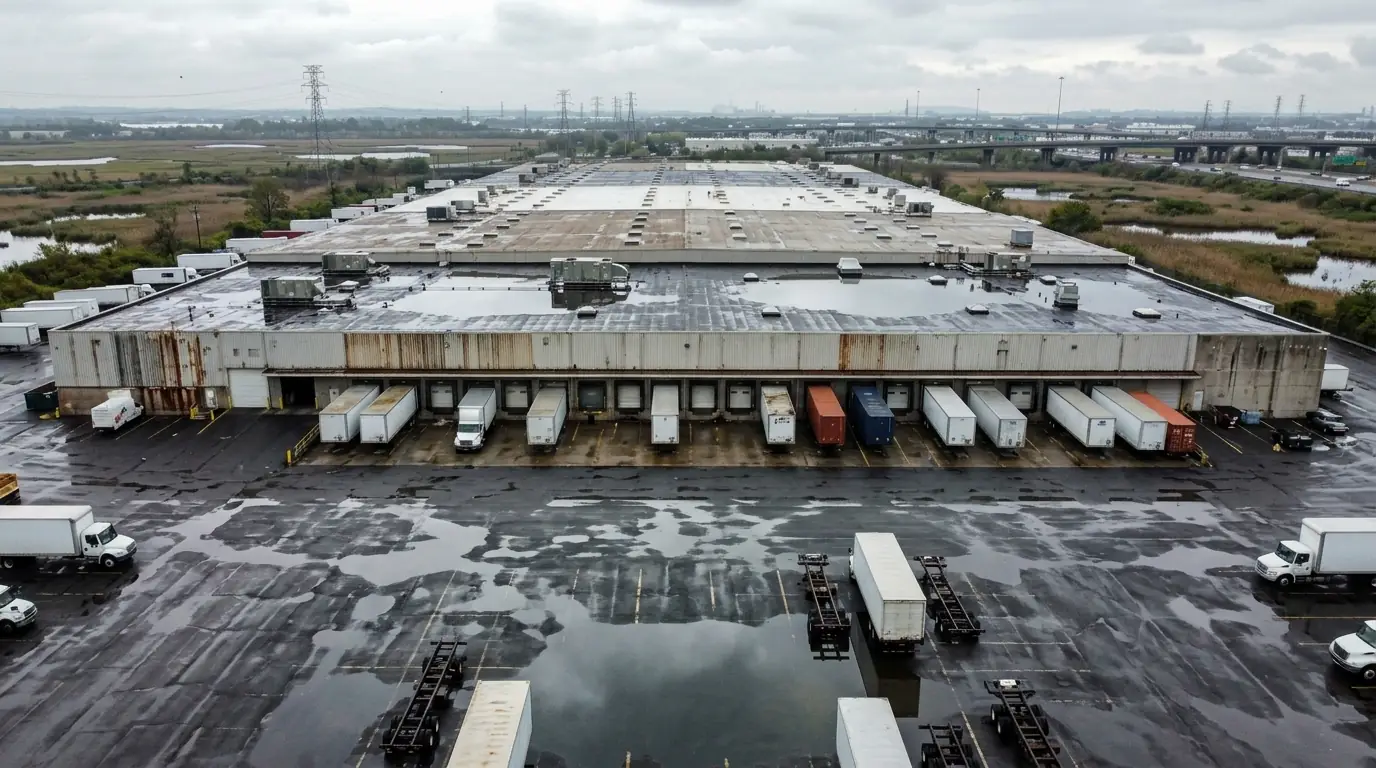
Secaucus sits in the Meadowlands, where big warehouse roofs, low ground and townhome lower levels all fight water. We waterproof commercial buildings and homes in and near the flood zone, from the slab up to the roof membrane.
Facility managers and homeowners in Secaucus can call (201) 578-5199 any time about leaking warehouses, wet below-grade rooms or townhome lower levels. We trace the water to the slab, wall, drain or roof, then repair it with injection, drainage, sump systems or membrane and coating work. You get a written scope and a typical price range before anything starts.
Secaucus grew up in the Meadowlands, and parts of the town fall within FEMA flood zones. Low ground like this usually keeps groundwater close to the surface, so slabs, loading dock pits and below-grade rooms stay under groundwater pressure after any long rain. In commercial buildings the first sign is often a dark line spreading from a slab joint, or water collecting in a dock leveler pit. In homes it shows up as dampness at the cove joint or a sump that seems to run nonstop through wet spells. Both point to the same cause: water pushing up from saturated soil.
Flood insurance and flood-zone rules are questions for your agent and the town, and we keep our advice to the building itself. What we can do is make a structure shed everyday water better and recover faster after a big event. That often means a sump with a battery backup sized for long run times, sealed slab joints, interior drains along walls that weep, and a check on how roof water is carried away. Owners reading up first can start with our checklist for the days after a flooded basement.
The warehouses and commercial buildings around Paterson Plank Road carry very large flat roofs, and on a roof that size a small low spot adds up fast. One inch of rain on 1,000 square feet is about 623 gallons, and an inch of standing water weighs about 5.2 pounds per square foot. Ponding stresses the membrane and finds every weak seam. We handle ponding water repair with added drains, tapered crickets and patching, and a reflective roof coating for membranes that are sound but weathered by years of sun.
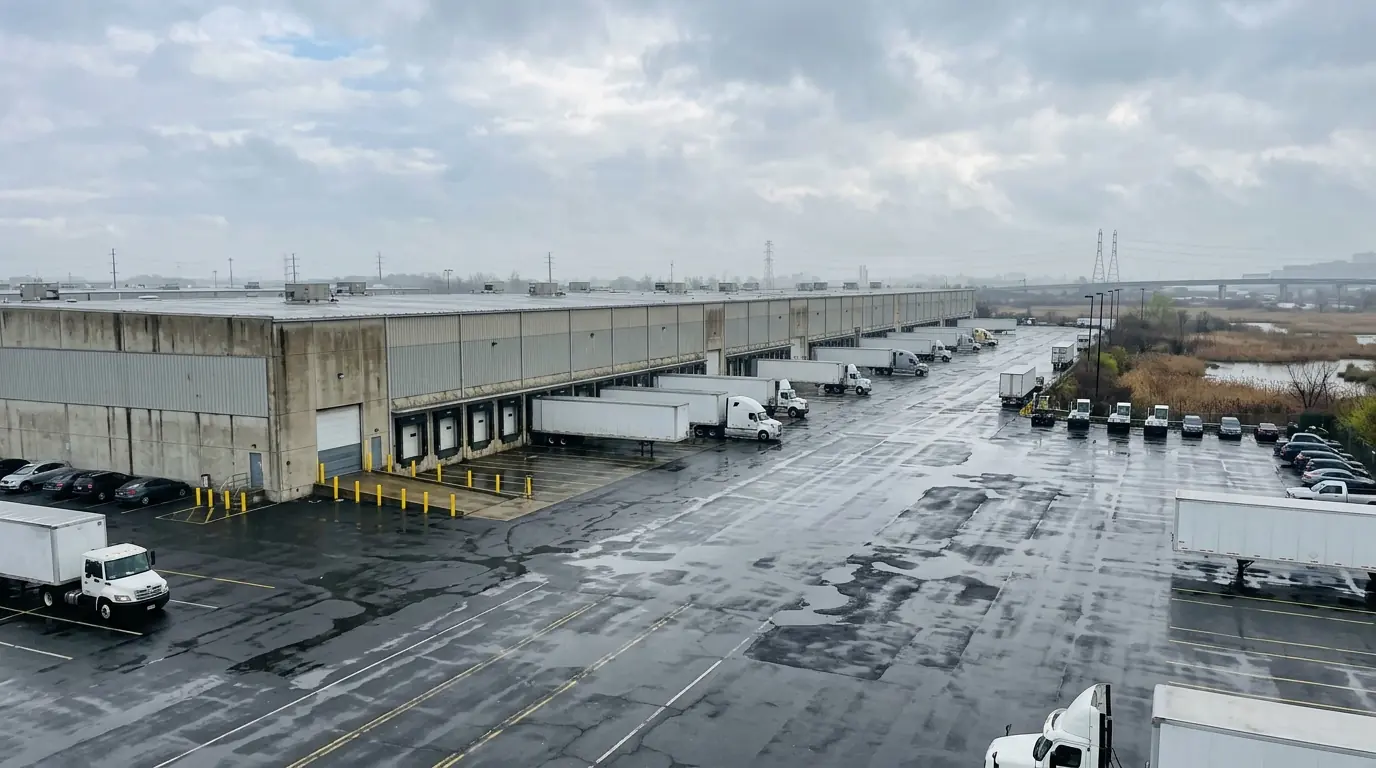
Down at ground level, dock walls and building perimeters take a beating from trucks, snowplows and runoff off broad paved lots. Cracked wall panels, failed joint sealant and settled pavement pitching toward the building all send water inside. We work around operating hours, keep loading lanes open and stage materials away from traffic. For larger facilities, our commercial waterproofing crews phase a project area by area so receiving and shipping keep moving. The phone is answered 24/7, so a leak that turns up during a weekend shift still reaches someone who can act on it.
Based on the buildings here, these are the calls we expect from Secaucus. Every other service on our list is available too.
A leak in a commercial building costs more than the repair: damaged stock, closed storefronts, unhappy tenants and an anxious board.
DetailsTwo days after the rain stopped, there's still a puddle on your flat roof.
DetailsYour flat roof is chalky, crazed on the surface and baking the top floor every summer, but it isn't leaking yet.
DetailsIf water keeps showing up in the same corner of your basement after every heavy rain, a properly placed sump pump gives it somewhere to go.
DetailsWhen groundwater keeps finding its way in at the base of your walls, coating the inside won't hold it back.
DetailsIf your building sits on low ground downtown, in Hoboken or in Secaucus, the next big storm can push water through doors, areaways and window wells.
DetailsHarmon Cove's townhomes sit on the same low Meadowlands ground as the commercial strips, and their lower levels feel it. Common problems are slab cracks that weep after storms, a cove joint that lets water creep across the floor, and sump pumps that work hard through every wet season. Because these are attached homes, many owners also deal with an association that maintains the exteriors while the owner handles the inside. We document what we find so you and the association can see which part of the problem sits on whose side of that line.
For a townhome lower level, the usual plan is an interior drain along the affected walls feeding a sealed basin, with a check valve on the discharge and a battery unit for outages, plus sealing of slab cracks. Where the air stays damp, a dehumidifier finishes the job. We keep the work inside the unit, protect finished floors and carry debris out through the garage when there is one. If the leak turns out to come from a balcony, window or roof edge above, we trace that too rather than blaming the basement for water that arrived from upstairs.
On low Meadowlands ground, groundwater pressure can push water up through joints and cracks in a slab, especially where the joint sealant has failed. It can also be roof water running down inside a wall and spreading along the floor. We separate those possibilities with moisture readings and inspection, then seal the joint, inject cracks or add drainage depending on the source.
In most cases, yes. Sump pumps in low areas run often during wet seasons, and the storms that bring the most rain are the ones most likely to cut power. A backup that switches on by itself keeps the pit from overflowing during an outage. We size it to your pump's workload and test the alarm when we install it.
Usually. We plan around shifts, docks and traffic, phase the work by area, and set staging where it won't block forklifts or trucks. Roof work happens above operations with little interior disruption beyond occasional access. For slab or wall repairs inside, we section off small zones at a time and brief you on each phase before it begins.
Call (201) 578-5199 any time. Tell us the address and what you're seeing, and we'll take it from there.