Water on the inside sill
Puddles on the sill or streaks down the wall below a basement window after rain.
Basement & foundation · Jersey City, NJ
When a window well fills in a storm, the basement window becomes the side of a bucket, and water finds the frame. We drain the well, seal the window and cover the opening so that stops happening.
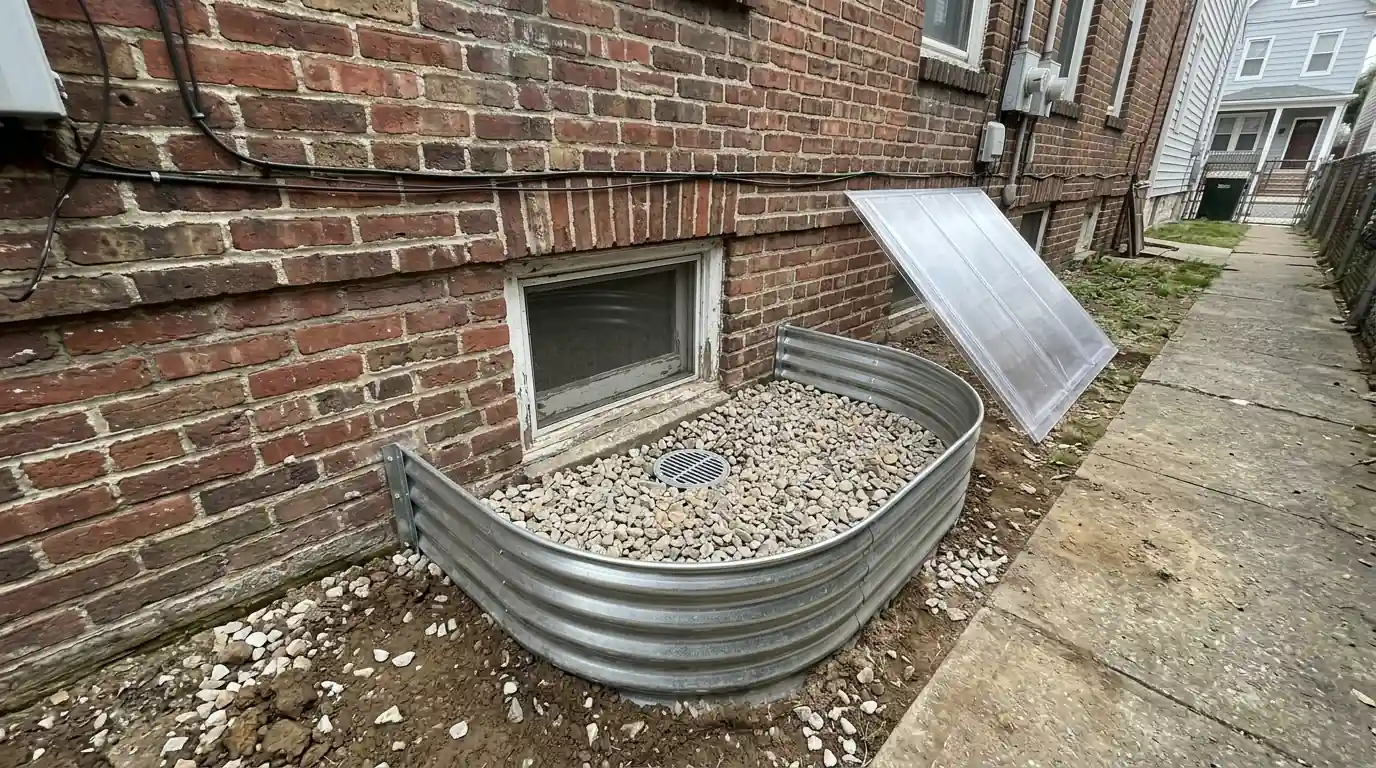
In Jersey City, we handle leaking basement windows and flooded window wells as one job. Our crew clears or installs the well drain, tied into a footing drain, interior drain or sump, fits a sound liner, reseals the window frame to the wall and adds a cover where rain pours in. Call (201) 578-5199 and we will check every well before recommending anything.
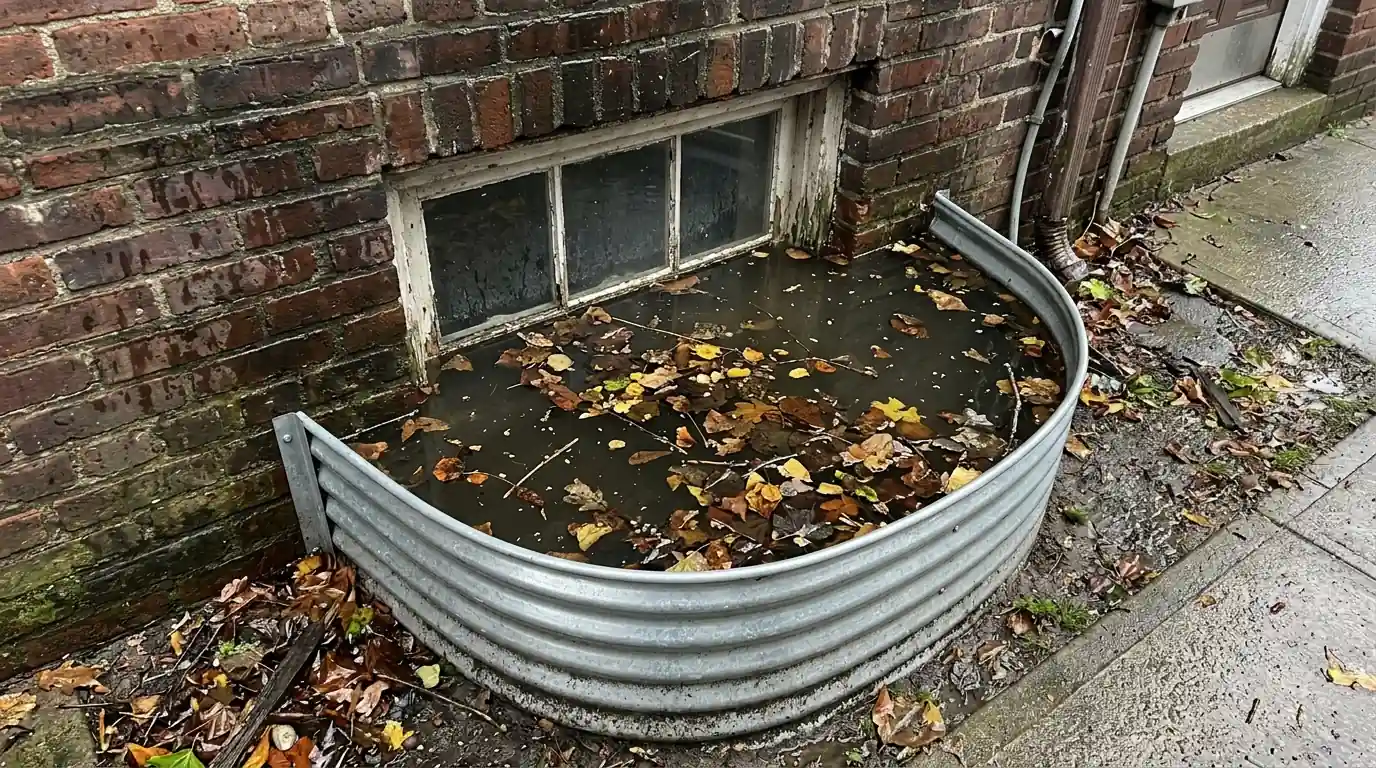
A window well is a small pit dug beside the foundation so a below-grade window can open and let in light. It has a liner, usually corrugated metal or masonry, and it should have a drain at the bottom. When that drain is missing, silted up or buried in leaves, rain that lands in the well has nowhere to go. The water rises until it reaches the sill and then pushes in around the frame.
It does not take a hurricane. A summer thunderstorm can send enough water off a roof edge or down a driveway to fill a well quickly. When the remnants of Ida came through in 2021, window wells were one of the main ways water reached north Jersey basements, along with floor drains and walls. A well can hold back a surprising amount of water until the glass or the frame finally gives.
Older basement windows make it worse. Many Jersey City houses still have single-pane steel or wood sashes set low in the foundation, with the bottom of the frame only a few inches above the floor of the well. The caulk or mortar around those frames dried out and cracked long ago. Once water rises to that level, it does not need much of a gap, and it runs down the inside wall onto the floor.
Puddles on the sill or streaks down the wall below a basement window after rain.
Water still sitting in the well hours after a storm means the drain is clogged or missing.
A plain dirt bottom with no drain opening or gravel layer at all.
A corroded metal liner, or one pulling away from the foundation and letting mud slide in.
Rotted wood, peeling paint or crumbling mortar around the window frame.
Leaves, trash or soil filling the well and smothering any drain underneath.
The drain matters most. A working well drain is a vertical pipe or gravel column at the bottom of the well that connects to the footing drain, an interior drain system or a sump. Over time, soil and leaves clog the gravel and the pipe silts up. We dig out the bottom of the well, clear or replace the drain, and lay fresh clean gravel so water drops out of sight quickly.
The liner holds soil back and keeps the well a sensible size. A rusted metal liner, one that has pulled away from the foundation, or one set too low lets mud and water run straight down against the window. We replace or reset it so its top sits above the surrounding grade. Covers come last. A clear, sloped cover sheds rain while still letting light in, and it keeps leaves and trash out of the drain.
Inside, the joint between the window frame and the foundation is often old caulk or crumbling mortar. We cut it out and reseal it with a sealant suited to masonry. If the frame itself is rotted through, we tell you plainly, because no sealant holds on soft wood and the frame needs replacing before the seal can last.
We look at each well, test its drain with water and inspect the window from inside. We also note where roof and yard water reaches it.
Debris and silted gravel come out down to the drain. That shows whether the drain can be cleared or needs replacing.
We clear the existing drain or install a new one tied to a footing drain, interior drain or sump. Fresh clean gravel goes back on top.
The liner is fastened to the foundation with its top above grade. Soil around it is pitched away from the house.
We cut out failed caulk or mortar at the frame and reseal it to the masonry. Any rot we find is pointed out to you.
A sloped, clear cover goes on where rain or leaves get in. It keeps the drain clean between storms.
A lot of window well floods start on the roof. A leader that empties next to the well, or a gutter overflowing right above it, sends hundreds of gallons into a pit a few feet wide. The rain math is simple: one inch of rain on 1,000 square feet of roof is about 623 gallons. Moving that water into an underground leader line often cures the well on its own.
Grade matters too. On narrow Jersey City lots, the strip between the house and the fence often slopes toward the foundation, and the well sits right at the low point. Raising the liner, pitching the soil away and adding a short French drain along that side can keep surface water out of the well entirely. If water still comes through the wall below the window, we check that stretch of foundation for cracks as well.
Snow is the other seasonal trap. Plowed or shoveled snow often gets piled against the house, right over the wells, and when it melts during a warm spell the well fills from above while the ground below is still frozen and the drain cannot take water. Keeping snow piles away from basement windows and covering the wells before winter avoids a lot of February leaks that owners otherwise blame on a mystery crack.
Start with any well under a leader, any well at the low corner of the yard and any well with no visible gravel at the bottom. Those fill first. Pull out leaves and trash after the fall, look for a drain opening and pour a bucket of water in on a dry day. If it just sits there, the drain is not working, and the next big storm will find that out for you.
Basement windows on the street side of rowhouses often sit in an areaway under the stoop rather than a well, and that is a related but different job. For houses with several wells, we look at all of them in one visit, because fixing one while the others stay clogged only moves the problem around. If a well is overflowing during a storm, call us at any hour and we will talk you through it until a crew can get there.
| Fix | What it solves | When it is not enough |
|---|---|---|
| Clean out and new gravel | Silt and leaves blocking an existing drain | There is no drain, or the drain pipe is broken |
| New well drain | Water that collects with nowhere to go | Water is coming through the wall, not the well |
| Clear well cover | Rain and leaves falling straight into the well | Surface water runs into the well from the side |
| Liner reset or replacement | Mud and water sliding in around a rusted or low liner | The drain under it is still clogged |
$640 to $2,280
per well, typical range
Most window well jobs land between $640 and $2,280 per well. That is a typical range for planning, not a quote, and several wells on one house are usually priced together.
Not listed? See every area we serve or call (201) 578-5199.
Membranes, sealers, pumps and dehumidifiers we work with come from makers such as
Sometimes, if rain falling straight into the well is the only source. Often it is not. Water running across the yard, down a leader or up from saturated soil still reaches the bottom of the well, and without a working drain it rises to the sill. We treat the cover as the last layer, after the drain and liner are sound, not as the fix on its own.
A proper well drain drops from the bottom of the well into something that carries water away: the footing drain around the foundation, an interior perimeter drain, or a sump basin inside. Many older wells were built with only a bit of gravel over dirt, which works until it silts up. When we install a new well drain, we show you exactly what it ties into.
Ida brought extreme rainfall in a short time, far more than most drains and wells in north Jersey were built to handle. A well that copes with a normal storm can fill like a bucket when rain arrives that fast, especially if a leader or an overflowing gutter dumps into it. A working drain, a cover and moving roof water away give it much more margin next time.
We can seal the frame-to-wall joint from inside, and that helps with small leaks. But if water stands in the well against the glass, it will keep finding a way through. The lasting fix is to stop water from collecting in the well at all, which means drain, liner and grading work outside. We usually handle both sides in the same visit.
Call (201) 578-5199 and tell us what you're seeing. We'll set up a visit and give you a typical range before any work starts.