Standing water in the pit
Any depth of water on the pit floor after rain or even in dry weather.
Commercial & inspections · Jersey City, NJ
Water in an elevator pit is more than a nuisance: it rusts equipment, can take a car out of service and tends to show up on inspection reports. We stop groundwater coming through the pit walls and floor and leave the pit dry.
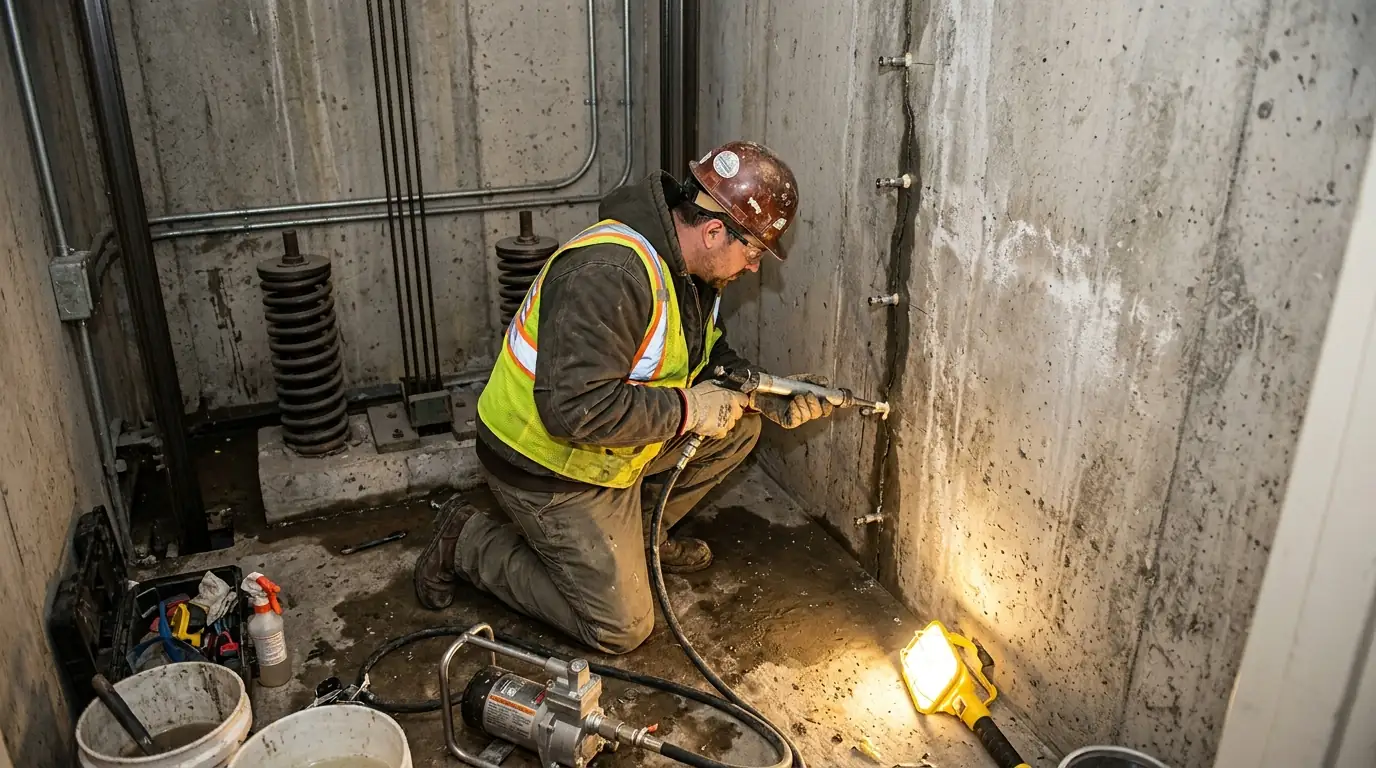
We waterproof elevator pits in Jersey City condo, rental and commercial buildings where groundwater seeps through cracks, cold joints and pipe penetrations. Our crew injects active leaks, applies crystalline treatment to the concrete and checks the pit sump, coordinating every step with your elevator contractor and building management. Call (201) 578-5199 any time water appears in a pit.
An elevator pit is the lowest point in most buildings, often several feet below the basement or garage floor. That puts it deepest into the groundwater. In Jersey City, many condo and rental towers stand on low, filled ground near the Hudson, where the water table is high and rises further after long rains. The pit becomes a concrete box pressed into wet soil, and hydrostatic pressure pushes water through any weak point it can find.
Those weak points are predictable. Cold joints where the pit floor meets the walls, or where the pit was poured separately from the surrounding slab, are the most common. Cracks from shrinkage or settlement come next, followed by gaps around pipe and conduit penetrations and old tie-rod holes left in the walls. On older buildings the original waterproofing behind the pit wall may have broken down, or there may never have been much to begin with.
Buildings up on the Palisades ridge can see pit leaks too, even without a high water table. There, water running along rock close to the surface reaches the pit walls and pushes through joints after heavy rain. The repair approach is much the same, but the timing differs: water tends to show up during and right after storms rather than sitting in the pit for weeks.
Any depth of water on the pit floor after rain or even in dry weather.
Dark damp lines along joints or cracks in the pit walls.
Corrosion on buffers, rails or fittings near the bottom of the hoistway.
White crusty efflorescence where the pit floor meets the walls.
An elevator inspection or maintenance report that mentions water in the pit.
A pit sump pump that cycles often or runs long after storms.
Because there's no practical way to dig down outside a pit in an existing building, the repair happens from inside. Active leaks get polyurethane injection: we drill along the crack or joint, set injection ports and pump in resin that reacts with water and expands to fill the path. That stops running water, often within the same visit. For structural cracks where the concrete needs to be joined back together and the crack is dry, epoxy may be the better choice.
Once active leaks are stopped, we treat the pit's concrete surfaces with a crystalline waterproofing product. Crystalline treatments react with moisture and compounds in the concrete to grow crystals in the pores and fine cracks, making the concrete itself more resistant to water passing through. They work with the concrete rather than sitting on top like a paint, which matters in a pit where groundwater pressure comes from behind. Joints and penetrations get extra attention, since those are where leaks come back.
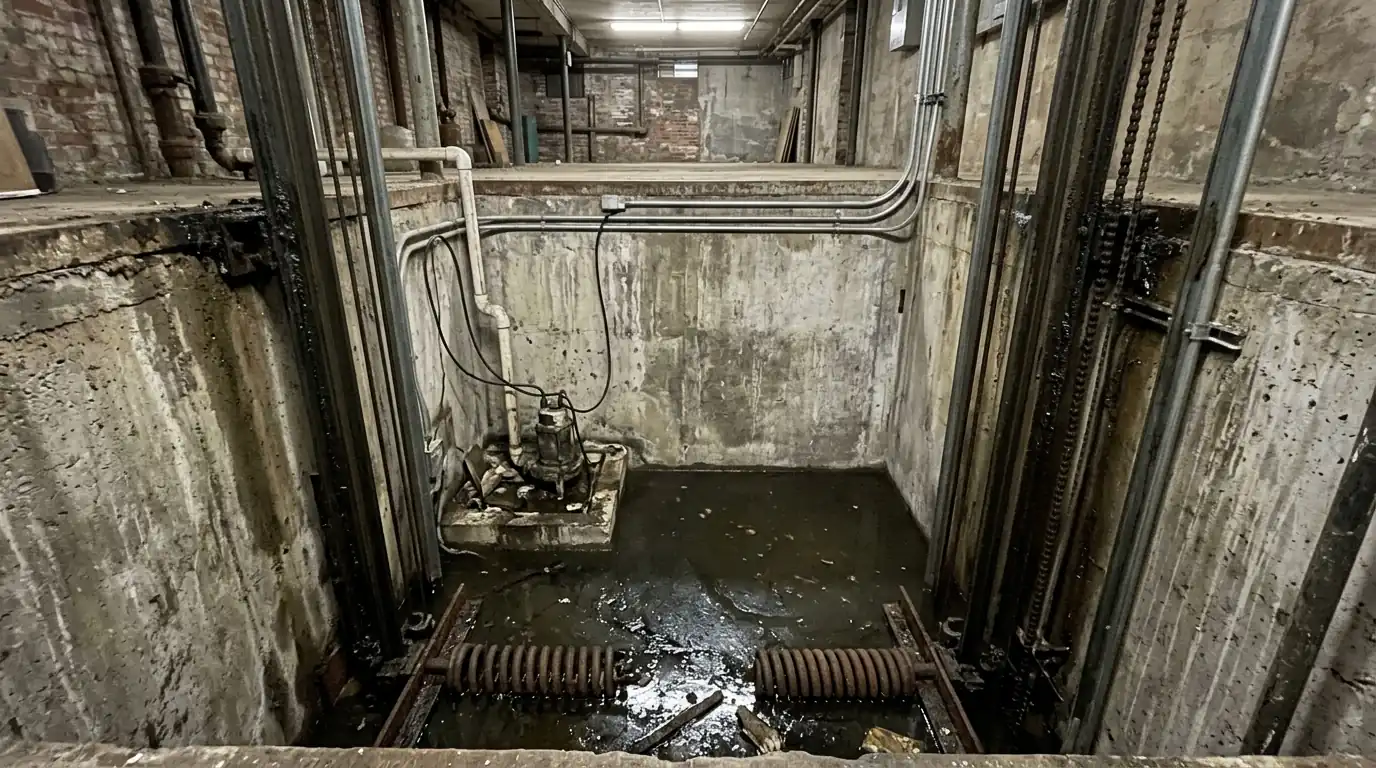
We read any inspection finding and look at the pit with management. We photograph where water enters and note joints, cracks and penetrations.
We schedule with the elevator contractor, who takes the car out of service and makes the pit safe. Management notifies residents of the outage.
We pump out standing water and clean the pit surfaces. That lets us see every active leak clearly.
Our crew sets ports along cracks and joints and injects polyurethane to stop running water. Dry structural cracks may get epoxy instead.
We apply crystalline waterproofing to walls, floor and joints. Penetrations get extra detailing.
We confirm the pit is dry, check the sump and photograph the finished work. Management gets notes for its inspection records.
Many pits have a small sump or drain to remove water that does get in. We check that the sump pit is clear, that any pump runs and discharges where it should, and that the cover fits. Pit sump requirements and how they connect to building drainage are set by codes the elevator contractor and building engineer deal with, so we coordinate with them instead of changing anything on our own. Our role is getting the walls and floor to stop taking water in the first place.
Elevator pits have strict safety rules. The car must be locked out and the pit made safe by the elevator contractor before anyone works inside it. We schedule around that, which usually means taking one car out of service for a set period while the others keep running. Building management handles resident notice; we give them a clear timeline. Where the same groundwater also affects the garage, we can look at garage waterproofing and foundation wall cracks in the same visit.
Water in an elevator pit often gets noted during routine elevator inspections or maintenance visits. A note like that usually lands on the property manager's desk with no clear idea of who should fix it. The elevator contractor maintains the equipment; stopping the water coming through the concrete is waterproofing work, which is where we come in. We read the finding, inspect the pit, photograph where water is entering and write up what we'll do.
After the repair, we document the dry pit with photos and notes the manager can file with the inspection response. If water comes from more than one source, such as a sewer or drain line backing up rather than groundwater, we say so, because that needs a different fix like a backwater valve. Buildings with several pits, or pits plus other below-grade leaks, often fold this into a broader commercial waterproofing plan.
If a pit has been wet for a long time, some equipment at the bottom may already show rust. We point out what we see, but evaluating or repairing elevator equipment is the elevator contractor's call. Our report sticks to the concrete, the water and the fix, so each trade knows exactly which part of the problem belongs to them and nothing falls between the two.
$2,850 to $8,400
per pit, typical range
Most elevator pit waterproofing lands between $2,850 and $8,400 per pit. That's a typical range for planning; we price a specific pit after seeing how much water is coming in and from where.
Not listed? See every area we serve or call (201) 578-5199.
Membranes, sealers, pumps and dehumidifiers we work with come from makers such as
Usually both play a part. The elevator contractor maintains the equipment and makes the pit safe for work. Stopping groundwater coming through the concrete is waterproofing work. We coordinate with the elevator contractor so the car is locked out during our repair, then treat the pit, and we can give management documentation to answer an inspection finding.
That depends on pit size and how many leaks we find. Many pits can be treated in a short scheduled outage, with the car back in service once the work is done and checked. Crystalline treatments need curing time with moisture present, which is usually compatible with returning the car to service. We give management a timeline before the lockout is booked.
Yes, that is the normal approach in an existing building. Polyurethane injection seals active leaks from the inside by filling cracks and joints with resin that expands in water. Crystalline treatment then makes the concrete itself more water resistant. Excavating outside a pit is rarely practical once a building is up.
In low parts of Jersey City near the waterfront, the water table can sit above the pit floor for long stretches, not just after storms. The pit is then under steady hydrostatic pressure. It's also worth ruling out a leaking pipe or a drain line backing up. We check for both before deciding on a repair.
Call (201) 578-5199 and tell us what you're seeing. We'll set up a visit and give you a typical range before any work starts.