Brick Repointing
Rain driven sideways by a nor'easter finds every open mortar joint on a brick wall, then shows up as stained plaster, peeling paint or a damp closet.
DetailsJersey City neighborhood
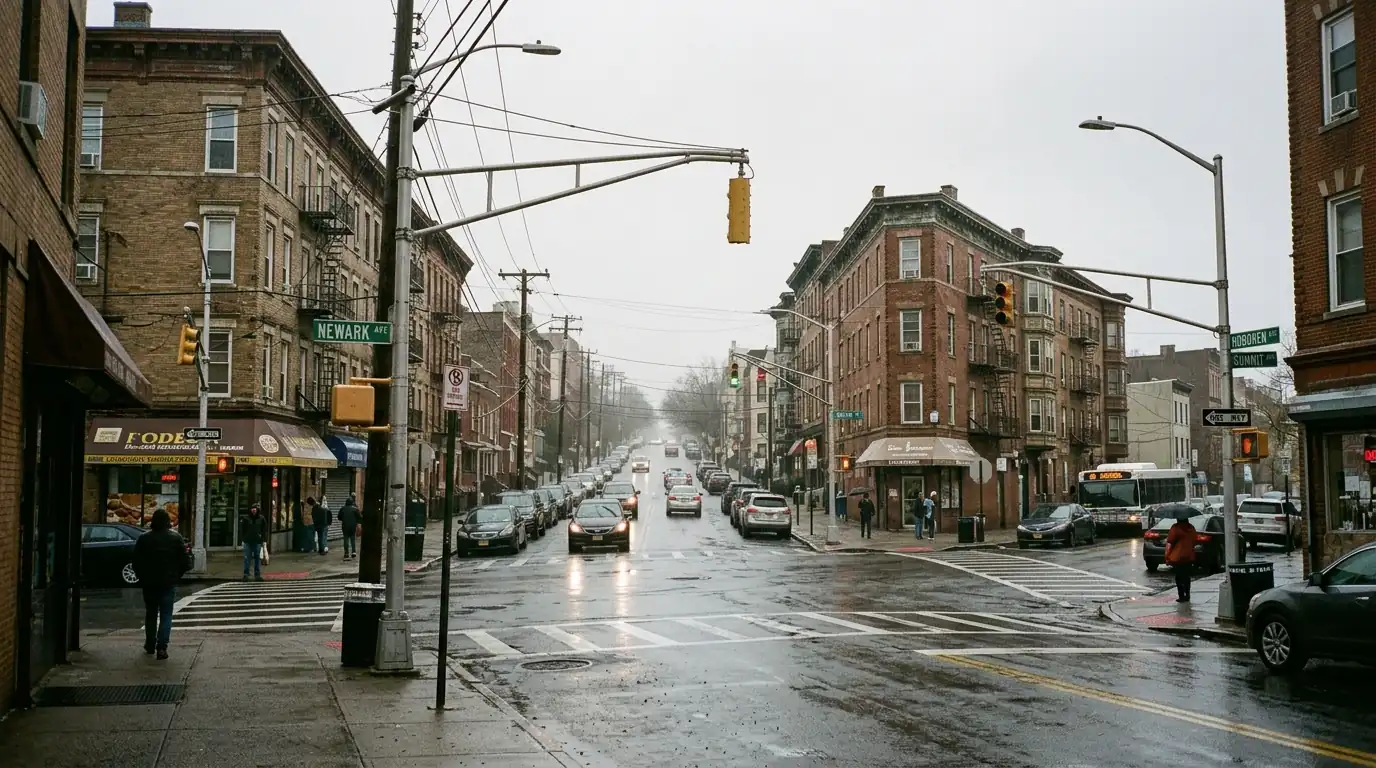
Five Corners sits on the slope between Journal Square and the Heights, where Newark, Summit and Hoboken Avenues meet. Rowhouses and small apartment buildings here catch water running downhill from the ridge.
For damp, leaking basement walls in Five Corners rowhouses and small apartment buildings, call (201) 578-5199 at any hour. We trace water coming downslope from the ridge, check party walls and leaders, and fix the uphill wall with repointing, crack sealing or an interior drain. The typical cost range is explained before any work starts.
Five Corners sits between Journal Square and the Heights, on the slope below the Palisades ridge. Rain that falls on higher ground moves downhill through the soil, often along rock, and reaches the foundations here from the uphill side. That is why so many Five Corners basements are wet along one wall while the opposite wall stays dry. The leak follows the slope. In rowhouses, the wet wall may be the rear or a party wall depending on which way the block runs. Walk the basement after a storm and the uphill wall is usually darker, with efflorescence building up near the floor where the water dries.
The buildings themselves add to it. Rowhouses have brick foundations in old mortar, small apartment buildings have block or brick walls with internal drains and flat roofs behind parapets. Leaders often run down the rear wall and end at the ground, adding roof water to the water already moving downslope. When that combination meets worn joints, the wall stays damp for days. Brick repointing on the worst sections, combined with controlling roof water, is the usual first step. Rerouting those leaders through buried lines down the slope takes a load off the wall before we touch the masonry.
The Five Corners junction is busy, with traffic coming from three avenues and limited curb space. We plan staging carefully, often parking on a side street and carrying materials in by hand. Rowhouse basements are reached through front areaways or rear yards, and small apartment buildings through a service door. We protect stairs and halls, keep sidewalks clear and leave the work area clean each day. In occupied buildings we agree on hours and notices with the owner or super before starting. Noisy cutting is kept to daytime, and we tell the super which day the basement will be busiest so storage areas can be cleared ahead of time.
Shared party walls are common, and on a slope water can travel from one basement to the next along the wall. When the wet wall is a party wall, we look at both the uphill neighbor's leaders and yard, as far as we can see them, and explain what we find. We seal your side of the wall with repointing and, where the seepage is heavy, an interior drain along that wall to a sump, so the water has a path out that does not run across your floor. The drain sits under the slab, out of sight once the floor is patched.
Based on the buildings here, these are the calls we expect from Five Corners. Every other service on our list is available too.
Rain driven sideways by a nor'easter finds every open mortar joint on a brick wall, then shows up as stained plaster, peeling paint or a damp closet.
DetailsWhen groundwater keeps finding its way in at the base of your walls, coating the inside won't hold it back.
DetailsA thin line of water creeping out where the floor meets the wall after a downpour is a cove joint leak.
DetailsA single crack running down a poured basement wall can soak a corner of the floor every time it rains.
DetailsWater is reaching the top-floor walls, or even a floor or two lower, while the roof surface looks fine.
DetailsIn New Jersey, downspouts are called leaders, and most of them empty right beside the house.
DetailsOn sloped blocks the answer is often a partial system rather than a full one. If only the uphill wall leaks, an interior drain along that wall alone, feeding a sump in the low corner, can handle it at a lower cost than a full perimeter drain. We also check the cove joint along that wall, because downslope water pressing against the base of the wall finds that joint quickly. Where a wall has cracked, we seal the crack before running the drain. If the opposite walls ever start to seep later, the drain can be extended without tearing out what is already there.
Parapets and flat roofs on the apartment buildings here are worth a look as well. Water through a cracked coping can run down inside the wall and add to the dampness in the basement below. Our parapet wall waterproofing work addresses that. Basements up on the Heights see more crack leaks along rock, while those toward Journal Square see more sewer backups, and Five Corners can see a little of both. Small apartment buildings with internal roof drains get those drains checked too, because a clogged one can overflow into the top floor and down the walls.
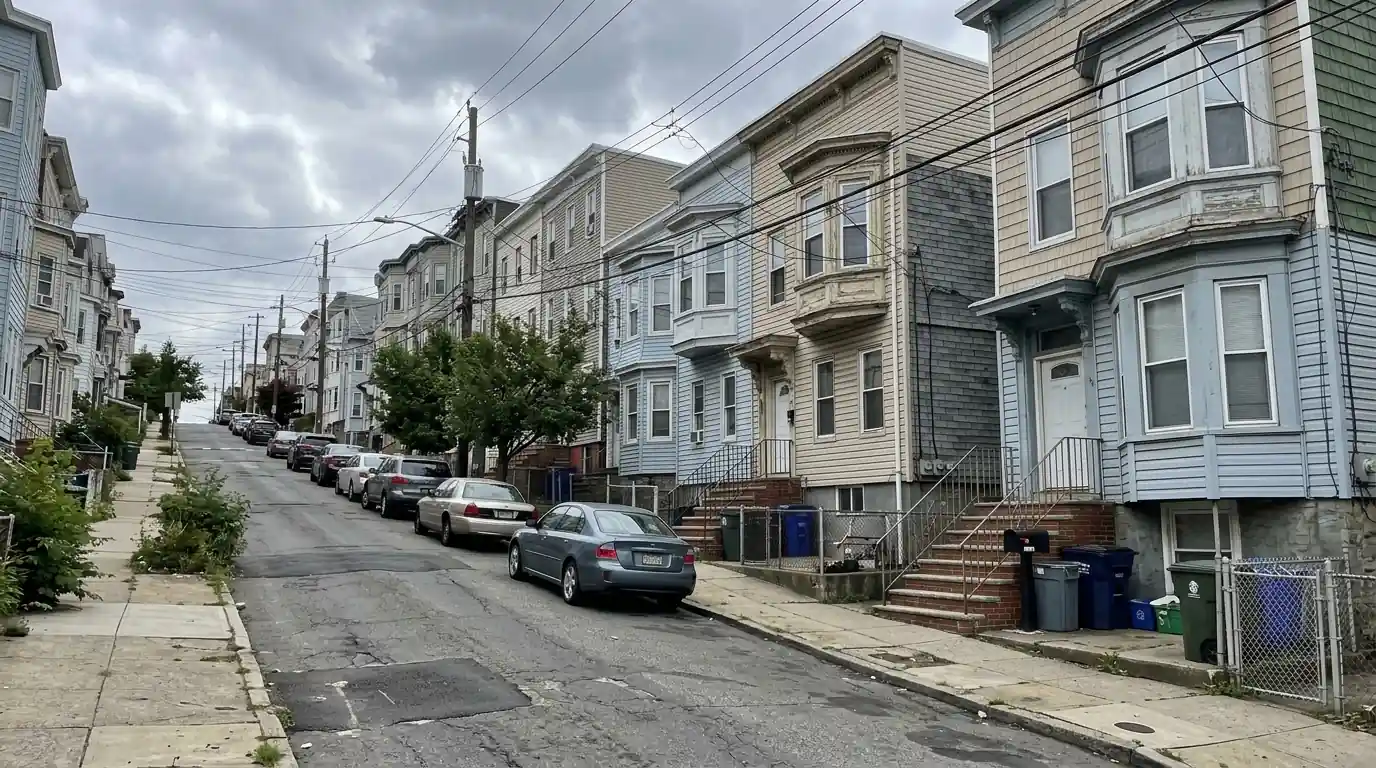
Five Corners sits on the slope below the Heights, so rain moves downhill through the soil and reaches the uphill wall first. That wall carries the water load while the others stay drier. Repairs focus there: sealing joints and cracks, managing roof water and, when needed, a drain along that wall to a sump.
Often, yes. When the leak is confined to one wall, a partial interior drain feeding a sump, combined with repointing or crack sealing, can handle it for less than a full perimeter system. We confirm the other walls are dry over a few storms before recommending that approach.
Possibly. On a slope, water from the uphill neighbor's yard or leader can travel along the shared wall into your basement. We explain what we can see from your side, and we seal your side regardless so the water stops reaching your space.
Call (201) 578-5199 any time. Tell us the address and what you're seeing, and we'll take it from there.