Balcony & Terrace Waterproofing
Water from a terrace or balcony is showing up in the unit below, at the door frame, or as rust stains on the concrete.
DetailsHudson County town
In West New York the leak often starts several floors up, on a Boulevard East terrace, a cracked balcony slab or the garage deck under a tower. We repair the membranes, drains and joints that let it through.
Condo owners, boards and managers in West New York with a leaking terrace, balcony or garage ceiling can call (201) 578-5199 at any hour. We inspect the surface, drains, door thresholds and wall flashings, find where water gets under the membrane, and repair or replace it with a liquid-applied or sheet system. Attached houses on the Palisades get the same attention for cracked foundations.
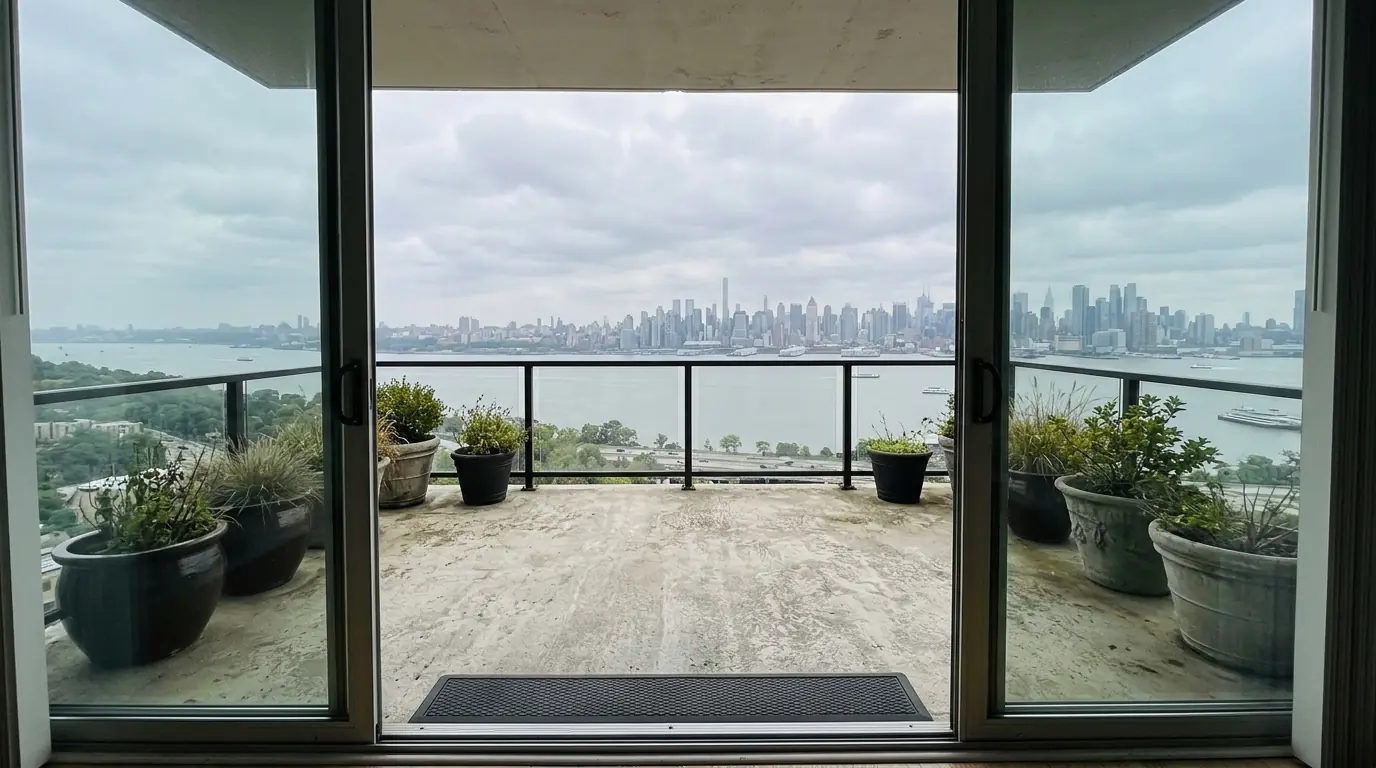
The high-rises along Boulevard East sell their views, which means terraces and balconies facing the Hudson, and those surfaces take the full brunt of rain blowing across the river. Most terrace leaks we trace in West New York don't begin in the open middle of the deck. They start at the edges: a door threshold where the membrane turns up too low, a drain whose clamping ring has loosened, or the base flashing where the deck meets the building wall. Water that slips in there travels under pavers and shows up as a stain in the ceiling of the unit below.
Balconies fail a little differently. A cantilevered concrete slab cracks with freeze-thaw cycling, water reaches the reinforcing steel, and the steel rusts, swells and spalls the concrete above it. Railings anchored straight into the slab become another entry point once the sealant around the posts dries out. Catching these early keeps the repair to cleaning, patching and coating the surface, instead of the larger concrete restoration a neglected balcony eventually needs. Our balcony and terrace waterproofing work covers private units and shared amenity decks alike.
On a tower, the property manager or condo board usually decides when and how work proceeds, so we put our findings in writing with photos and marked-up plans they can circulate. Access is planned around residents: elevator bookings for materials, protected paths through lobbies and halls, and a schedule that keeps noisy prep out of early mornings. Exterior staging on Boulevard East is limited, so most terrace work is done from the terrace itself with materials carried up. When a leak touches several units, we fix the source first and only then clear the units for anyone to repaint a stained ceiling.
Many of these buildings sit above parking levels, and the garage is where groundwater and road salt meet. Cracks in the deck let salty water reach the slab's steel, while the joints at columns and walls weep after storms. Our parking garage waterproofing combines crack routing and sealing, joint replacement and a traffic coating on exposed decks. Because these are big jobs, we often phase them by level so the garage stays partly open. West New York calls reach the Jersey City office on Newark Avenue, and someone picks up 24/7.
Based on the buildings here, these are the calls we expect from West New York. Every other service on our list is available too.
Water from a terrace or balcony is showing up in the unit below, at the door frame, or as rust stains on the concrete.
DetailsDrips onto parked cars, rust stains on the ceiling and water reaching the storage rooms or shops below a garage deck all mean water is getting.
DetailsWater is coming through the ceiling under your rooftop deck, and nobody can see the membrane because the deck sits on top of it.
DetailsA leak in a commercial building costs more than the repair: damaged stock, closed storefronts, unhappy tenants and an anxious board.
DetailsA single crack running down a poured basement wall can soak a corner of the floor every time it rains.
DetailsWater is reaching the top-floor walls, or even a floor or two lower, while the roof surface looks fine.
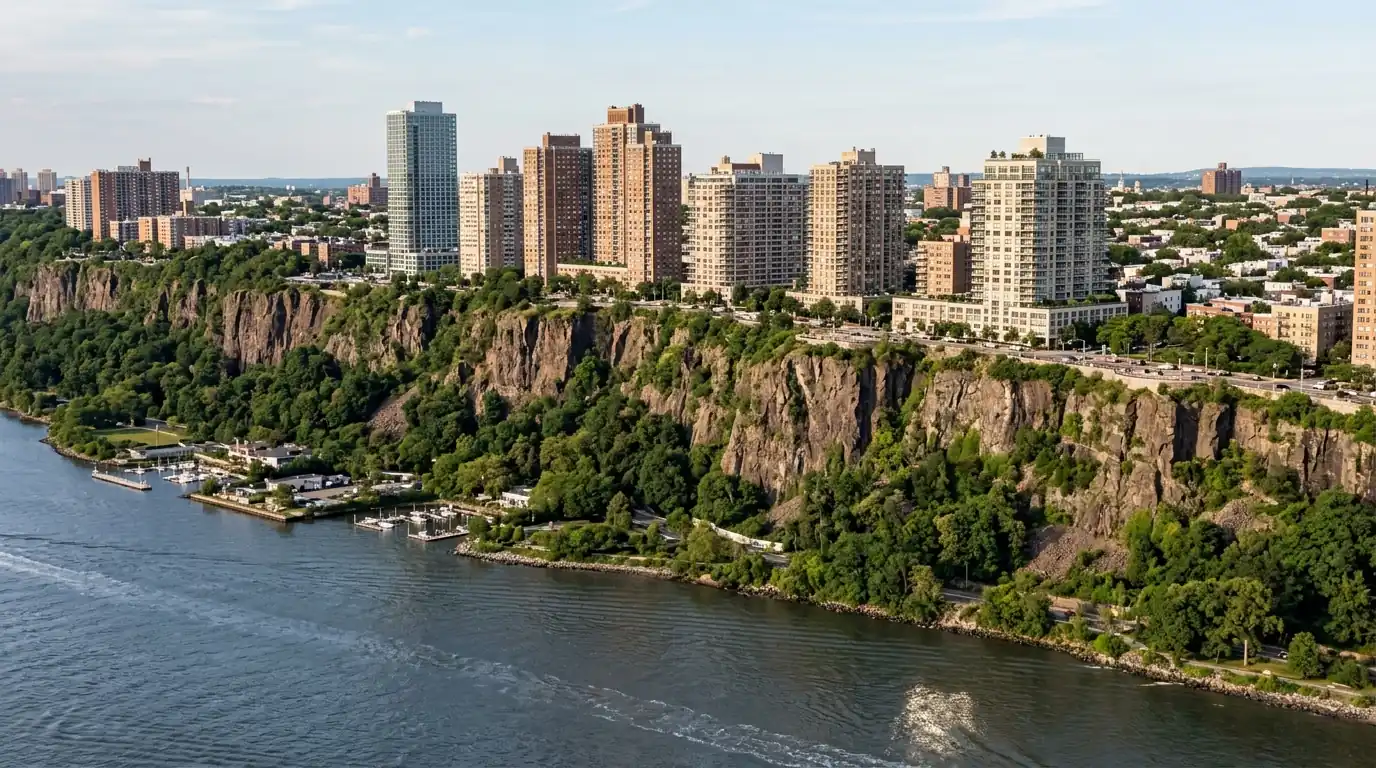
DetailsAway from the cliff edge, West New York is a grid of attached houses on Palisades rock, many of them a short walk from Bergenline Avenue. Their basements behave much like others on the ridge: water runs along shallow rock and enters through cracks, the cove joint and openings around old utility lines. These owners don't need a garage coating; they need a crack sealed or a drain run along one wet wall. We bring the same diagnostic habits to a two-family house that we use on a tower, sized to the building in front of us, whether that means one injected crack or a full wall drain.
Shared walls between attached houses mean one owner's downspout can soak the neighbor's foundation. We look at roof drainage, the pitch of the rear yard and the condition of the alley walk before recommending interior work. When a wall needs it, crack injection usually solves a single leak, and a drain to a sump handles broader seepage. If you'd like to weigh the tradeoffs first, our comparison of interior and exterior waterproofing explains why digging outside is rarely practical between attached houses on these blocks.
That depends on your building's governing documents, which define whether a terrace is a limited common element and who maintains its membrane. We don't make that call. What we can do is document where the water enters, with photos and a written description, so the board, the manager and the unit owner have the facts they need to sort out responsibility.
Sometimes. If the leak is at a threshold, drain or wall flashing, we lift the pavers in that zone, repair the membrane and reset them. If the membrane has failed broadly or the insulation beneath is soaked, partial repairs just move the leak. We check with targeted water testing and moisture readings before recommending either path.
It depends on exposure, foot traffic and how well the slab was prepared. Balconies facing the river get more wind-driven rain and freeze-thaw than sheltered ones. A urethane traffic coating holds up longest when cracks are routed and sealed first and planters aren't left sitting in water. We suggest a look each spring and a fresh topcoat when wear shows through.
Call (201) 578-5199 any time. Tell us the address and what you're seeing, and we'll take it from there.