Backwater Valve Installation
When a heavy storm sends dark, foul water up through your basement floor drain, the problem is the sewer, not groundwater.
DetailsHudson County town
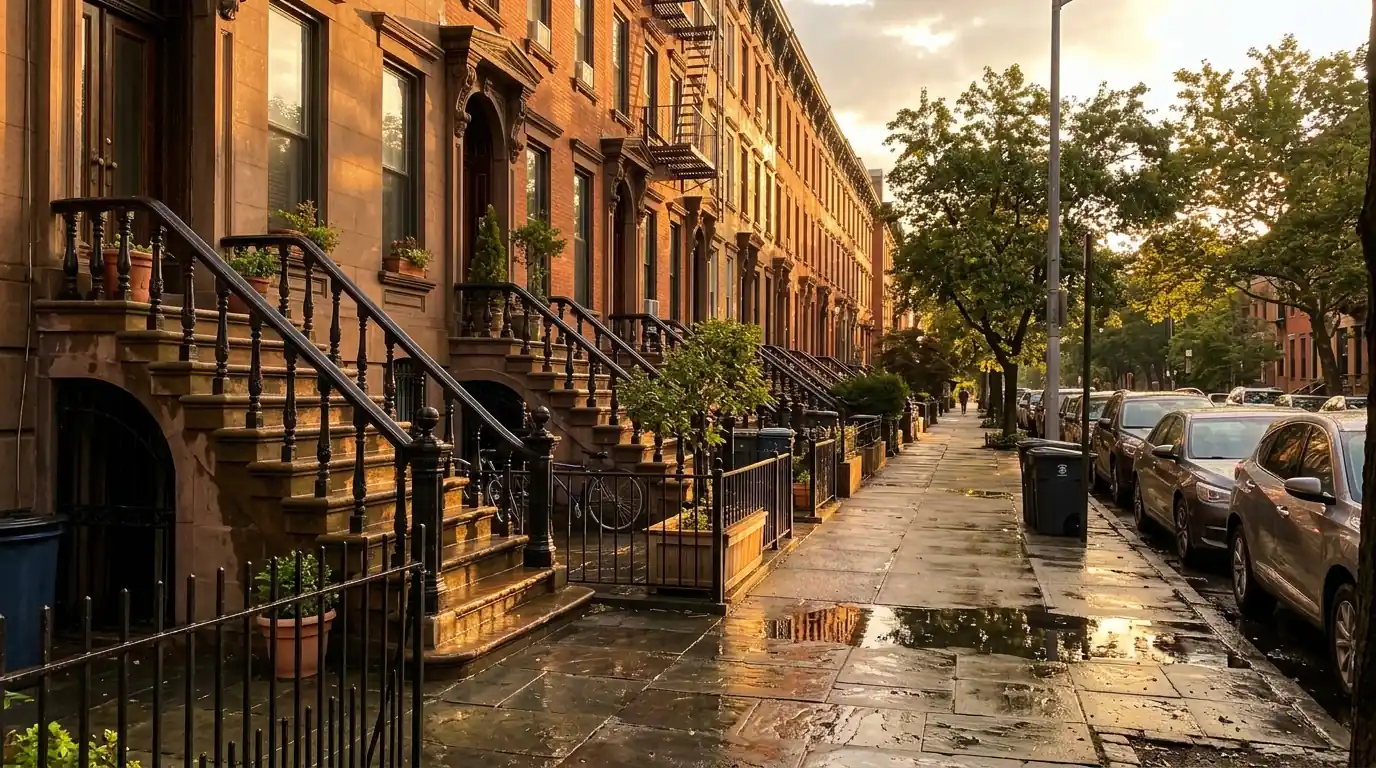
Hoboken's brownstones and brick rowhouses sit on low, filled ground near the Hudson, so their basements fight groundwater, combined-sewer backups and century-old stone walls all at once. We work on all three.
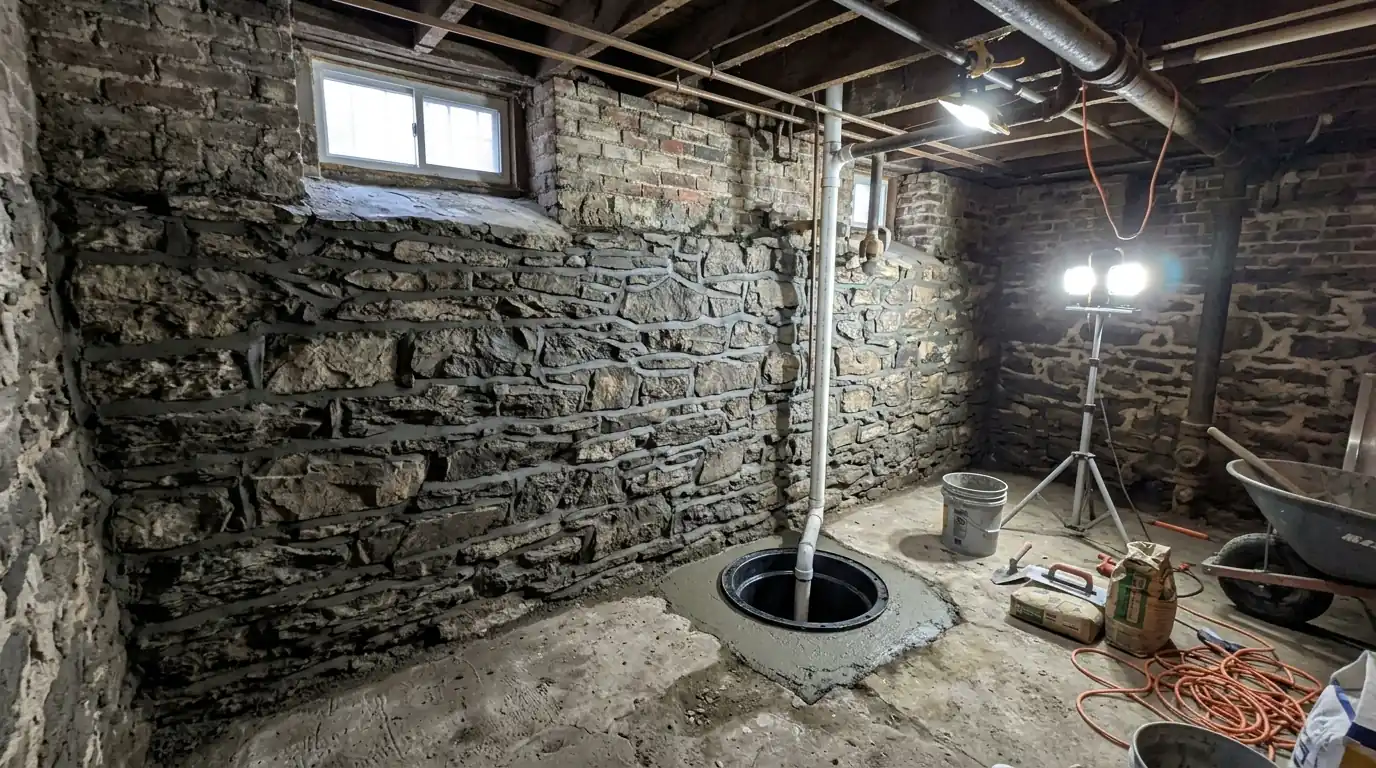
For a wet or flooded basement in Hoboken, call (201) 578-5199 any hour. We pump out standing water, trace whether it came through the floor drain, the stone walls or the slab, then fix the cause: a backwater valve on the sewer line, an interior drain and sump, or repointed and sealed foundation walls. Calls from Hoboken are handled from our Jersey City office at 218 Newark Avenue.
Hoboken packs brownstone and brick rowhouses into roughly one square mile, and a lot of that square mile is old marsh and fill close to the Hudson. Low, filled ground like that tends to hold a high water table, so after a long rain the groundwater pushes against the basement from below and from the sides. Most of these houses stand on brick or rubble-stone foundations laid with lime mortar. After a century of wet and dry seasons, that mortar washes out of the joints, and the wall starts weeping at the same spots every storm, usually low along the floor and around old pipe openings.
The third direction is the sewer. Hoboken, like Jersey City, is served largely by a combined sewer, where storm water and sewage share the same pipes. When a heavy storm fills those pipes, the water looks for the lowest opening it can find, and that is often a basement floor drain or a utility sink. Owners who went through the remnants of Ida in 2021 remember water arriving within hours through drains, window wells and walls together. Sorting out which of those paths is active in your building is the first thing we do, because each one needs a different fix.
Space is the constraint on nearly every Hoboken job. Streets are narrow, parking is scarce, and the basement is usually reached through a front areaway below the stoop or a narrow interior stair. We plan the day around that: material staged in small loads, sidewalk protection where we carry out debris, and buckets rather than wheelbarrows where the stair turns. Shared party walls matter too. When we cut a trench for an interior perimeter drain along a party wall, we keep the footing intact and tell you if the neighbor's side is feeding the water.
Front areaways deserve their own look. That sunken entry collects rain from the stoop and sidewalk, and its small drain is often clogged with leaves or broken below the slab. When it backs up, water sits against the front foundation wall and finds its way under the door. We clear and test areaway drains, reset or replace the grate, and seal the joint where the areaway slab meets the house. For deeper problems we rebuild the drain line and waterproof the wall face, which is the core of our areaway and stoop work on older blocks. Vaults under the stoop get the same check.
Based on the buildings here, these are the calls we expect from Hoboken. Every other service on our list is available too.
When a heavy storm sends dark, foul water up through your basement floor drain, the problem is the sewer, not groundwater.
DetailsWater on the basement floor after every hard rain usually means pressure from outside the wall, not a plumbing leak.
DetailsThe rubble-stone and brick walls under 19th-century rowhouses weep differently from poured concrete.
DetailsIf water keeps showing up in the same corner of your basement after every heavy rain, a properly placed sump pump gives it somewhere to go.
DetailsIf water pools in the sunken entry under your front stoop and slides under the basement door, the areaway drain or the stoop above it has failed.
DetailsIf your building sits on low ground downtown, in Hoboken or in Secaucus, the next big storm can push water through doors, areaways and window wells.
DetailsA backwater valve is the single most useful upgrade for many Hoboken basements. It lets water and waste leave the building but closes when the sewer side starts flowing back, so a combined-sewer surge stays in the street pipe instead of rising through your floor drain. We locate the building's main line, confirm where the fixtures tie in, and set the valve where it can be reached for cleaning. Sewer-side work falls under the local sewer utility and plumbing code, so we tell you when a permit or a plumber is needed and coordinate it. Our guide to sewer backups covers the details.
Parts of Hoboken also sit in FEMA flood zones, and Sandy in 2012 showed how storm surge can fill low streets. A valve and a sump will not stop surge coming over the curb, and we say so plainly. What they do is keep the everyday heavy-rain backups out, and a sump with a check valve and battery backup keeps groundwater moving when the power drops. Questions about flood insurance belong with your agent. Questions about what the work costs are answered in our basement waterproofing cost guide, with the factors that push a job up or down.
Because Hoboken is served largely by a combined sewer, storm water and sewage share the same pipes. In a hard storm those pipes fill, and the water pushes back toward the lowest opening, often your floor drain. A backwater valve on the building's main line closes against that backflow. We check whether the drain, the walls or the slab is the real source before recommending one.
Usually it can be made much drier and kept that way. We rake out failed lime mortar, repoint with a compatible mix, and seal the face where it makes sense. Where groundwater is pushing in at the base, an interior drain along the footing carries it to a sump. Rubble stone is never perfectly watertight, so the goal is controlled water, not a sealed tank.
Yes. Many Hoboken basements we see sit in or near mapped flood zones. We focus on what waterproofing can control: groundwater, sewer backups, areaway drains and wall seepage. We are honest that no basement system holds back storm surge coming over the street. For coverage and flood insurance questions, your agent is the right call; for the building itself, call us.
Call (201) 578-5199 any time. Tell us the address and what you're seeing, and we'll take it from there.