Water rising from the drain
Water comes up through the floor drain itself during a heavy storm, not along the walls.
Sump pumps & drainage · Jersey City, NJ
When a heavy storm sends dark, foul water up through your basement floor drain, the problem is the sewer, not groundwater. A backwater valve lets your waste flow out and stops the street's overflow from coming back in.
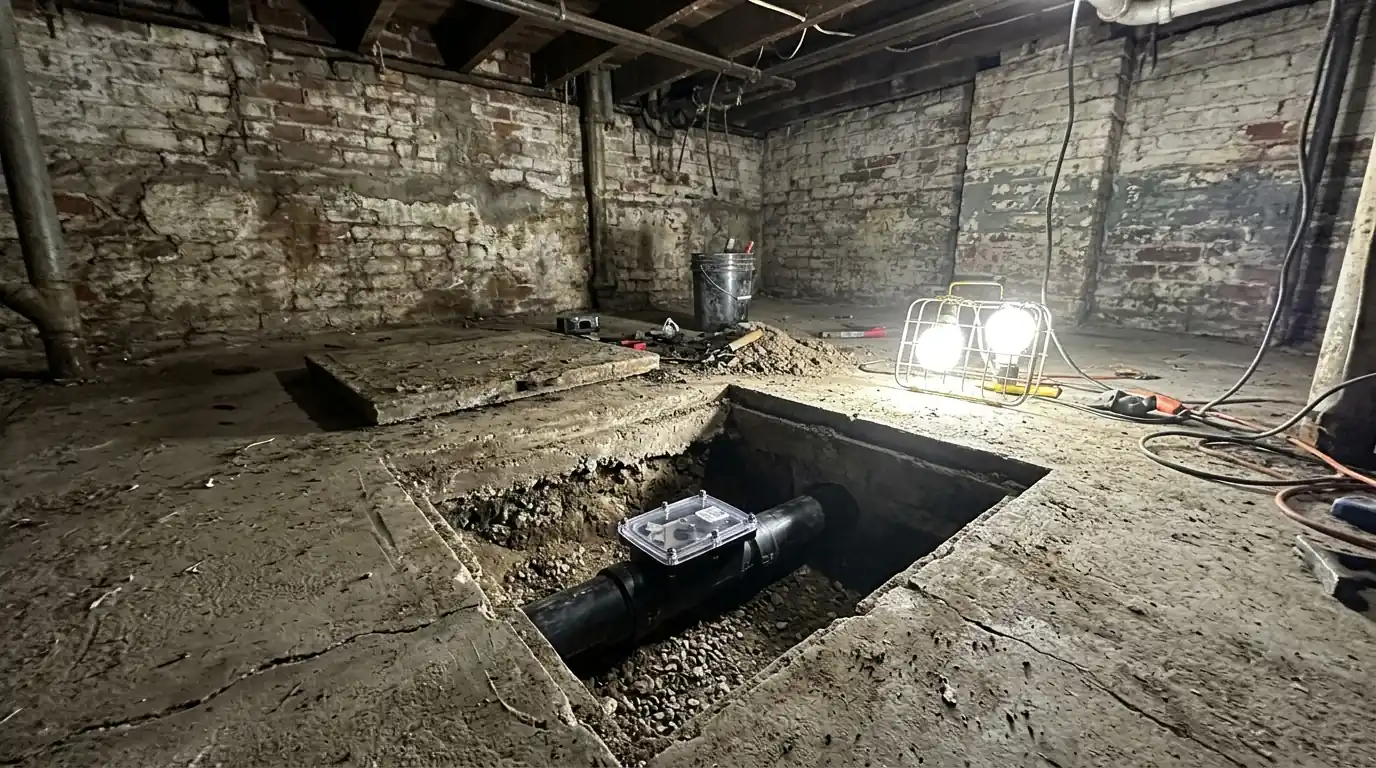
In Jersey City and Hoboken, combined sewers carry storm water and sewage in the same pipes, and in heavy rain that water can push back into basements. We install a backwater valve on your building's sewer line so flow can leave but can't return, coordinate any permit or plumber the code requires, and leave an access cover for cleaning. Call (201) 578-5199 to have your line looked at.
Jersey City and Hoboken are served largely by combined sewers, which means the rain running off streets and roofs shares the same pipes as household sewage. During a cloudburst, those pipes can fill faster than they empty. When the water in the street main rises above the level of your basement floor drain, it takes the easiest path, backward up your building's sewer line and out the lowest opening in the house.
That's why the floor drain, the basement toilet or the laundry sink is usually where it starts. The water is gray or brown, it smells like sewage, and it often arrives fast, with no seepage at the walls beforehand. Owners who went through the remnants of Ida in 2021 remember how quickly it came up. Groundwater problems look different, slower and cleaner, and our guide to sewer backups walks through how to tell them apart.
Low, filled ground downtown and in Hoboken puts many basements close to the level of the street mains, so the margin is thin. Rowhouses in Paulus Hook and the other historic districts often have old cast iron or clay sewer laterals running under the basement slab, which is also where the valve usually ends up going.
Water comes up through the floor drain itself during a heavy storm, not along the walls.
A sewer odor in the basement after a storm, even with little visible water, means the line is surcharging.
Dirty water carrying debris points to the sewer, not to clean groundwater.
Toilets and sinks bubble and gurgle when the street mains are full.
A basement toilet, shower or laundry sink fills from below during rain.
When adjoining rowhouses flood through their drains at the same time, the shared sewer main is usually the cause.
A backwater valve is a fitting cut into your building's sewer line with a hinged flap inside. Normal flow from your toilets, sinks and washer pushes the flap open and passes straight through. When water from the street side starts moving backward, it presses the flap shut against its seat and seals the line until the main drains down. It's a simple mechanical device, and that simplicity is exactly why it keeps working when the power is out.
Some valves hang open at rest and close only when backflow arrives; others rest closed and open for outgoing flow. Both work when they're kept clean. While the valve is shut during a backup, water from your own fixtures has nowhere to go, so we tell every household to hold off on laundry, showers and flushing until the storm passes. A valve protects your basement from the street, not from your own drains.
Direction matters. Every valve has an arrow cast into its body that must point toward the street, and a valve set backward blocks your own waste while doing nothing about the main. We also check the pipe on the street side of the valve, because a cracked old section there can still leak sewer water into the soil under your slab when the main surcharges. A bad section next to the valve gets replaced through the same opening.
We run a camera through the lateral to see its material, condition and route. That shows where the valve can go and whether the old pipe needs repair first.
We tell you whether the work needs a permit or a plumber under the code and arrange both. You deal with one contact for the whole job.
We saw-cut the slab and dig down to the sewer line. Concrete and soil are bagged and carried out.
We cut in the valve with new pipe and proper couplings, set level and facing the right direction. The flap is checked for free movement before anything is covered.
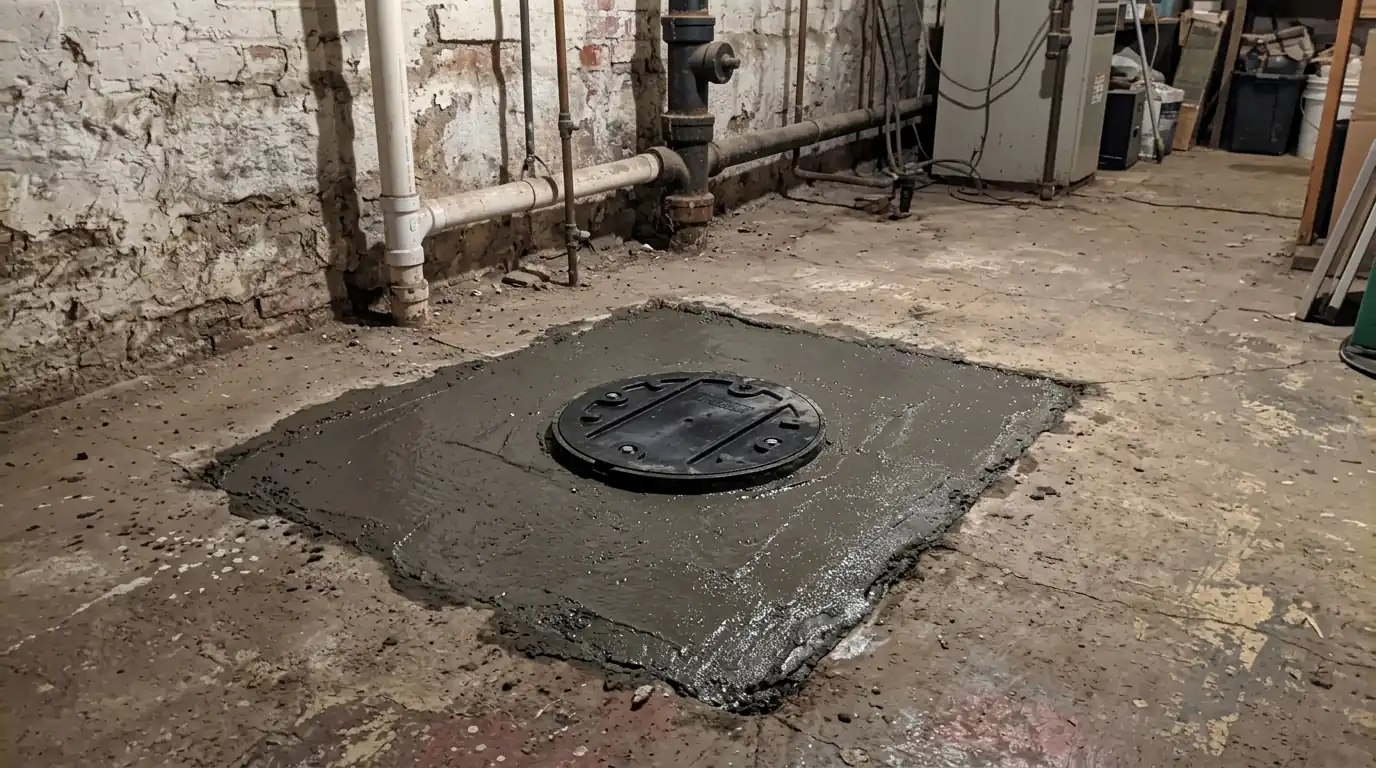
We set an access cover flush with the floor and pour new concrete around it. That cover lets you inspect and clean the valve for years.
We run water through the line to confirm normal flow passes and show you how to open and check the valve. You also get the list of fixtures to rest during a storm.
The valve has to sit on the main sewer line downstream of every fixture you want protected, usually inside the basement near where the line leaves the building. In most Jersey City houses that means cutting the concrete slab, exposing the old lateral and installing the valve in a short new section of pipe. In houses where the line runs out under the front areaway, the work sometimes happens there instead.
Every valve we install gets an access box with a cover set flush with the floor, so the flap can be checked and cleaned without breaking concrete again. Grease, wipes and debris can hold the flap open, and a valve stuck open protects nothing. We show you how to lift the cover and look, and we suggest checking it once or twice a year and after any big storm. The routine takes a few minutes:
Work on a building sewer is governed by the local sewer utility and the plumbing code, not by us. Depending on the town and the work, a permit may be required, and part of the connection may have to be made by a plumber the code allows to do it. We tell you up front when that applies to your house and we coordinate the plumber and the paperwork, so you aren't juggling two contractors. We don't quote permit fees, because they vary and aren't ours to set.
A backwater valve often works best alongside other fixes. If groundwater is also seeping in, an interior drain and sump handle that separately, and a sump pump discharge must never be tied into the protected sewer line. If you've just had a backup, our basement pump-out crew can clean up first, and the valve can follow once the floor is dry.
| Valve type | How it rests | Good to know |
|---|---|---|
| Normally open | Flap hangs open and closes when backflow pushes it | Free flow for your drains; needs cleaning so debris doesn't prop it open |
| Normally closed | Flap rests on its seat and opens for outgoing flow | Sealed at rest; flow from your fixtures has to push it open |
$1,640 to $4,350
per valve, typical range
Most jobs land between $1,640 and $4,350, including cutting the floor, installing the valve and access box, and restoring the concrete. The camera inspection tells us where in that range your house falls.
Not listed? See every area we serve or call (201) 578-5199.
Membranes, sealers, pumps and dehumidifiers we work with come from makers such as
No. It stops sewer water from coming back through the drain line it's installed on. Groundwater seeping through walls, the cove joint or the slab is a separate problem handled by drainage and a sump pump, and water entering through a window well or door is separate again. We tell you which sources your basement actually has before recommending anything.
Not safely. When the valve shuts during a backup, water from your own fixtures can't leave either, so it collects in the pipe on your side and can overflow at the lowest fixture. During a heavy storm, hold off on laundry, showers and the dishwasher until the street main drains and the valve opens again.
Work on a building sewer falls under the local sewer utility and the plumbing code, so a permit is often part of it, and part of the connection may need a plumber the code allows. We check what applies to your property, coordinate the plumber and the paperwork, and tell you before work starts. We don't quote permit fees.
Look at it once or twice a year and after any major storm. Lift the access cover, check that the flap swings freely and seats fully, and clear out wipes or grease. Households that flush wipes or pour grease down drains will need to clean it more often. If you'd rather not, we can check it during a visit.
Call (201) 578-5199 and tell us what you're seeing. We'll set up a visit and give you a typical range before any work starts.