Foundation Crack Repair
A single crack running down a poured basement wall can soak a corner of the floor every time it rains.
DetailsJersey City neighborhood
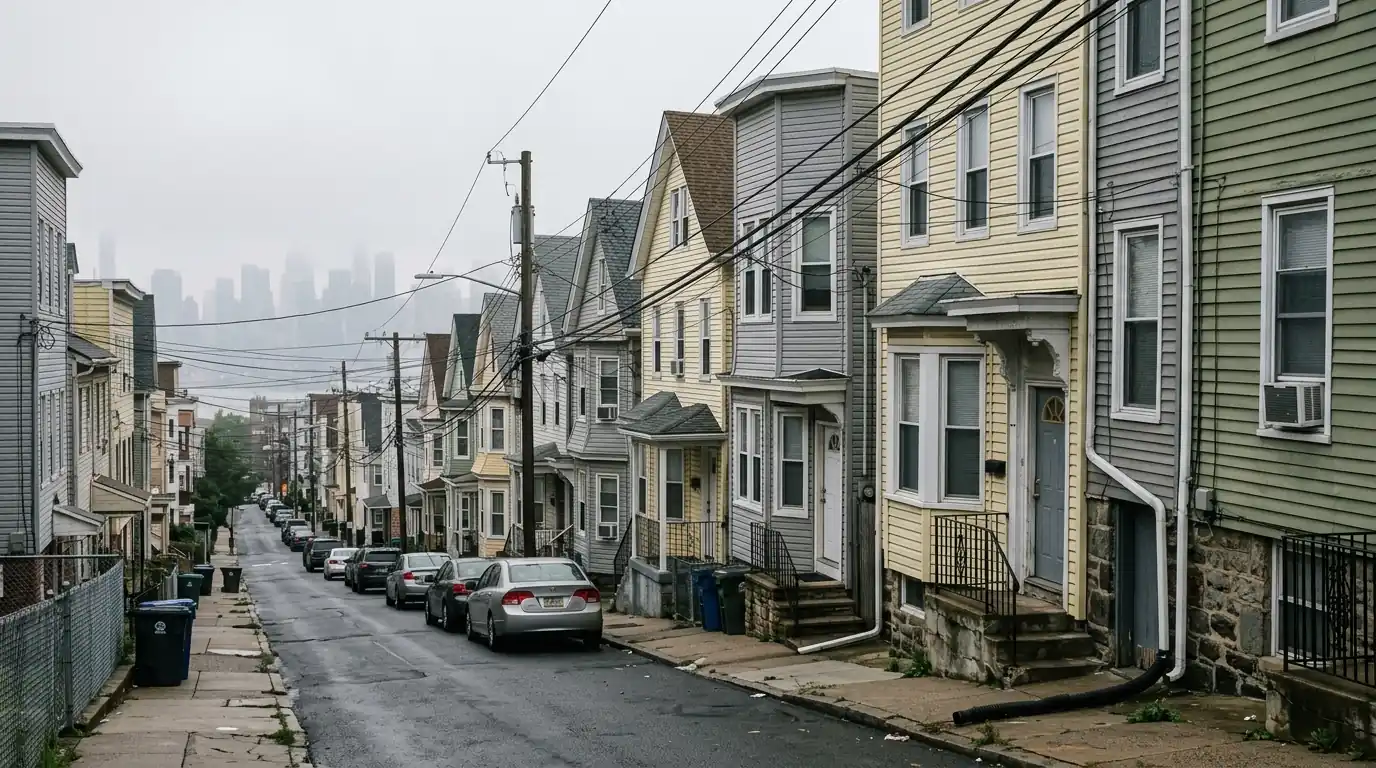
On the Heights, water rarely rises from below. It runs along the Palisades rock, finds a crack in the foundation of a two-family frame house, and shows up as a damp stripe down one basement wall.
For leaking foundation cracks, wet basement walls and failed leader drains in the Heights, call (201) 578-5199 at any hour. Our technicians come up from the Newark Avenue office, trace whether the water follows rock, a crack or a leader line, and then inject the crack or reroute the drain. You hear the typical cost range before we start any work.
The Heights sits on the Palisades ridge, and rock is close to the surface under most backyards. Rain soaks in, hits that rock and travels sideways until it meets your foundation. On a poured wall it finds the shrinkage crack that runs from a basement window corner down to the floor. On an older block or rubble wall it finds a washed-out joint. Either way the leak is narrow and specific, which is good news: a targeted foundation crack repair usually solves it without digging up the whole yard or cutting the entire slab.
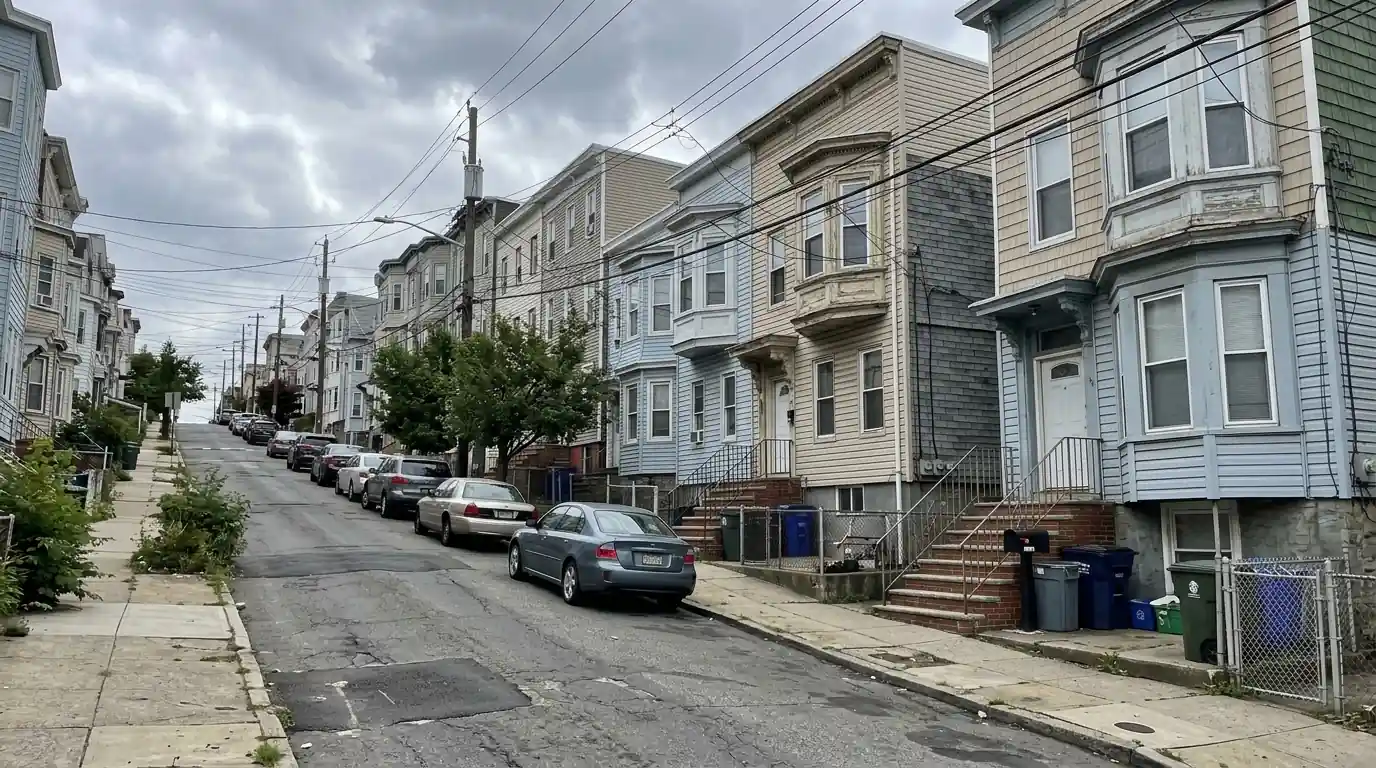
Many houses here are two- and three-family frame buildings, often with a pitched front and a flat rear roof. That rear roof sheds water into one leader at the back corner, and if the leader empties onto the ground or into a cracked clay line, the full flow from the roof soaks into the soil beside the basement. One inch of rain on a 1,000 sq ft roof is about 623 gallons, so a single bad leader can feed a crack all night. Bay windows with small roofs add their own drip lines along the front wall.
Side yards on these blocks are narrow, sometimes just a walkway between houses, and the basement door is often under the rear porch. We plan for that. Crack injection is done from inside with a small pump and surface ports, so nothing heavy has to go through the house. When a leader line has to be replaced, we cut a narrow trench by hand along the walkway, lay the new pipe and restore the concrete or pavers, keeping the neighbor's side clear the whole time. Before we start, you know which part of the yard will be open and for how long.
Parking around Central Avenue and Palisade Avenue is tight and many blocks run alternate-side or permit rules, so we work out where the truck stages before the day of the job. Ridge-top wind is another factor up here. A nor'easter drives rain sideways into the exposed walls, which is why we look at the brick or siding above grade and at window perimeters when the dampness sits high on the wall rather than at the floor. Wall leaks above grade and crack leaks below it need different repairs, and treating one as the other wastes your money.
Based on the buildings here, these are the calls we expect from The Heights. Every other service on our list is available too.
A single crack running down a poured basement wall can soak a corner of the floor every time it rains.
DetailsIn New Jersey, downspouts are called leaders, and most of them empty right beside the house.
DetailsRain is getting through the brick on an upper floor, usually after a storm with strong wind behind it.
DetailsWater on the basement floor after every hard rain usually means pressure from outside the wall, not a plumbing leak.
DetailsWhen a window well fills in a storm, the basement window becomes the side of a bucket, and water finds the frame.
DetailsIf the room over your rear addition smells musty or the floor feels cold all winter, the crawl space underneath is probably damp and open to outside.
DetailsBefore we price crack work on the Heights, we run a hose test on the leaders. Roof water that dumps at the foundation puts the heaviest load right where the basement is weakest, and on shallow rock it has nowhere to go but toward the wall. Rerouting that water through underground leader drains that carry it well away from the house often cuts the leak to a trickle, and sometimes stops it outright, for far less than an interior drain system. It is the cheapest test with the biggest payoff on most ridge-top houses.
When the crack still weeps after the roof water is under control, we inject it. Polyurethane foam suits an active, wet crack because it expands and follows the water path. Epoxy suits a dry crack where we also want to bond the concrete back together. Stone and brick walls get repointed instead, since injection does not hold in crumbling lime mortar. On blocks near Five Corners, where the ridge slopes down, we also check the downhill wall for seepage under pressure. Our guide to why Jersey City basements leak explains the pattern.
On the Palisades ridge, water usually travels along the rock until it reaches one weak spot, typically a crack or a failed joint on the uphill side or under a leader. That is why the dampness often sits in one stripe instead of spreading across the floor. Fixing that single path, plus the roof water feeding it, usually costs far less than a full system.
Often it does not. Sump pumps make the most sense where a high water table pushes water up under the slab, which is more common on low ground downtown and toward the bays. On the Heights we usually control the source first: leaders, grading and cracks. If water still collects at the floor after that, we talk through a sump then.
Yes. We repair flat-roof leaks, reseal flashing where the rear roof meets the house wall, and coat sound membranes. We also make sure that roof drains into a leader that carries the water away from the foundation instead of beside it.
Call (201) 578-5199 any time. Tell us the address and what you're seeing, and we'll take it from there.