Crawl Space Encapsulation
If the room over your rear addition smells musty or the floor feels cold all winter, the crawl space underneath is probably damp and open to outside.
DetailsMiddlesex County town
Woodbridge Township is a suburb of split-levels, colonials and capes, and their lower levels fail in their own ways: damp crawl spaces, window wells that fill, and leaders that soak the soil beside a finished family room.
Across Woodbridge Township, we seal crawl spaces, waterproof lower levels and bury leader drains for split-levels, colonials and capes. Our technicians check the vapor barrier, humidity, window wells and gutters before suggesting anything, because suburban basements usually leak from more than one direction. Call (201) 578-5199 at any hour, and we'll set up a visit that fits around your day.
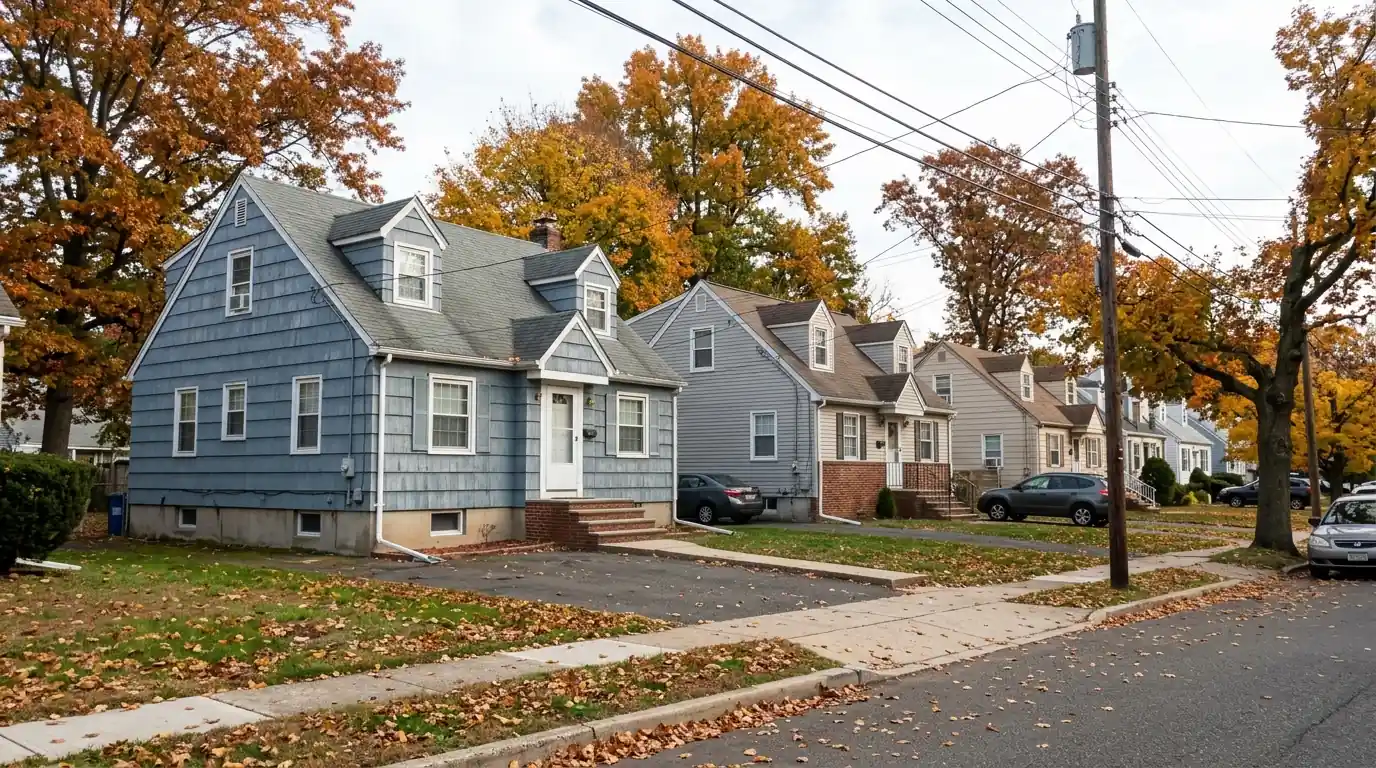
Drive the side streets off Route 1 and 9 and you'll pass every classic suburban house type. Each has a weak spot. A split-level often has a crawl space under one wing and a partly buried family room under another, so moisture can creep in from two directions. A colonial usually sits over a full basement with poured or block walls, and the cove joint and corners are the first to seep. Capes tend to have smaller basements, low window wells and leaders tucked against the walls, which concentrate roof water at the foundation. Knowing the house type tells us where to look first.
These are pitched-roof homes, and the roof itself is rarely the culprit. The trouble starts where its water lands. Gutters overflow when they clog, leaders end a few inches from the house, and window wells with no drain become small ponds after every storm. A window well drain and cover can stop a basement leak that owners blame on the wall. We look at all of it together, since fixing one side of the house often leaves the real source untouched. Clean gutters and longer leader runs are inexpensive fixes, so they come first on our list, before anything bigger. Often they're enough.
Suburban jobs are easier to stage than city ones. We can usually park in the driveway, run hoses and cords from the garage, and dig along a wall without disturbing a neighbor. That opens up options that attached city houses don't have, including exterior excavation and regrading. Before any digging, utility lines are marked, and we talk with you about plantings and walkways near the work, and we lay boards and tarps wherever equipment rolls. Cleanup happens before we leave each day. A typical inspection starts outside at the gutters and grade, then moves into the basement, the crawl space and any finished rooms.
We measure humidity in the lower level, since summer air commonly pushes basements above 60 percent, and a target of roughly 45 to 55 percent keeps musty odors down. Where readings run high, a properly sized basement dehumidifier drains to a pump or floor drain instead of a bucket. Readings also tell us whether moisture is coming from outside air or from the walls themselves. That difference changes which fix comes first. Leaders that empty at the foundation get tied into buried leader lines carried out to the yard. Owners in Carteret and Rahway see the same mix, and the same order of work usually applies.
Based on the buildings here, these are the calls we expect from Woodbridge. Every other service on our list is available too.
If the room over your rear addition smells musty or the floor feels cold all winter, the crawl space underneath is probably damp and open to outside.
DetailsA basement can be free of leaks and still smell musty, sweat on the pipes and grow mildew on stored boxes.
DetailsIn New Jersey, downspouts are called leaders, and most of them empty right beside the house.
DetailsWhen a window well fills in a storm, the basement window becomes the side of a bucket, and water finds the frame.
DetailsA single crack running down a poured basement wall can soak a corner of the floor every time it rains.
DetailsWater on the basement floor after every hard rain usually means pressure from outside the wall, not a plumbing leak.
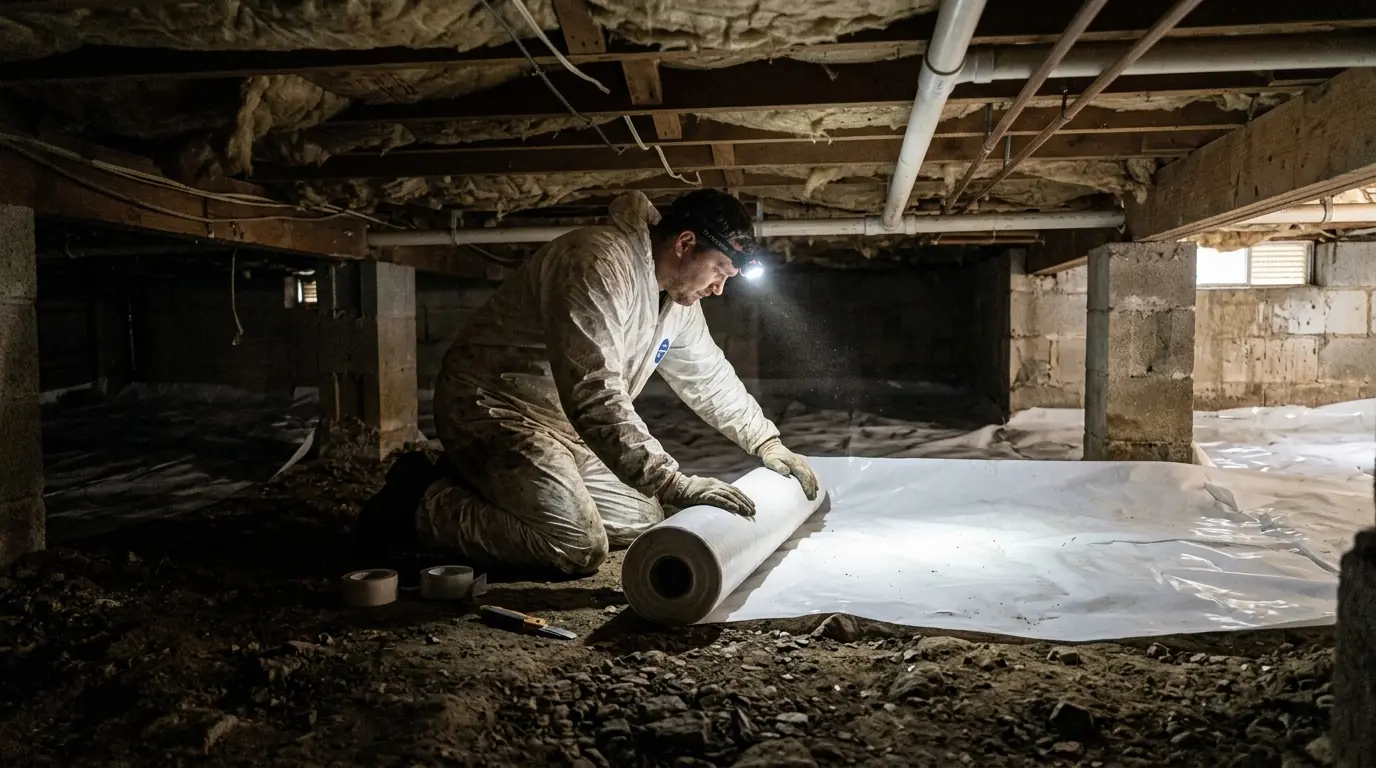
DetailsMany Woodbridge homes have grown over the years: a rear family room, a sunroom, a bump-out kitchen. Additions like these were often built over a shallow crawl space with a dirt floor and open vents. In summer, warm humid air flows in, meets the cool ground and condenses on joists and ductwork. In winter, cold air chills the floor above. The result is damp insulation, rusted fasteners, musty smells in the room overhead and, sometimes, mold on the framing. These crawl spaces are out of sight, so problems run for years. Opening the hatch is often the first time an owner has seen the space in a decade.
Crawl space encapsulation closes that space off. We clear debris, lay a heavy sealed vapor barrier over the floor and up the walls, tape every seam, seal the vents and add a small dehumidifier where readings call for one. If water pools in the crawl space after storms, we add drainage first. The access hatch then gets a weatherstripped cover so the sealed space stays sealed, and we note the humidity readings for you. For the trade-offs, our article on whether encapsulation is worth it lays out what changes, what doesn't, and how to tell if your crawl space actually needs it.
Musty air usually means high humidity rather than standing water. Split-levels often have a crawl space beside the lower family room, and moist air from that crawl space drifts into the living area. Summer humidity makes it worse. We measure the humidity, check the crawl space, and usually recommend sealing it and adding a dehumidifier sized for the space.
Yes, and it's one of the most common causes we find. Wells without a working drain fill like a bucket in heavy rain, then water seeps through the window frame or the wall below it. A drain at the bottom of the well, clean gravel and a fitted cover usually fix it. We also check whether a leader is emptying into the well.
Both are possible on most suburban lots, which is an advantage over attached city houses. Interior drains and crack injection are less disruptive and cost less in many cases. Exterior excavation with a membrane makes sense when walls are badly cracked or when a finished basement can't be opened up. We explain both options and why one fits your house.
Call (201) 578-5199 any time. Tell us the address and what you're seeing, and we'll take it from there.