Key points
- Encapsulation pays off when a crawl space has wet soil, musty air, cold floors above or pests.
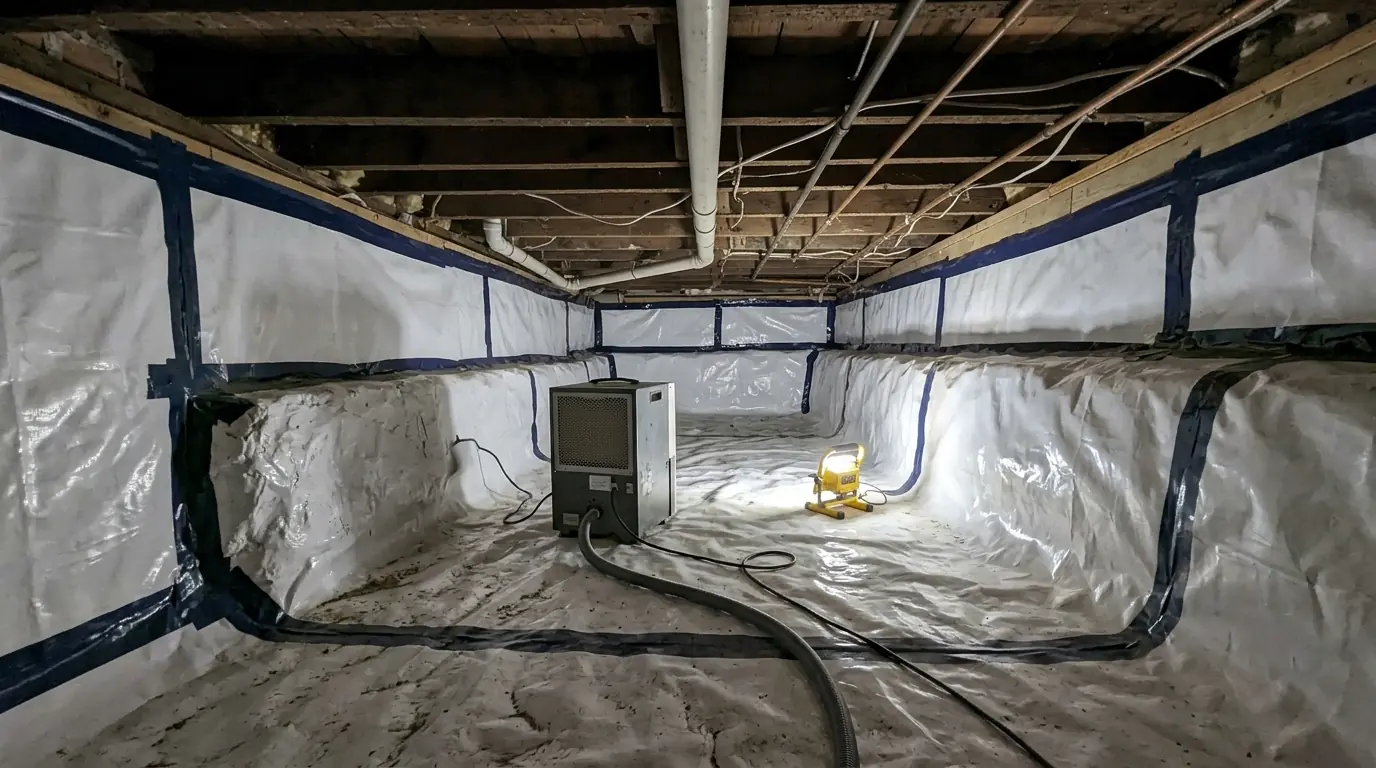
- A full job seals the floor, walls and vents and usually adds a dehumidifier.
- A dry, odor-free crawl space may only need a proper ground vapor barrier.
- Fix outside drainage first; no liner keeps up with water pouring in.
Where crawl spaces hide in Jersey City houses
Most Jersey City buildings sit on full basements, so crawl spaces tend to turn up in particular places. Rear additions on rowhouses and two-family frame houses are the most common: a kitchen or bathroom extension built over a shallow crawl space rather than a cellar. Some frame houses in Greenville and on the West Side have a partial crawl space beside the basement, and older houses across the county sometimes have a dirt-floored section that was never dug out.
These spaces are low, awkward to reach and easy to forget. The access might be a small hatch in a closet floor or a gap in the basement wall. Nobody goes in until a smell, a cold floor or a plumbing repair forces the issue, and by then the soil may have been damp for years. Because they sit under living space, the air in them drifts up into the rooms above, carrying whatever moisture and odor the crawl space holds.
Where the house sits matters as well. On low, filled ground near the rivers and Newark Bay, the water table is high and the soil under a crawl space can stay damp for long stretches after rain. Up on the Palisades ridge, water tends to run along rock instead, and a crawl space there is more likely to get wet from runoff and downspouts than from below. The same symptoms can have different causes depending on the block.
Signs that point toward encapsulation
Some signs show up in the house, and others only once you open the hatch and shine a light in. One sign on its own may call for a small fix. Several together usually mean the space is wet enough that sealing it will change how the rooms above feel and how long the framing lasts. Some of these, like a musty smell, can come from a basement next door too, so we check both before blaming the crawl space. Here's what we look for when we open the hatch:
Pests deserve a word of their own. A damp, vented crawl space is an easy home for insects and mice that like moisture, and they rarely stay put. Sealing the vents and the ground and drying the air makes the space much less inviting, though it isn't pest control, and gaps around pipes and wires still need attention. It also gives you a clean, bright surface where droppings or nests are easy to spot on a quick look, instead of disappearing into bare dirt and old insulation.
- A musty smell in the room above, worse in humid summer weather
- Floors over the crawl space that feel cold and clammy in winter
- Wet or dark soil, or puddles after heavy rain
- Condensation dripping from pipes or ductwork
- Fiberglass insulation sagging or falling from the joists
- Dark staining, white fuzz or soft spots on wood framing
- Mice, insects or droppings in the space
What a full encapsulation actually includes
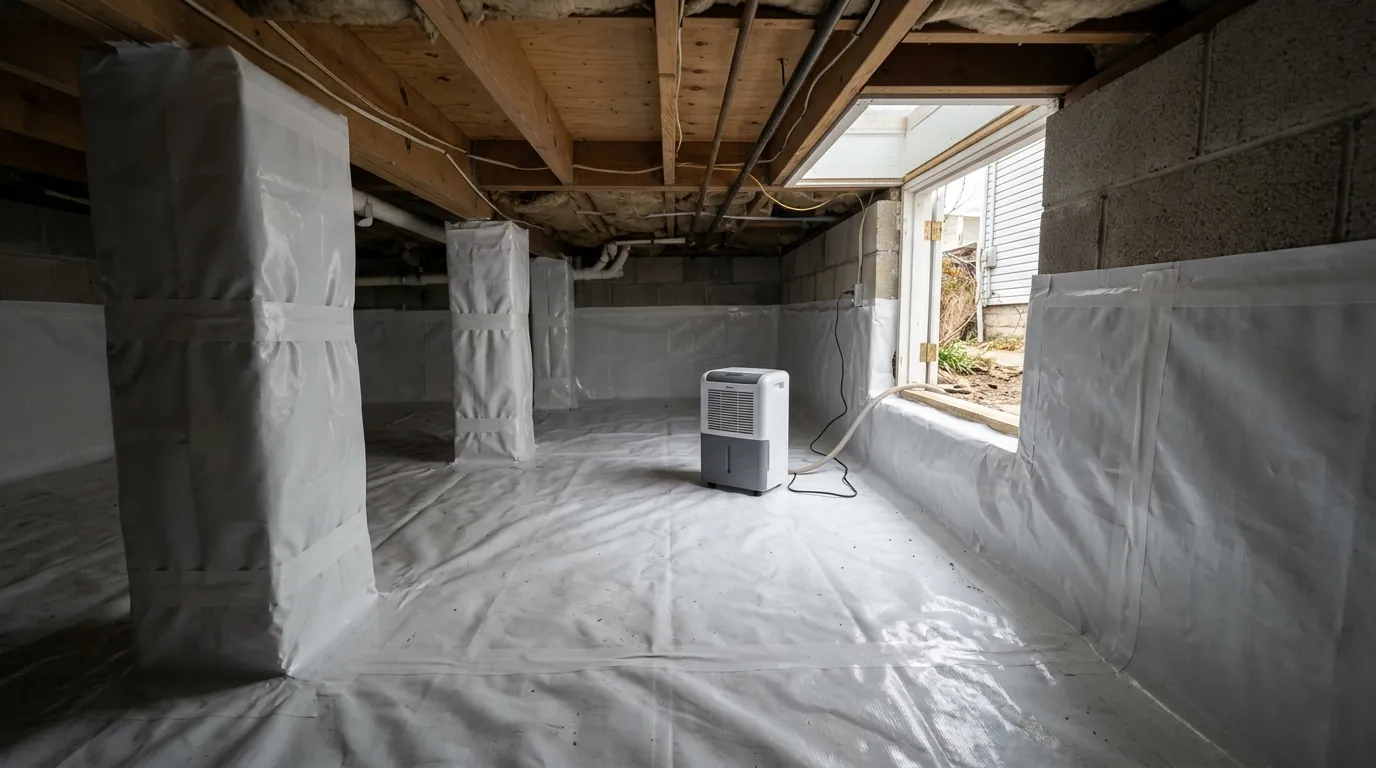
Encapsulation is more than a sheet of plastic on the dirt. A proper job starts by clearing out debris and any insulation that's wet or moldy. A heavy, reinforced vapor barrier goes over the whole floor, runs up the foundation walls and is fastened and sealed at the top. Seams are overlapped and taped, and the liner is sealed around piers, posts and pipes so ground moisture can't sneak around the edges.
The vents to the outside are closed and sealed, along with gaps at the rim joist, so humid summer air stops flowing in. If water collects on the floor after rain, a small drain or sump under the liner gives it a way out before the liner goes down. Then the air needs a way to stay dry, usually a dehumidifier sized for the space. Our crawl space encapsulation work covers each of these steps in that order.
Insulation changes too. In a vented crawl space, insulation sits between the floor joists, where it often sags once it gets damp. In a sealed one, the space is treated as part of the house, so the walls are usually insulated instead. Air sealing the rim joist, the band of framing that sits on top of the foundation, matters as much as the insulation itself, because it's where outside air leaks in most. We explain which approach fits your space before any work starts, and how it ties into any heating ducts or plumbing that run through the crawl space.
When a simple vapor barrier is enough
Not every crawl space needs the full treatment. If the soil is dry, there's no standing water after storms, the framing is sound and nobody notices a smell in the rooms above, a properly installed ground vapor barrier may be all it needs. That means a heavy sheet across the whole floor, overlapped at the seams and turned a short way up the walls, so moisture from the soil can't evaporate straight into the space. It's a much smaller job, and often the right one.
The catch is that a plain barrier only stops moisture from below. It does nothing about humid outside air coming through open vents in July and condensing on cooler pipes and wood. If that's your pattern, with dry soil but sweating pipes in summer, sealing the vents and drying the air matters more than the liner. A waterproofing inspection sorts out which of these problems you actually have, so you pay for the fix that matches it.
A vapor barrier alone is also a reasonable first step when the budget is tight. It's often possible to lay a good ground barrier now, see how the space behaves through a summer, and add vent sealing and a dehumidifier later if the musty air or sweating pipes persist. Nothing about that order wastes money, because the floor liner gets reused as part of the full job.
The dehumidifier's role, and why outside water comes first
Once a crawl space is sealed, some moisture still gets in through small gaps, the concrete and the house above, and nothing carries it away. That's the dehumidifier's job. A unit built for crawl spaces runs on a drain line, so nobody crawls in to empty it, and holds the air around 45 to 55 percent relative humidity, the range that discourages musty odors. Many of the same units work as basement dehumidifiers in the room next door.
No liner or dehumidifier keeps up with water pouring in, though. If the crawl space takes on water after storms, look outside first. Downspouts dumping beside the foundation put roof water right where the crawl space is lowest, and a yard that slopes toward the house sends runoff the same way. Routing leaders through underground leader drains and correcting the grade often does more for a wet crawl space than anything done inside it.
So, is it worth it for your house?
Encapsulation is worth it when the crawl space is wet, smells, has damaged framing or insulation, or sits under rooms you use every day and want comfortable. It also makes sense if you plan to keep the house for a long time, because framing over a dry crawl space simply holds up better. It's less worth it when the space is already dry and odor-free, in which case a ground barrier and a look every few years is plenty.
The honest way to decide is to look. A flashlight, a moisture reading on the framing and a humidity reading in the space tell you more than any rule of thumb. If you'd like our technicians to open the hatch and tell you which of these your crawl space needs, we answer (201) 578-5199 day and night. We'll show you photos of what's down there, including the soil, the framing and the vents, so you can judge it for yourself rather than taking our word for it.
Owner Guides Editor at Waterproofing Services Carteret. Writes the owner guides from the questions our crews hear in Jersey City basements and on its roofs every week.