Basement Waterproofing
Water on the basement floor after every hard rain usually means pressure from outside the wall, not a plumbing leak.
DetailsEssex County town
Newark basements in the Ironbound and along Broad Street often mix century-old masonry with floor drains tied to the street sewer, so one storm can push water through the wall and up through the drain at once.
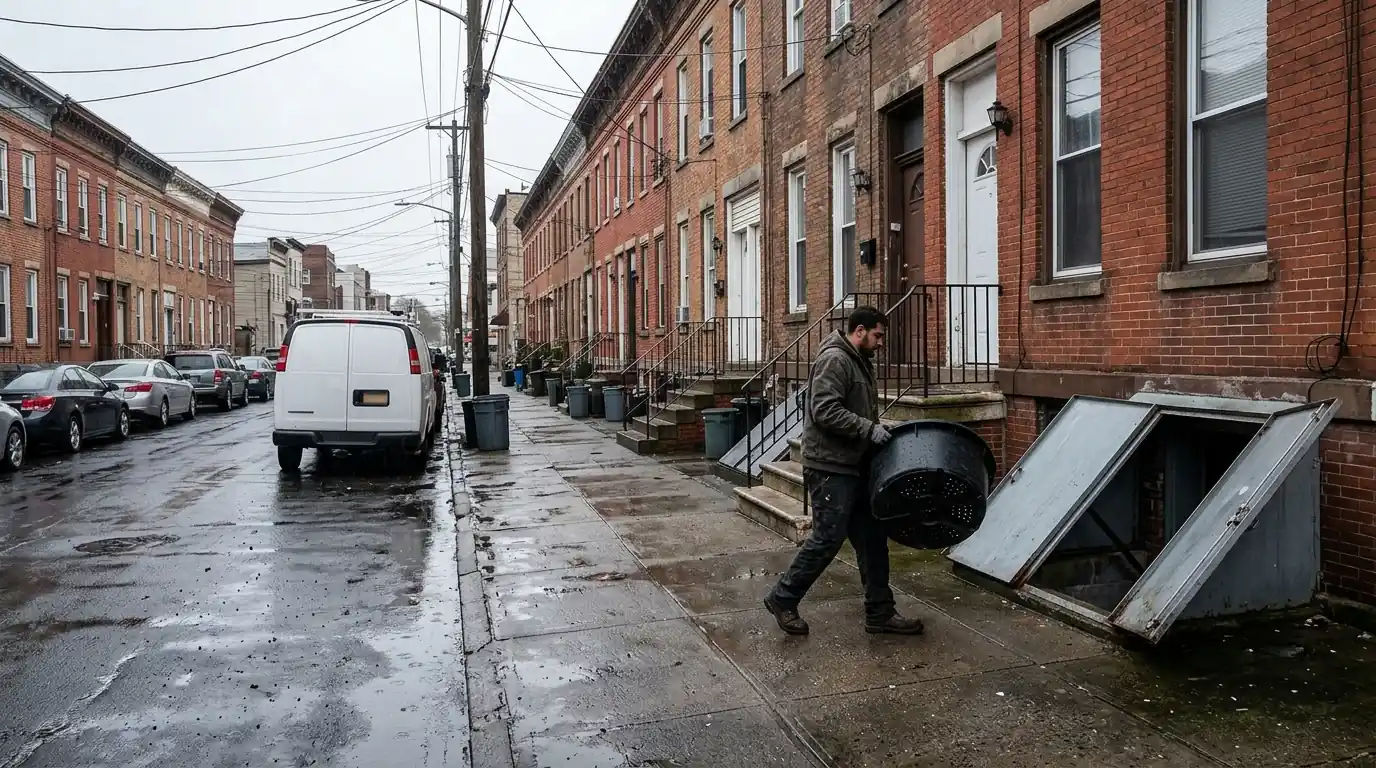
We handle wet basements and sewer backups across Newark, from Ironbound rowhouses to flat-roof apartment buildings off Broad Street. Our technicians first find out whether water is seeping through the foundation or rising from a floor drain, then seal the wall, add interior drainage, or fit a backwater valve with the right permit. Call (201) 578-5199 any hour; an emergency crew can come the same night when one is free.
Newark is the largest city in New Jersey, and its housing carries a long build history. In the Ironbound, attached rowhouses and two-family homes sit shoulder to shoulder, many of them on brick or rubble-stone foundations laid with lime mortar. After a century of wet seasons that mortar washes out of the joints, and the wall begins to weep along its lowest courses. You'll notice white efflorescence, loose sand collecting on the floor and a damp band that climbs after every long rain. Patching the face with cement rarely holds, because water is moving through the whole wall rather than just the surface.
Away from the rowhouse blocks, plenty of apartment and commercial buildings carry flat roofs over poured concrete basements. Those foundations leak at different spots: the cove joint where wall meets slab, tie-rod holes left by construction, and shrinkage cracks that open a little wider every winter. Roof water plays its part too. When leaders empty at the sidewalk edge or into a narrow side passage, that water soaks straight down beside the footing. We look at the building as one system, so a call about a basement puddle often ends with a check of the downspouts and the flashing at the roof edge above.
Some Newark basements flood without a single crack in the wall. During a hard storm the street sewer can fill faster than it empties, and water pushes back into the lowest opening it can reach: a floor drain, a laundry tub or a basement toilet. The remnants of Ida in 2021 showed how quickly that happens across north Jersey, when basements took water within hours through drains, window wells and walls together. If your floor drain gurgles, or leaves a dark ring on the concrete after rain, the trouble is on the sewer side, and sealing the walls alone will not stop it.
The usual answer is a backwater valve, which lets water leave the house but swings shut when flow reverses. Sewer-side work falls under local plumbing code and the sewer utility, so we tell you up front when a permit or a plumber is required and coordinate that step with you. We set the valve with an access cover you can actually reach, and we show you how to check the flap twice a year. Our write-up on how sewer backups reach a basement explains the parts in plain terms before you decide anything. We also check the cleanout cap and the drain trap while we're there.
Based on the buildings here, these are the calls we expect from Newark. Every other service on our list is available too.
Water on the basement floor after every hard rain usually means pressure from outside the wall, not a plumbing leak.
DetailsWhen a heavy storm sends dark, foul water up through your basement floor drain, the problem is the sewer, not groundwater.
DetailsWhen groundwater keeps finding its way in at the base of your walls, coating the inside won't hold it back.
DetailsThe rubble-stone and brick walls under 19th-century rowhouses weep differently from poured concrete.
DetailsIf water pools in the sunken entry under your front stoop and slides under the basement door, the areaway drain or the stoop above it has failed.
DetailsIf water keeps showing up in the same corner of your basement after every heavy rain, a properly placed sump pump gives it somewhere to go.
DetailsRowhouse jobs in the Ironbound mean shared party walls, small rear yards and no driveway to stage from. Most of our interior drain work there happens entirely from inside: we carry tools through the front door, saw the slab along the wall, and haul spoil out in bags so the sidewalk stays clear. Because the wall beside you also belongs to your neighbor, we watch for water crossing over from their side and tell you plainly when it is. A wet party wall sometimes needs a short conversation between two owners before any membrane goes on. We note those spots on a sketch so both owners see the same picture.
Out front, we plan around tight street parking and foot traffic, protecting the walk whenever we open an areaway or dig at the stoop. Small areaway drains on older houses clog with leaves and grit, then overflow toward the cellar door, so we clear and flow-test them on nearly every visit. When the whole basement needs attention, an interior perimeter drain feeding a sump is the practical route here, since excavating between attached houses is rarely possible. The waterproofing cost guide shows how wall length, wall type and pump choices move the total. Pumps get a battery backup, since storms that overload drains often knock out power too.
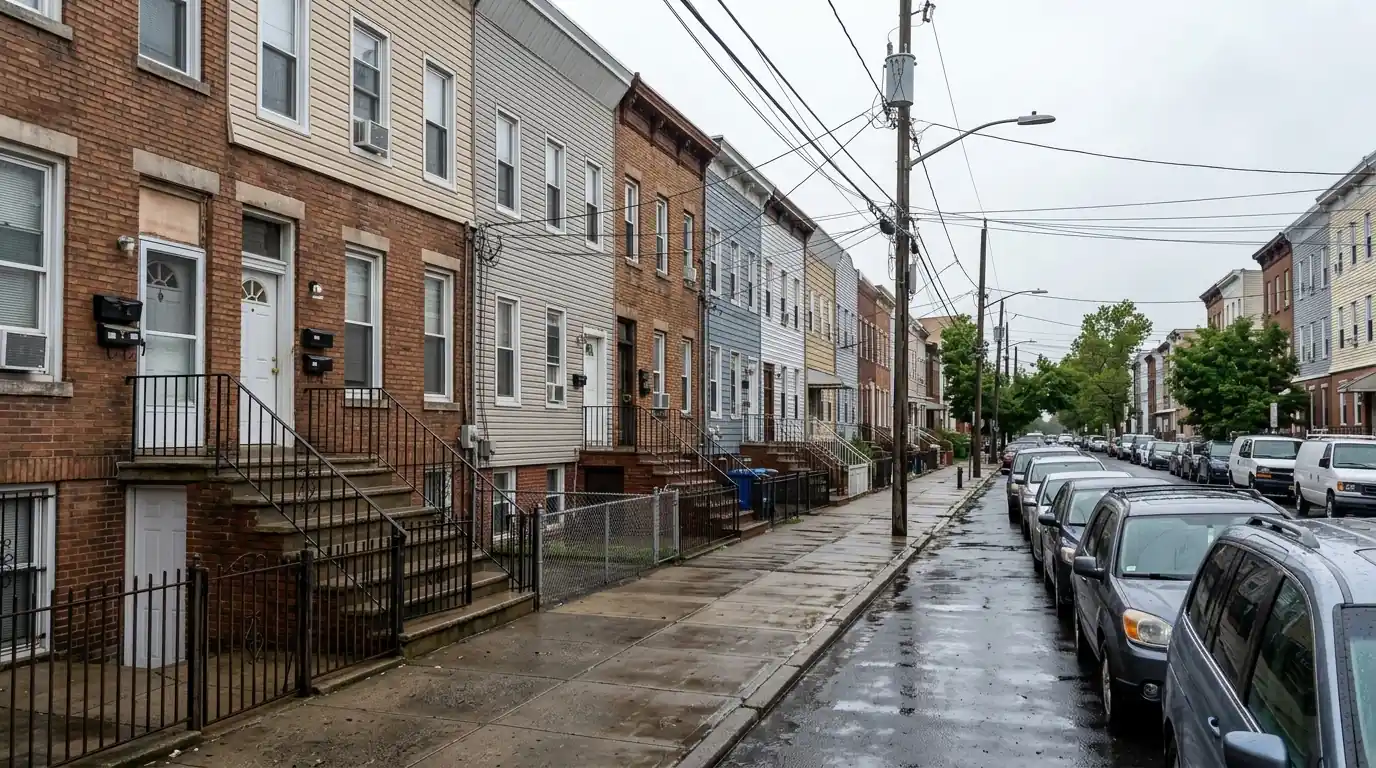
In a heavy downpour the sewer line under the street can run full, and water takes the easiest path back toward your house, which is usually the lowest drain in the basement. Between storms the line flows normally, so the problem seems to vanish. A backwater valve on your building sewer closes when flow reverses. We confirm the cause first, because wall seepage and sewer backup can look alike on a wet floor.
Yes, in most cases. Attached houses rarely leave room to excavate outside, so we work from the basement: a channel cut along the wall, a perforated pipe in stone, and a sump that carries water out. Old stone or brick walls get their loose joints repointed first so the drain is catching water, not mortar and sand. The yard and sidewalk stay as they are.
Often they do. Larger buildings tend to have poured concrete foundations, so the leaks show at cove joints, tie-rod holes and cracks, which we seal with injection or a drain system. They also have flat roofs and internal drains, and a clogged roof drain can send water down inside the walls. We check both ends of the building before recommending work to an owner or manager.
Call (201) 578-5199 any time. Tell us the address and what you're seeing, and we'll take it from there.