Parking Garage Waterproofing
Drips onto parked cars, rust stains on the ceiling and water reaching the storage rooms or shops below a garage deck all mean water is getting.
DetailsBergen County town
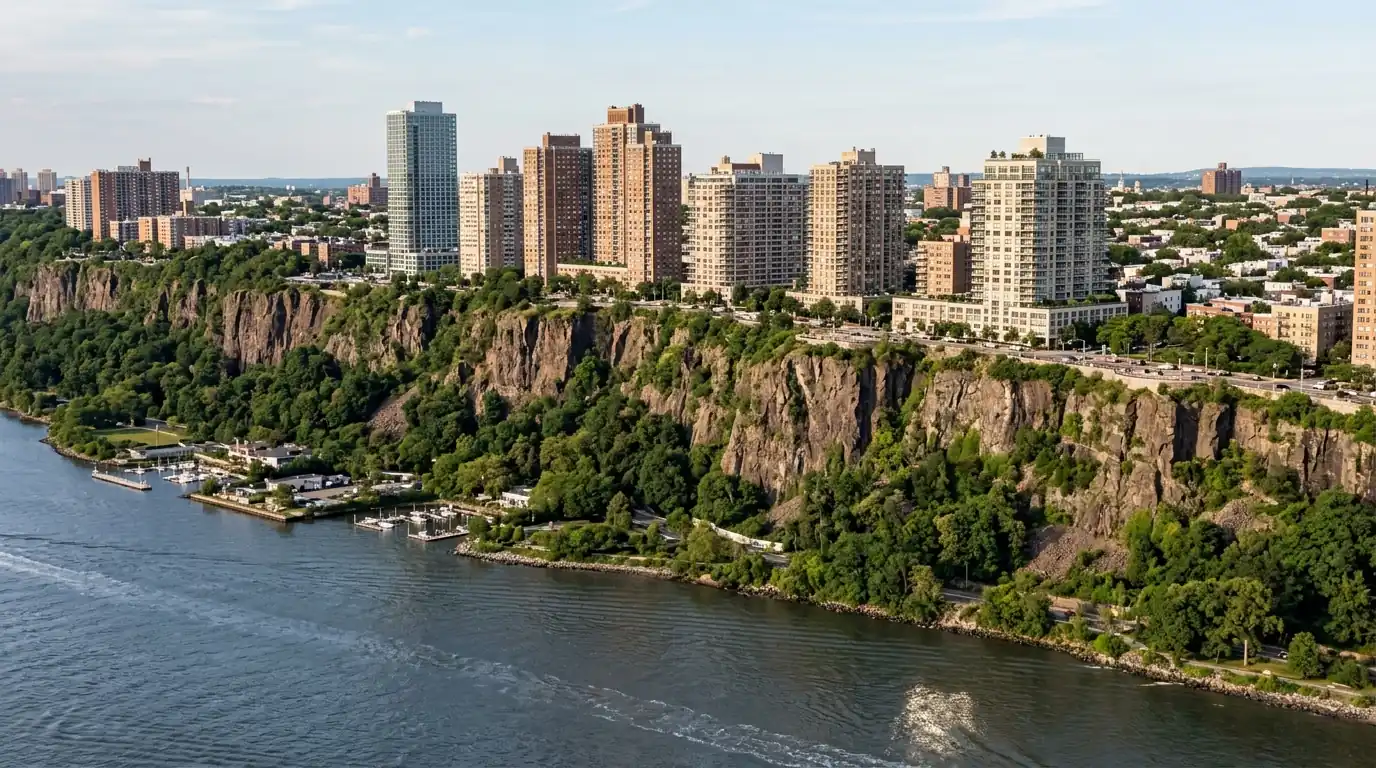
Fort Lee's high-rise co-ops and condos near the George Washington Bridge sit on Palisades rock, and their water problems cluster in three places: below-grade garages, elevator pits and the terraces stacked up the face of the building.
In Fort Lee, our waterproofing crews work with co-op boards and property managers on garage deck coatings, elevator pit sealing, terrace and balcony membranes and below-grade crack injection. We start with a walk-through and a written scope, then phase the work so residents keep parking and access. Call (201) 578-5199 any hour to set up a site visit or report an active leak.
Fort Lee's skyline near the George Washington Bridge is made up largely of high-rise co-ops and condominiums, many with multiple levels of parking below grade. Garage decks take a beating: cars bring in road salt and slush all winter, and that brine soaks into the concrete, rusts the reinforcing steel and opens cracks that leak onto the level below. Expansion joints dry out and split. A garage that drips on cars or shows rust stains on the ceiling is telling you the deck surface has already failed in places. Left alone, that damage spreads deeper into the slab each winter.
Higher up, terraces and balconies sit over occupied units. A terrace membrane that cracks at the door threshold or along a planter base can send water into a ceiling two floors down, which makes the source hard to pin down. The roof often carries an amenity deck or mechanical equipment, with curbs and penetrations that need sealing. We trace leaks from the unit upward, then lay out terrace and balcony waterproofing that addresses the actual failure rather than covering the whole surface with a coating it doesn't need. A targeted repair also keeps the disruption to residents as small as possible. Owners see exactly which units are affected.
Tower work runs on approvals and notices. We meet the superintendent or property manager, walk the problem areas, and provide a written scope the board can review. Garage jobs get split into zones so residents can still park, and we post notices before any section closes. Coatings need dry concrete and the right temperature to cure, so we schedule around weather and give the building realistic windows. Terrace work involves entering units, and we coordinate those visits with management so owners know who is coming and when. Nothing starts until the board has signed off on the scope and schedule. Any changes go back to the board in writing.
For garages, our parking garage waterproofing work includes routing and sealing cracks, rebuilding joints and applying a traffic coating that stands up to tires and salt. Elevator pits get pumped out, injected and treated with a crystalline sealer. We keep dust and odors contained with barriers and ventilation where needed. Boards in Cliffside Park deal with nearly identical towers, so we see the same failures repeat along the cliffs, and that experience shortens the time it takes to find a leak. Before we leave each zone, we flood-test repaired joints where possible and photograph the finished work for the board's records.
Based on the buildings here, these are the calls we expect from Fort Lee. Every other service on our list is available too.
Drips onto parked cars, rust stains on the ceiling and water reaching the storage rooms or shops below a garage deck all mean water is getting.
DetailsWater from a terrace or balcony is showing up in the unit below, at the door frame, or as rust stains on the concrete.
DetailsWater in an elevator pit is more than a nuisance: it rusts equipment, can take a car out of service and tends to show up on inspection reports.
DetailsA leak in a commercial building costs more than the repair: damaged stock, closed storefronts, unhappy tenants and an anxious board.
DetailsWater is coming through the ceiling under your rooftop deck, and nobody can see the membrane because the deck sits on top of it.
DetailsA single crack running down a poured basement wall can soak a corner of the floor every time it rains.
DetailsFort Lee sits on the Palisades ridge, where rock lies close to the surface. Water there behaves differently than in low, filled ground. Rather than rising evenly from a high water table, it runs along the rock face and through seams, then finds the foundation wall at whatever crack or joint is closest. A garage wall might stay dry for most of its length and pour water from one tie-rod hole after heavy rain. Ida in 2021 showed how fast that can happen when a storm drops extreme rainfall. That point-entry pattern is typical of buildings set into rock. It also explains why one dry wall proves little.
Because the water comes in at specific points, we treat it point by point. Polyurethane injection seals active cracks while they're wet, and it expands to fill the void behind the wall. Where seepage runs along a long joint, we add a drain channel that carries water to the building's sump. Elevator pits, the lowest point in the structure, get crystalline and injection treatment so the pit stays dry for inspections. Once the active leaks stop, a coating keeps the repaired concrete protected from salt. We also note any cracks that are dry today but stained, since those tend to open again under the next long rain.
Start with a walk-through of the level above the drips, looking for cracked concrete, failed expansion joints and worn coating. Salt and water work through those spots and leak onto the level below. We map every active leak, then propose crack routing and sealing, joint replacement and a traffic coating, phased by zone so residents can keep parking during the work.
We start in the damaged unit and work upward, checking the terraces, window frames and wall joints above it. Water often travels along the slab before dripping, so the leak may be offset from the stain. A controlled water test on each suspect terrace, with someone watching below, pins down the source. Then we repair that membrane, threshold or drain rather than guessing.
Pits are below grade and sit in rock that carries water, so pressure never goes away entirely. We pump the pit, inject each active crack and joint, and apply a crystalline treatment that reacts with the concrete to block seepage. Where water still finds a way in, a small drain to a sump keeps the pit dry for inspections. Regular checks catch new cracks early.
Call (201) 578-5199 any time. Tell us the address and what you're seeing, and we'll take it from there.