Basement Waterproofing
Water on the basement floor after every hard rain usually means pressure from outside the wall, not a plumbing leak.
DetailsMiddlesex County town
Carteret is home base for us, and the one- and two-family houses around Roosevelt Avenue show every common basement problem: cove joint seepage, cracked poured walls, crawl spaces under additions and leaders that dump at the foundation.
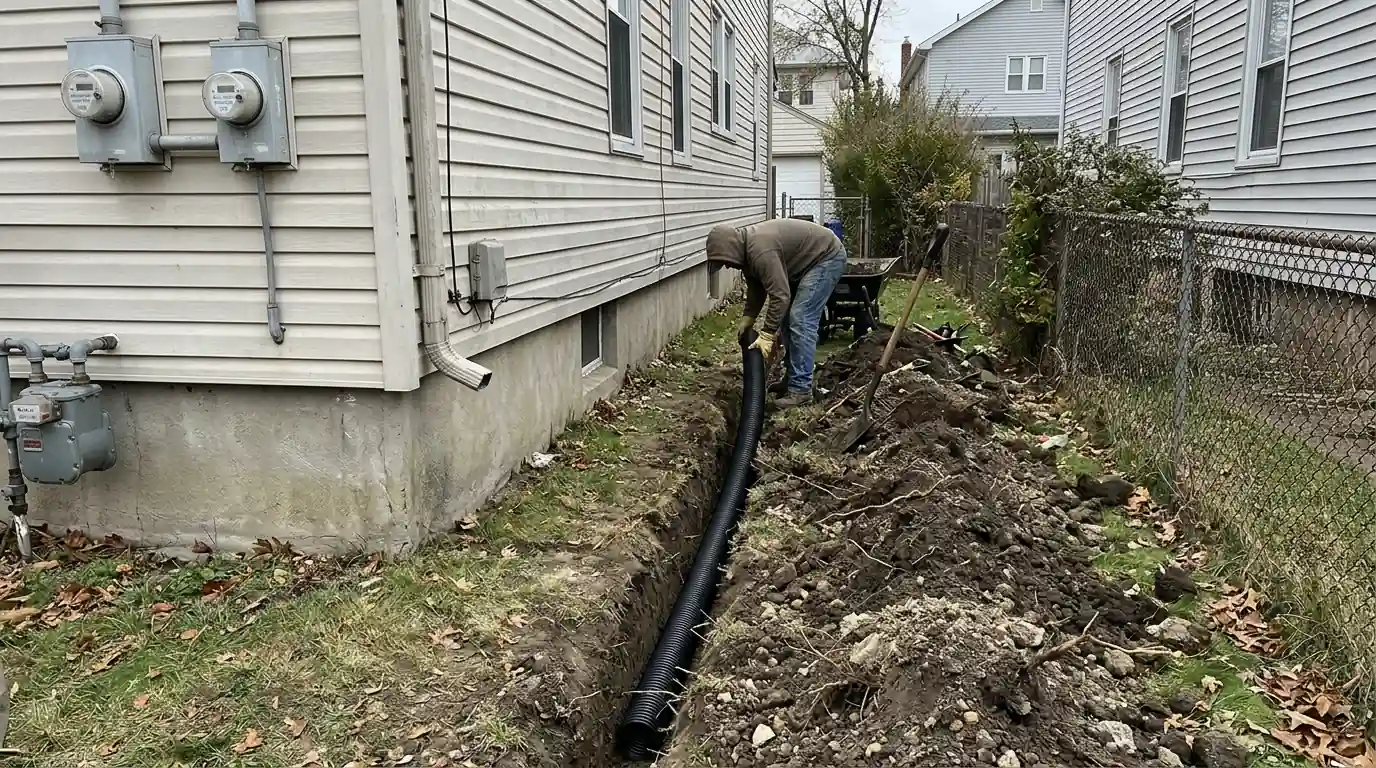
Our head office sits at 83 Willow St in Carteret, so basement and drainage work around town is close to home for our crew. We fix wall cracks, seal cove joints, install sump pumps, encapsulate crawl spaces and bury leader drains for one- and two-family houses. Call (201) 578-5199 any hour of the day or night and tell us what your basement is doing.
Most of the homes we see in Carteret are one- and two-family houses on side streets around Roosevelt Avenue. Many have poured concrete or block basements, and those walls leak in predictable places. The cove joint where the wall meets the floor lets water in when the soil outside is saturated. Tie-rod holes left by construction rust out and weep in neat rows. Vertical cracks open over winter as freeze-thaw cycles work on the concrete. None of these needs guesswork; each leaves its own pattern of stains for us to read, and we map them before talking about cost. Most owners find that reassuring.
Additions tell another story. Rear rooms and enclosed porches built over a crawl space instead of a full basement tend to be damp and musty, with bare soil under them and vents that pull in humid summer air. Moisture from that crawl space rises into the floors above. On the main house, a single injected crack repair or a sealed cove joint is often enough. When seepage runs the full length of the walls, we talk about a complete system rather than chasing one leak at a time. Small fixes come first when they are enough, and we say so plainly when they are.
Because our head office is right here at 83 Willow St, Carteret jobs rarely involve a long drive or a complicated schedule. That matters most on the nights you'd rather not think about, when a pump quits or water is spreading across a finished floor. We answer (201) 578-5199 around the clock, and when an emergency crew is free we can send one out the same night. For planned work, it means an easier time lining up an inspection, a follow-up visit or a quick look after the next big storm. Short trips also make it easy to recheck a repair after the first heavy rain.
Being local also means we know how these streets drain. We see which blocks hold water after a nor'easter and which yards stay soft for days. We bring that into every recommendation, whether that is a new sump pump with a check valve or a simple change to where a leader empties. Neighbors in Woodbridge and Perth Amboy are a short trip from here, and many of the same fixes apply, but the houses and soils change enough that each property gets its own look. That local knowledge shapes where a discharge line ends and how far a leader drain needs to run.
Based on the buildings here, these are the calls we expect from Carteret. Every other service on our list is available too.
Water on the basement floor after every hard rain usually means pressure from outside the wall, not a plumbing leak.
DetailsIn New Jersey, downspouts are called leaders, and most of them empty right beside the house.
DetailsA single crack running down a poured basement wall can soak a corner of the floor every time it rains.
DetailsIf water keeps showing up in the same corner of your basement after every heavy rain, a properly placed sump pump gives it somewhere to go.
DetailsIf the room over your rear addition smells musty or the floor feels cold all winter, the crawl space underneath is probably damp and open to outside.
DetailsA thin line of water creeping out where the floor meets the wall after a downpour is a cove joint leak.
DetailsIn Carteret the most overlooked source of basement water is the house itself. A pitched roof gathers rain into gutters, the gutters feed leaders, and too many leaders end with a short elbow pointing at the foundation. Each inch of rain on 1,000 square feet of roof is about 623 gallons, and it all lands in the same few spots. That concentrated water saturates the soil right where the cove joint and footing sit. Splash blocks help a little, but they rarely move water far enough. Extensions are a start, not a fix. It is the simplest problem to fix and one of the most common we find.
We tie leaders into underground leader drains that carry water well away from the house, or we clear and repair old buried lines that silted up years ago. A quick test with a hose shows where the water goes now. Inside the basement, a sealed vapor barrier for the crawl space under an addition handles the damp that the leaders were feeding. Fixing the water at its source often makes a later interior system smaller, or unnecessary altogether. We also make sure the buried outlet ends somewhere legal and won't soak a neighbor's yard, so the walls finally get a chance to dry.
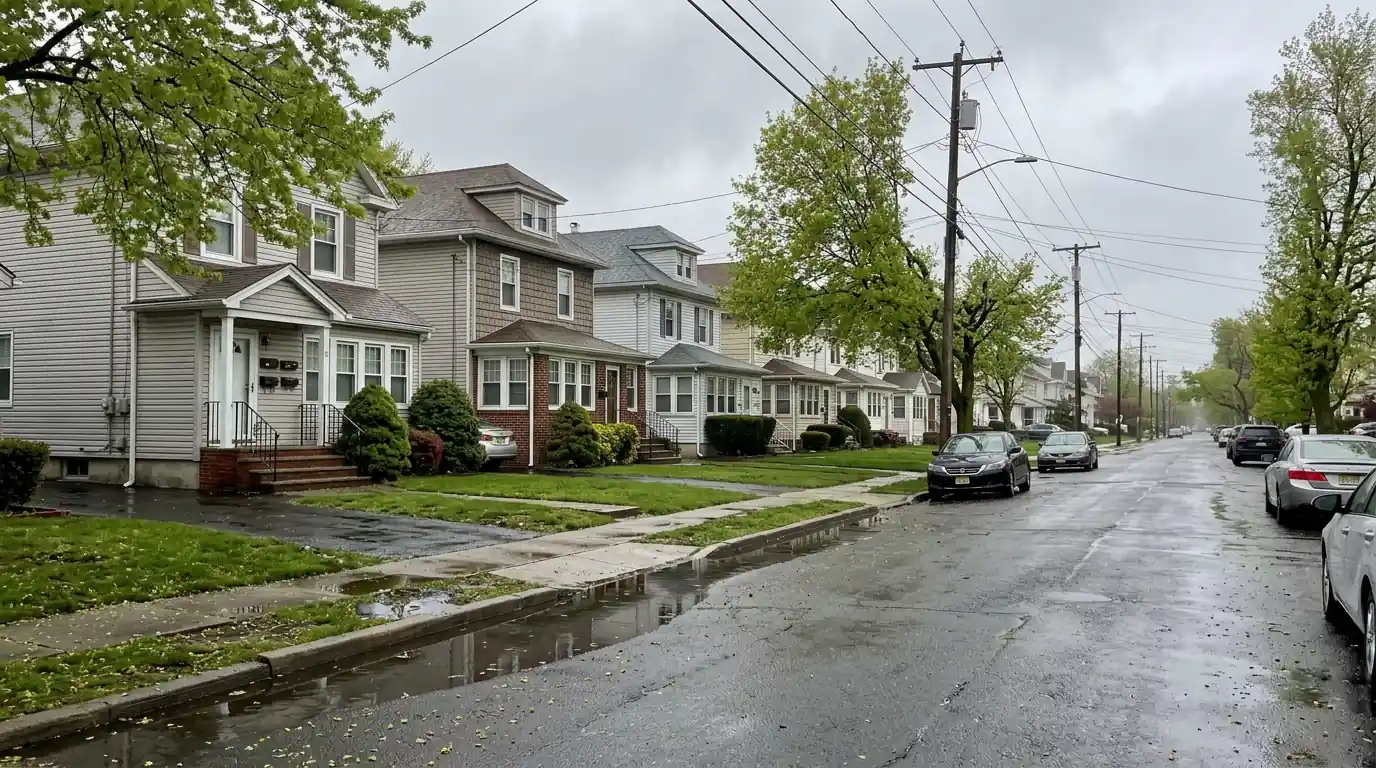
Our head office is at 83 Willow St, Carteret, NJ 07008. Our crews work all over Carteret, from the blocks around Roosevelt Avenue to the streets near Carteret Waterfront Park on the Arthur Kill. Calls go to (201) 578-5199 at any hour, and an emergency crew can head out the same night when one is available.
That line at the base of the wall is usually the cove joint, the seam where the poured wall meets the floor slab. When the soil outside is saturated, water pressure pushes moisture through that seam first. Sealing it from inside, or adding an interior drain that catches it, solves most cases. We also check where your leaders empty, since roof water often feeds the problem.
In most cases, yes. A bare soil crawl space lets ground moisture and humid outside air under your floors, which brings musty odors, damp insulation and soft subfloors. Encapsulation lays a sealed vapor barrier over the ground and walls and closes off the vents, often with a small dehumidifier. The rooms above usually feel drier soon after.
Call (201) 578-5199 any time. Tell us the address and what you're seeing, and we'll take it from there.