Flooded Basement Pump-Out
If your basement is under water after a storm or a sewer backup, the first job is keeping everyone safe and the second is getting the water out.
DetailsBergen County town
Hackensack's garden apartments and older frame houses near the Hackensack River sit on lower ground where storms push water into basements through drains, window wells and walls, sometimes all in the same night.
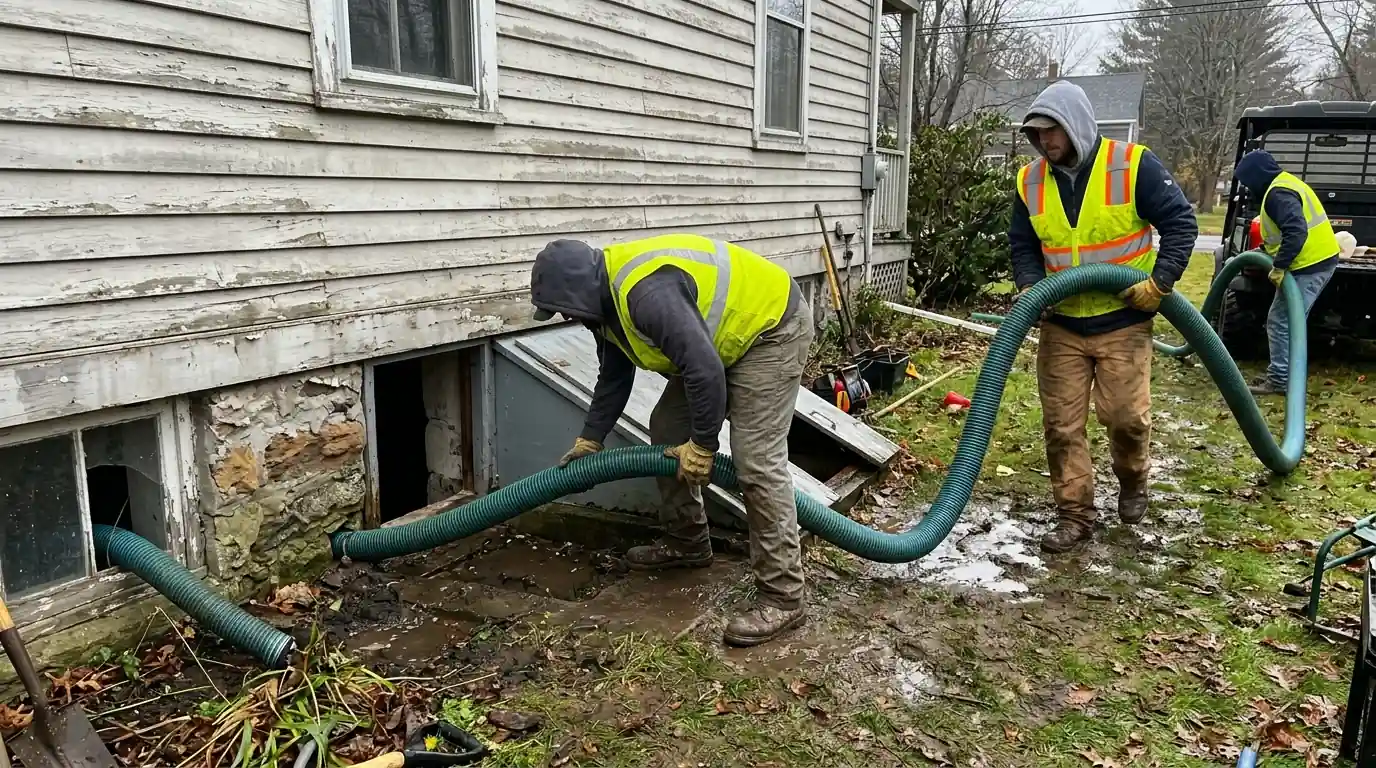
When basements flood in Hackensack, our crew pumps out the water, finds where it came in and fixes the cause, with sump pumps, backwater valves, interior drains and sealed window wells. We also work with garden apartment managers on building-wide protection. Call (201) 578-5199 at any hour; an emergency crew can come the same night when one is free.
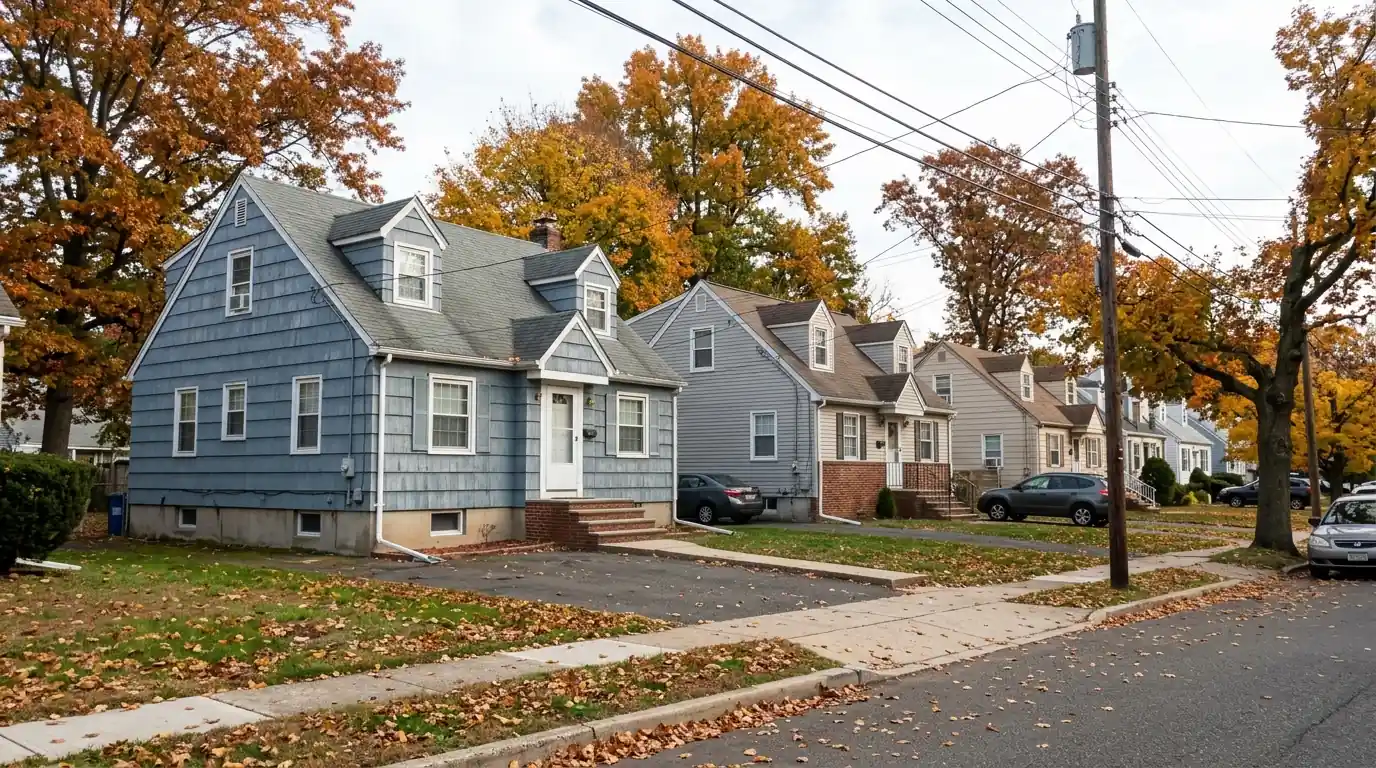
As the county seat of Bergen County, Hackensack has a busy Main Street, and the residential blocks around it hold a mix of garden apartment complexes and older frame houses. Garden apartments typically have basement units or storage and laundry rooms below grade, with long foundation walls and several window wells per building. Older frame houses often have block or stone foundations and floor drains that tie into the sewer. Both types share one weak point: when the ground is saturated, water enters at every low opening it can find. That list of openings is exactly where we start every inspection here. Nothing gets skipped.
Close to the Hackensack River, the ground sits lower and tends to hold more water. After a long rain the water table rises, and basements that stay dry most of the year start to seep at the cove joint and through cracks. A window well without a working drain fills and spills through the frame. A floor drain can push water back up if the sewer is overloaded. That combination is why one storm can bring water in from three directions, and why we check all of them before deciding on a fix. Sealing one path and missing the other two only moves the puddle.
When a basement is already under water, the first job is getting it out safely. Our crew checks that the power to the basement is off, then sets pumps and runs discharge hoses well away from the foundation. Once the floor is clear, we look for where the water came in, because pumping alone just resets the clock. Flooded basement pump-out calls often end with a plan: a new or repaired sump, a backwater valve, or a drain for the window wells. Our checklist for the days after a flood covers drying, cleanup and what to photograph. Wet carpet and drywall should come out quickly to limit mold.
For garden apartment complexes, we work through the property manager and look at the buildings as a group. Often the same failure repeats in every building: clogged window well drains, missing check valves on sump pumps, or leaders discharging at the foundation. Fixing them together is more efficient and protects every unit. We provide a written scope for each building, schedule access to units and storage rooms with management, and keep walkways and laundry areas clear while the work is in progress so residents can still get around. Buildings with the worst history get done first, so the most units are protected before the next storm season.
Based on the buildings here, these are the calls we expect from Hackensack. Every other service on our list is available too.
If your basement is under water after a storm or a sewer backup, the first job is keeping everyone safe and the second is getting the water out.
DetailsIf water keeps showing up in the same corner of your basement after every heavy rain, a properly placed sump pump gives it somewhere to go.
DetailsWhen a heavy storm sends dark, foul water up through your basement floor drain, the problem is the sewer, not groundwater.
DetailsWhen groundwater keeps finding its way in at the base of your walls, coating the inside won't hold it back.
DetailsWhen a window well fills in a storm, the basement window becomes the side of a bucket, and water finds the frame.
DetailsA basement can be free of leaks and still smell musty, sweat on the pipes and grow mildew on stored boxes.
DetailsFEMA flood zones cover parts of the Hackensack River side, and owners there often ask what they can do beyond insurance. Flood insurance and coverage questions belong with your own agent, and we leave policy advice to them. What we can do is reduce how much water reaches the basement and how quickly it leaves. That means sealing the paths water uses, adding pumps with battery backups, and making sure sewer water can't flow back in through the floor drain during a heavy storm. Each step is sized to the house, so a small basement isn't sold a system built for a large building.
A backwater valve on the sewer line stops reverse flow through floor drains, and it requires the right permit, which we coordinate. A sump pump with a battery backup keeps water down when storms knock out power. Sealed window wells with working drains close another common path. None of these can stop a true flood from rising over the ground, but together they handle the much more frequent storms that fill basements on the river side of town. We also work in Secaucus, which faces similar conditions. A dehumidifier afterward helps the walls and floor dry out fully between storms. We size it to the space.
Stay out of standing water if outlets or appliances are submerged, and shut off power to the basement only if you can reach the panel safely. Move what you can to higher ground, take photos for your records, and call (201) 578-5199. When an emergency crew is free we can come the same night to pump out and find the cause.
Garden apartment buildings often have several window wells along long foundation walls, and their small drains clog with leaves and soil over time. In heavy rain each well fills and water seeps through the window frame or the wall below. Clearing or installing drains, adding clean gravel and fitting covers usually stops it. We often repair every well on a building at once.
A backwater valve closes when sewer water tries to flow back into your house, so it blocks backups through floor drains and basement fixtures. It won't stop groundwater or surface flooding, which need other fixes. Installation involves the sewer line, so a permit is usually needed, and we tell you what's required and coordinate it.
Call (201) 578-5199 any time. Tell us the address and what you're seeing, and we'll take it from there.