Crawl Space Encapsulation
If the room over your rear addition smells musty or the floor feels cold all winter, the crawl space underneath is probably damp and open to outside.
DetailsNew Jersey county
Middlesex County spans suburban capes and split-levels in Woodbridge and older frame and brick houses in Carteret and Perth Amboy, and the water problems shift from crawl space humidity to wind-driven wall leaks as you move toward the bay.
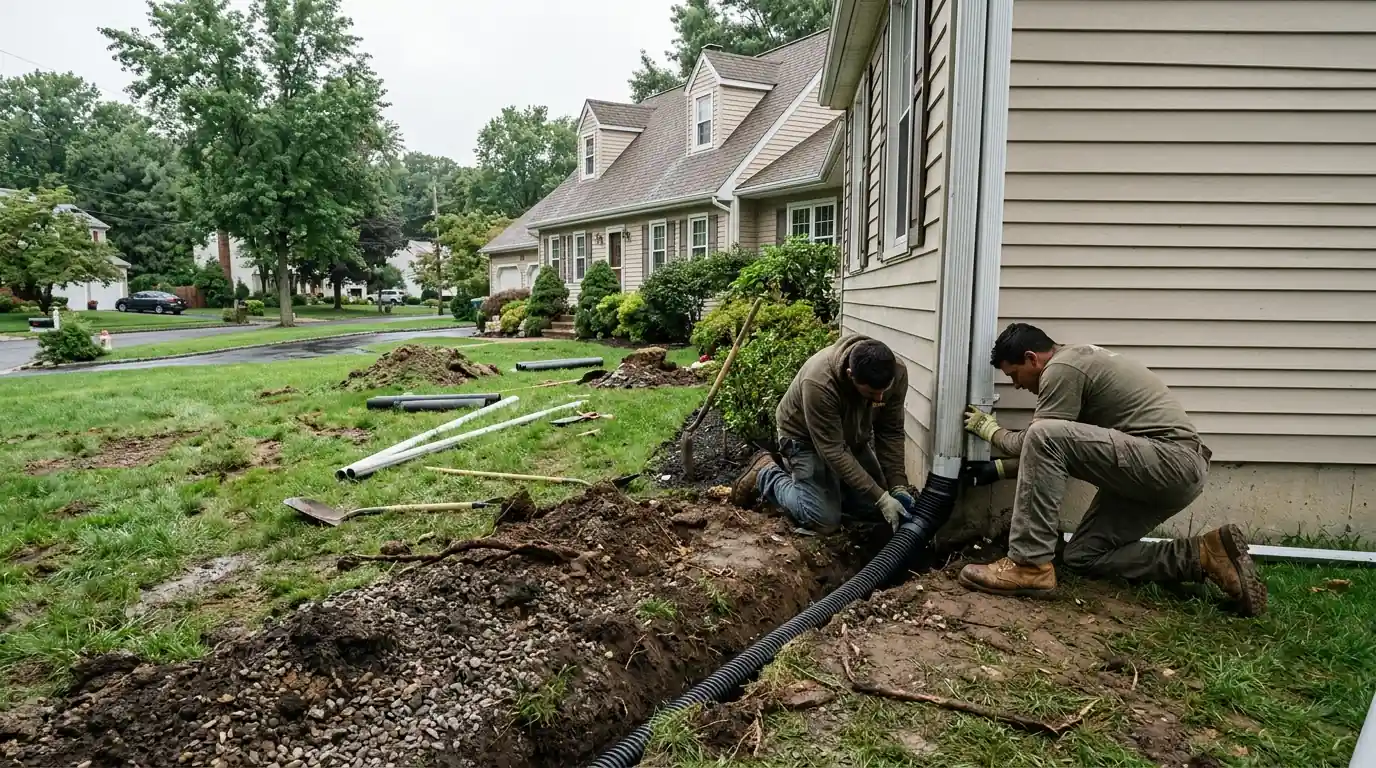
Across Middlesex County, our crew seals crawl spaces, waterproofs basements, buries leader drains and fixes chimney and skylight leaks on pitched-roof homes, while older city houses get repointing and foundation repairs. We look at the whole house, from gutters to basement floor, before recommending anything. Call (201) 578-5199 any hour and describe the leak; we'll tell you what's likely behind it.
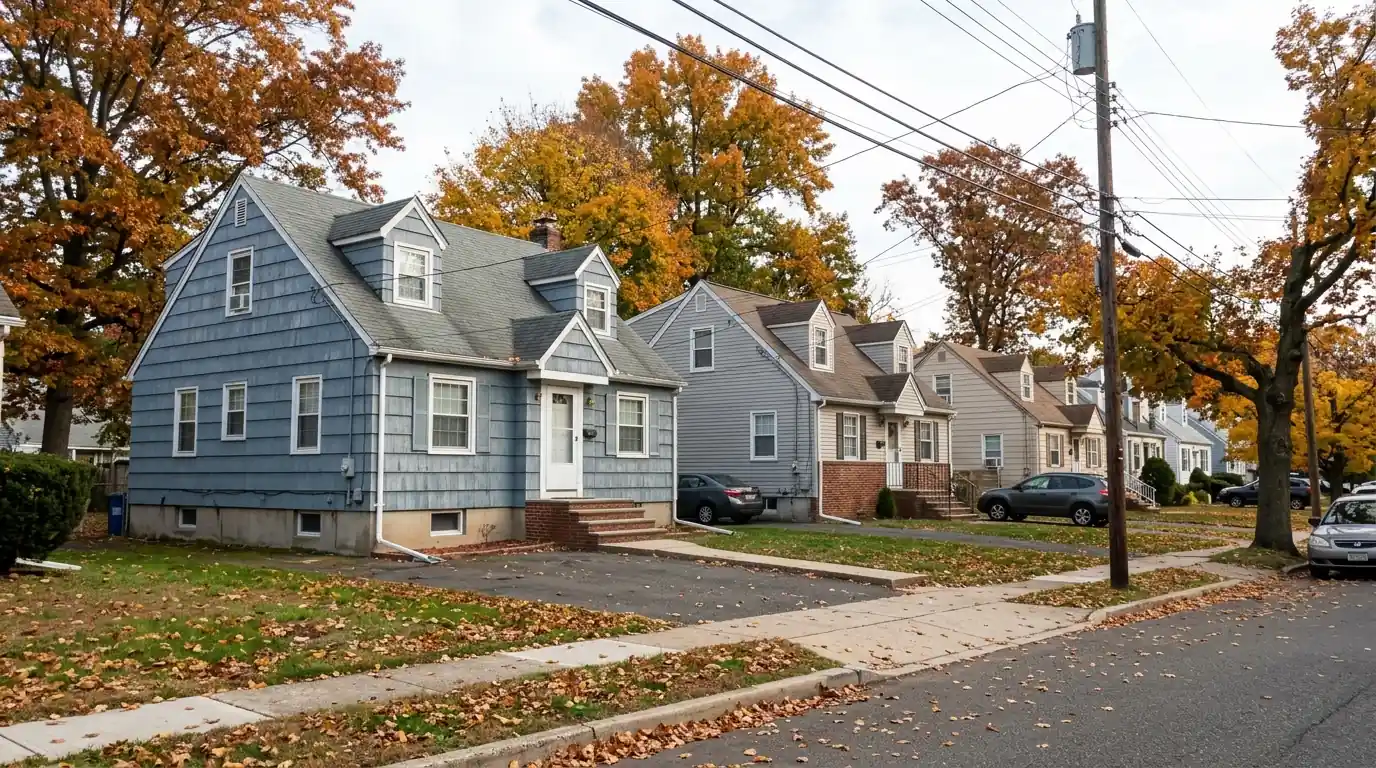
New Brunswick is the county seat, but our Middlesex County work centers on the eastern towns closest to the Arthur Kill and Raritan Bay. In Woodbridge Township, split-levels, colonials and capes with pitched shingle roofs fill the residential streets, many with crawl spaces under additions or lower wings. Carteret's side streets are lined with one- and two-family houses. Perth Amboy has older frame and brick houses near the bay. These are very different buildings, and they get wet in very different ways. That's why our first questions on the phone are about the kind of house you own and when the water shows up.
The suburban houses usually suffer from moisture rather than flooding. A crawl space with a dirt floor and open vents pulls in humid summer air, which condenses on cool framing and leaves the rooms above smelling musty. Basements seep at the cove joint when leaders dump water beside the foundation. The older houses closer to the water face harder weather: wind-driven rain off the bay pushes into worn mortar and window joints, and stone or brick foundations weep where the mortar has washed out. One county, two very different sets of fixes. Knowing which set applies is half the work. We sort that out on the first visit.
On suburban lots, we usually have room to park in the driveway and work around the whole house. That lets us start outside, checking gutters, leaders, grade and window wells before going in. Excavation along a wall is possible when needed, and drainage lines can run across the yard to a safe outlet. Inside, we measure basement and crawl space humidity, since summer readings above 60 percent are common and a target of roughly 45 to 55 percent keeps odors and mold growth down. Those readings decide whether a dehumidifier belongs in the plan, and how large it should be. Bigger isn't always better.
Older houses on tighter streets, especially in Perth Amboy, are a different setup. Masonry work often needs ladders or scaffolding over the sidewalk, with protection for pedestrians and neighboring walls. Basement work happens from inside, since there's little room to dig. In both settings, we explain what we found, show photos of the problem areas and give a clear scope. A sealed crawl space for a suburban addition and a repointed foundation for a bay-side house are both common outcomes of that first visit. If the fix is small, we say so, and if it can wait until after the next storm, we say that too.
Based on the buildings here, these are the calls we expect from Middlesex County. Every other service on our list is available too.
If the room over your rear addition smells musty or the floor feels cold all winter, the crawl space underneath is probably damp and open to outside.
DetailsWater on the basement floor after every hard rain usually means pressure from outside the wall, not a plumbing leak.
DetailsIn New Jersey, downspouts are called leaders, and most of them empty right beside the house.
DetailsWater is running down the wall beside the chimney or staining the ceiling around it.
DetailsRain driven sideways by a nor'easter finds every open mortar joint on a brick wall, then shows up as stained plaster, peeling paint or a damp closet.
DetailsPitched shingle roofs shed water well, but they send it all to a few places: the gutters, the leaders and the ground right beside the house. When a leader ends at the foundation, that roof water saturates the soil exactly where the basement is most vulnerable. One inch of rain on 1,000 square feet of roof is about 623 gallons. Burying that water in underground leader drains and carrying it away from the house is one of the most effective basement fixes we install in the suburbs. Clean gutters with properly sized leaders make that buried line work as intended. We flush old lines before reusing them.
The roof itself leaks at its penetrations rather than its field. Chimneys lose their flashing seal as mortar cracks and metal pulls away, and water runs down inside the chimney chase into attic and ceilings. Skylights leak at their curbs and flashing as sealants age. We repair chimney leaks and skylight flashing, since those leaks come down to water getting past a joint. Cracked chimney crowns and loose mortar joints get repointed at the same visit, because flashing can't hold against crumbling masonry. A ceiling stain near a chimney is often the first sign homeowners notice. Fixing them together with the gutters and leaders keeps the whole house drier.
We also take calls from other Middlesex County towns not listed here. Call (201) 578-5199 to check.
Many were built with crawl spaces under additions or lower wings that have dirt floors and open vents. In summer, humid outside air flows in and condenses on the cooler framing and ductwork. That moisture leads to musty smells, damp insulation and sometimes mold. Sealing the crawl space with a vapor barrier, closing the vents and adding a dehumidifier usually solves it.
Yes. Those leaks happen at flashing and seals, which is waterproofing work. We repair or replace chimney flashing, repoint cracked chimney crowns and mortar, and reseal or reflash skylight curbs. We also check the gutters and leaders on the same visit, since overflow near a chimney often gets blamed on the flashing.
Roof water that ends up beside the foundation. Leaders that empty a few inches from the house, clogged gutters that overflow, and soil that slopes toward the walls account for a large share of the wet basements we see. Burying the leaders, cleaning the gutters and fixing the grade often stops the water before any interior work is needed.
Call (201) 578-5199 any time. Tell us the address and what you're seeing, and we'll take it from there.