Sump Pump Repair & Battery Backup
If your sump pump is humming without moving water, cycling every few seconds or sitting silent while the pit fills, call us now.
DetailsHudson County town
Bayonne sits on a narrow peninsula with Newark Bay on one side and Upper New York Bay on the other, so its one- and two-family houses get wet basements from below and rain driven sideways into their walls.
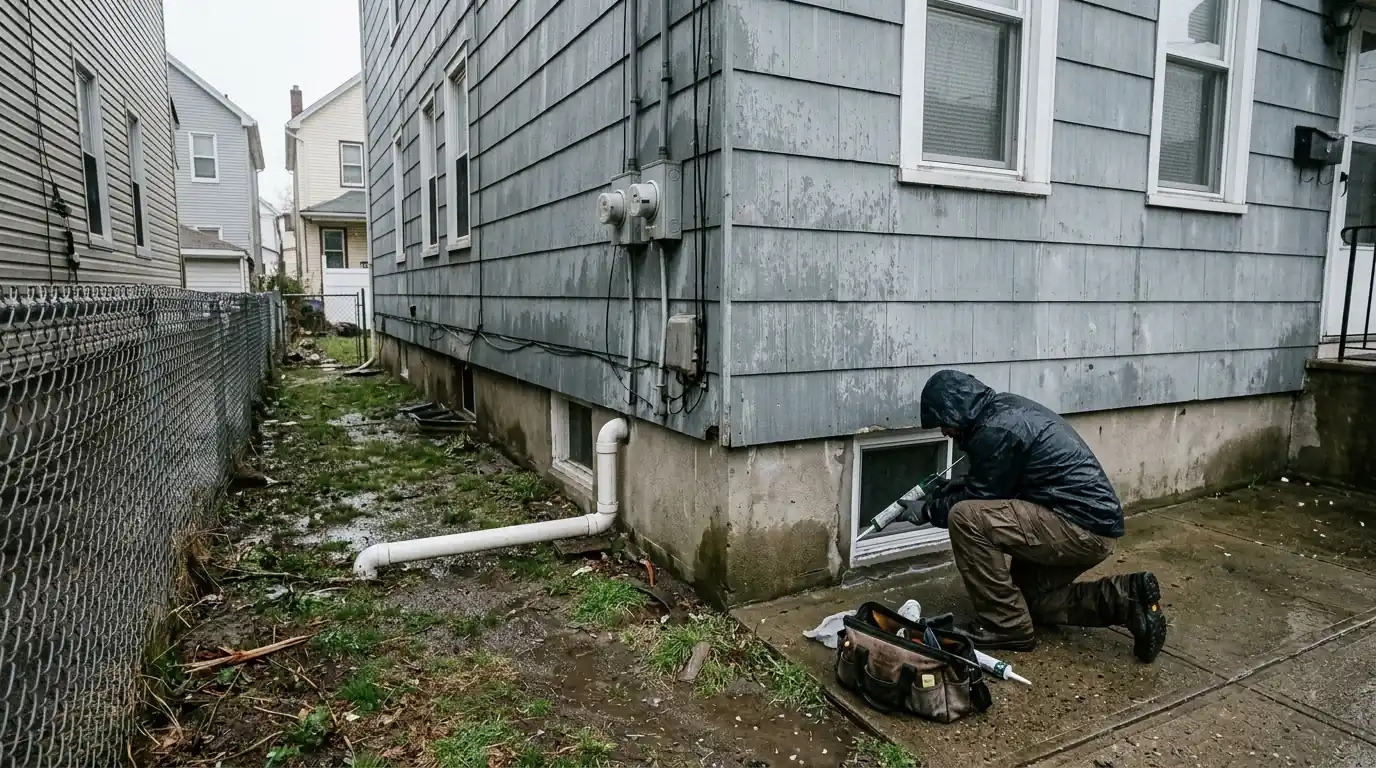
If your Bayonne basement is wet or the sump keeps cycling, call (201) 578-5199, day or night. We test the pump, check valve and discharge, add a battery backup, and trace leaks that start higher up, in siding seams, brick joints and window perimeters soaked by wind off the bays. Then we fix the source, not just the puddle.
Most of Bayonne is one- and two-family houses lined up along blocks running off Broadway, and almost all of them have a basement that someone has tried to finish at some point. Being a peninsula between Newark Bay and Upper New York Bay means low ground close to the water in many spots, and low ground near the bays tends to carry a high water table. After a long rain, that water presses up through the slab and in at the cove joint, where the wall meets the floor. A sump that ran twice a year starts running every hour.
The other half of the story starts above grade. Wind off both bays drives rain sideways into siding seams, brick joints and the gaps around basement windows and doors. That water runs down inside the wall and shows up in the basement, where it gets blamed on groundwater. Salt air shortens the life of metal flashing and old caulk, so those gaps open faster here than they do inland. When we walk a Bayonne house, we look at the outside of the wall before we decide anything about the floor, because a wet basement can start at a second-floor window.
We start at the sump, because it tells us how much water the house is fighting. We pull the cover, check the float, run the pump, and look at the check valve and the discharge line. A discharge that empties next to the foundation simply sends the water back around for another trip, so we extend it to daylight or a drain where the yard allows. Storms here knock out power often enough that a pump without a battery backup is half a system. Our sump pump repair and battery backup work covers all of that in one visit, and our owner notes on pumps and backups explain the upkeep.
Then we go outside. On frame houses we check where siding meets the foundation and where trim, window sills and door thresholds let water in. On brick fronts we look for open joints and cracked sills. Many Bayonne lots are narrow, with a driveway on one side and a neighbor's wall a few feet away on the other, so we plan ladders and staging around shared access and keep the walk clear. If the exterior is the source, the fix is perimeter sealing at windows and doors or wall treatment, not a bigger pump.
Based on the buildings here, these are the calls we expect from Bayonne. Every other service on our list is available too.
If your sump pump is humming without moving water, cycling every few seconds or sitting silent while the pit fills, call us now.
DetailsIf water keeps showing up in the same corner of your basement after every heavy rain, a properly placed sump pump gives it somewhere to go.
DetailsRain is getting through the brick on an upper floor, usually after a storm with strong wind behind it.
DetailsWhen the wall below a window stays damp after storms, the sealant joint around the frame has usually let go, and rain is running behind the trim.
DetailsA basement can be free of leaks and still smell musty, sweat on the pipes and grow mildew on stored boxes.
DetailsA thin line of water creeping out where the floor meets the wall after a downpour is a cove joint leak.
DetailsInland, a well-sealed window perimeter might go many seasons before it needs attention. Close to the bays, salt in the air and repeated soaking in wind-driven rain wear down sealant, corrode metal flashing and loosen mortar faster. Freeze-thaw cycles in winter finish the job, prying open any joint that took on water. The result on Bayonne houses is a slow leak that shows up as efflorescence, the white crust on basement walls, or as a damp smell behind finished drywall. Those are early signals worth acting on before the wall framing or the carpet pays for it.
For brick and block, we repoint failed joints and apply a breathable silane or siloxane sealer that sheds water without trapping moisture inside the masonry. For frame walls, we reseal penetrations and reset flashing at the sill and foundation line. On the basement side, a dehumidifier holding roughly 45 to 55 percent humidity keeps the space from turning musty in summer. If you want to know where the money goes before you call, our price guide for waterproofing work lays out typical ranges and what moves them. Our crews reach Bayonne from 218 Newark Avenue, the downtown Jersey City desk where Hudson County calls come in.
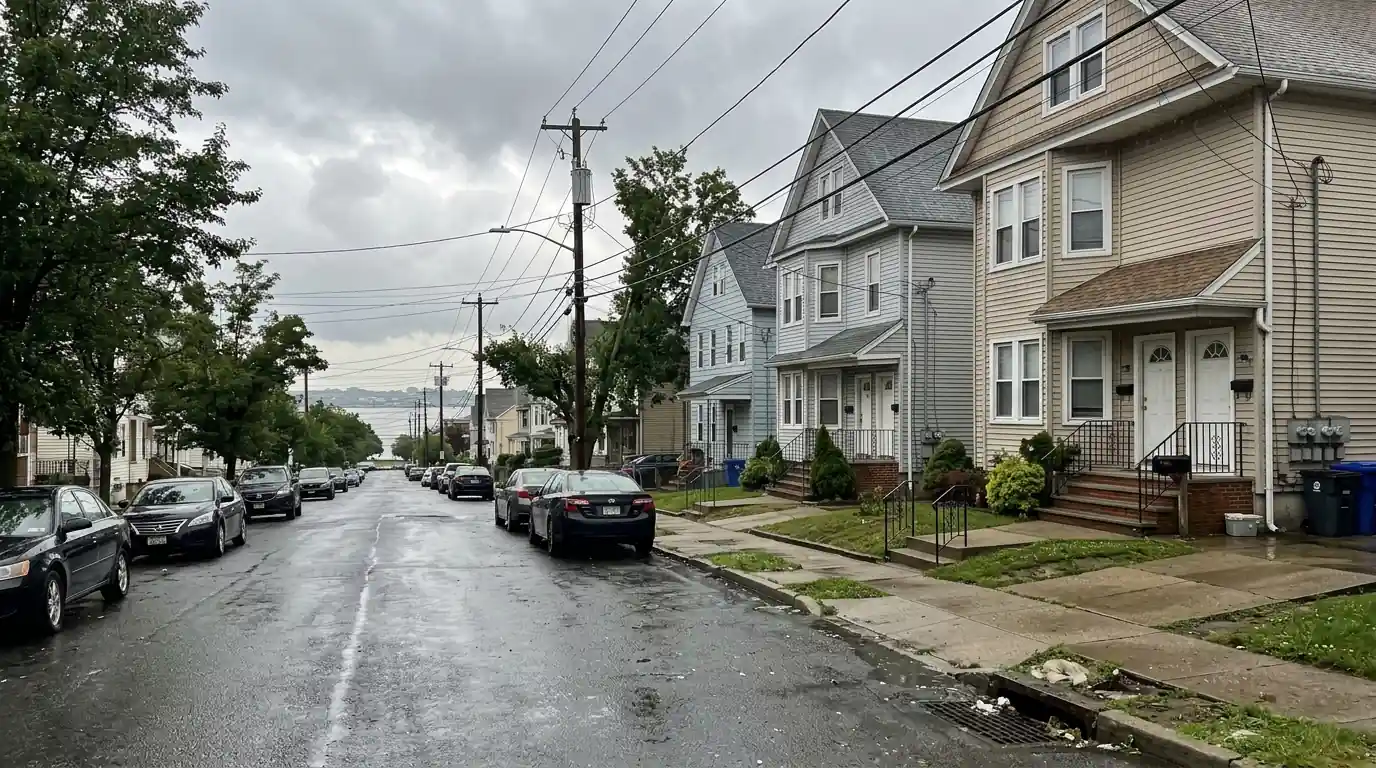
That pattern usually points above grade, not to groundwater. Wind off Newark Bay and Upper New York Bay drives rain into siding seams, brick joints and the gaps around basement windows, and the water runs down inside the wall. We check the exterior first, then reseal or treat the wall. A bigger sump pump will not fix a leak that starts at a window.
We suggest a quick test each spring and fall: lift the float, or pour water into the basin, and watch it pump down and shut off. Check that the discharge carries water well away from the foundation. If your pump has no battery backup, that is worth adding, since storms here can take the power out right when the pump is needed most.
Only if the mortar joints are sound. A silane or siloxane sealer sheds rain from brick that is in good shape, but it cannot bridge open or crumbling joints. On older Bayonne fronts we often repoint the worst areas first, then seal. That combination holds up to the salt air and wind far better than sealer alone.
Call (201) 578-5199 any time. Tell us the address and what you're seeing, and we'll take it from there.