Key points
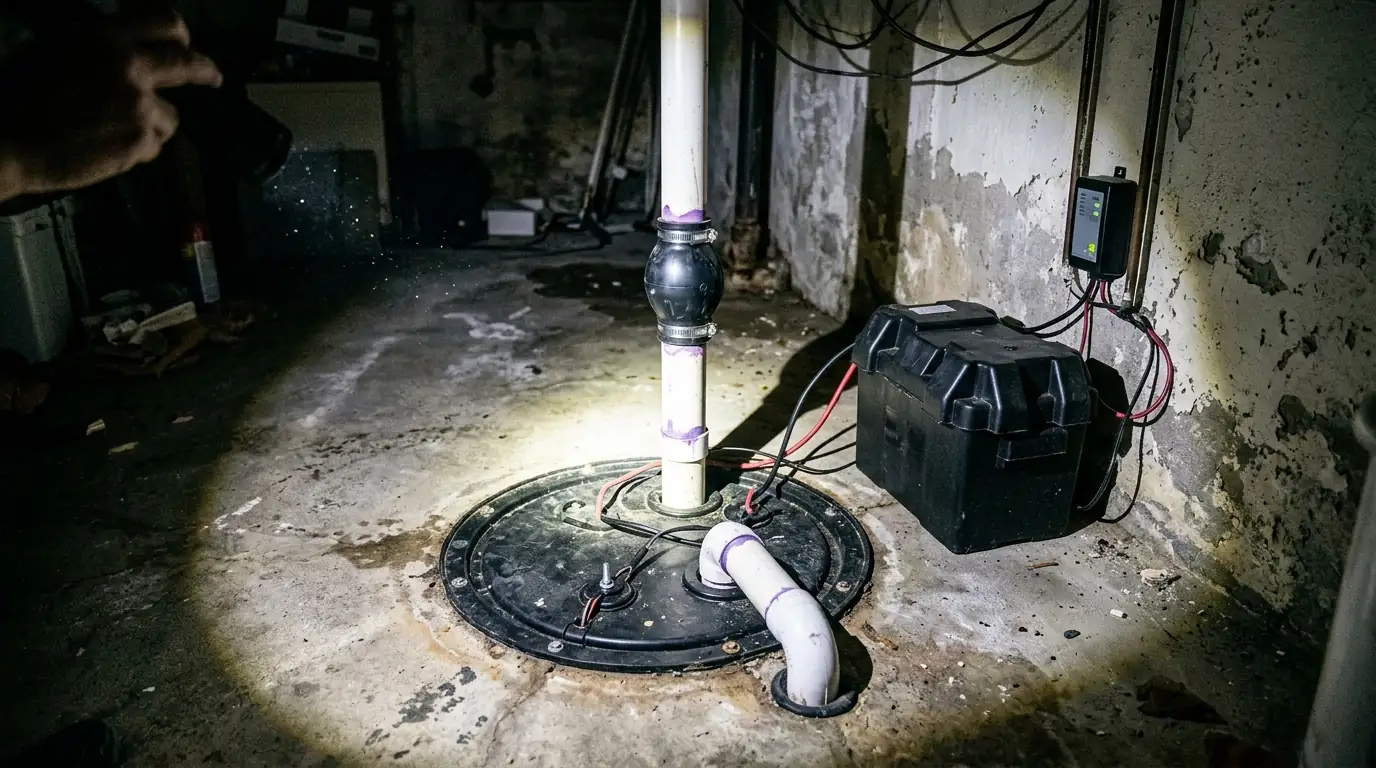
- A sump system is a basin, a pump, a check valve and a discharge line, and each part can fail.
- Test the pump with a bucket of water before every big storm.
- Storms knock out power, so a pump without a battery backup stops when you need it most.
- Discharge water has to land well away from the foundation.
How does a sump system actually work?
A sump system is simple once you see the parts. Drain tile or an interior perimeter drain collects groundwater from around the foundation and carries it to a sump basin, a pit sunk below the basement floor. As the basin fills, a float rises and switches on the pump, which pushes water up through a discharge pipe and out of the building. When the level drops, the float falls and the pump shuts off. In a dry spell it may not run for weeks; in a long rain on filled ground near the river it can cycle every few minutes.
Two small parts matter more than owners expect. The check valve sits on the discharge pipe just above the pump and stops the water in the pipe from falling back into the basin when the pump shuts off. Without it, the pump moves the same water over and over, which shortens its life. The basin lid keeps debris out and cuts down on humidity and odor in the basement. If either one is missing, it's worth fixing even on a pump that seems to work fine.
Most basement pumps are submersible, meaning the motor sits in the water inside the basin and is sealed against it. Older setups sometimes use a pedestal pump, with the motor perched on a column above the pit. Pedestal pumps are easy to reach but louder, and they leave the basin open more often. Either style works when it's sized right and maintained, though submersible pumps are the usual choice for a finished basement or a basin with a sealed lid.
What are the signs a sump pump is failing?
Pumps rarely die without warning. Most give signs for weeks or months before they quit, and the trick is noticing them on a dry day instead of in the middle of a storm. Lift the lid and listen a few times a year, and look again after the first heavy rain of each season, when the pump has its hardest work. Any of the following deserves attention before the next big forecast.
A hard-cycling pump is the most common problem we find, and it's often one of the cheapest to fix. A failed check valve, a float switch rubbing against the basin wall or a basin too small for the inflow will all make a pump short-cycle, and left alone that cycling burns out the motor. Sump pump repair covers these parts, and most repairs land between $245 and $980 depending on what's worn.
- The pump runs constantly, even when the basin is nearly empty.
- It switches on and off every few seconds.
- Grinding, rattling or loud humming points to a worn bearing or jammed impeller.
- Water sits above the float level and the pump doesn't start.
- Rust, an oily film or debris collects in the basin.
- The pump is old enough that nobody remembers when it went in.
How should you test the pump before a storm?
Testing takes about five minutes and is worth doing before any nor'easter, ahead of the summer thunderstorm season and again at the start of spring. Do it while the power is on and the basin is easy to see, and keep a flashlight handy so you can watch the float move. Write the date on a strip of tape on the lid, so the next person in the basement knows when it was last checked.
If the pump hesitates, hums without moving water or won't shut off, don't wait for the rain to prove the point. A stuck float or a clogged intake can sometimes be cleared on the spot, but a motor that struggles in a bucket test will struggle more in a storm. Those are the calls we'd much rather take on a dry weekday than at midnight with water at the top of the basin.
- Confirm the pump is plugged into a working outlet, not an extension cord.
- Slowly pour a five-gallon bucket of water into the basin.
- Watch the float rise and the pump start before the water nears the rim.
- Check that the basin drains down and the pump shuts off cleanly.
- Step outside and confirm water is leaving the discharge.
- If you have a battery backup, unplug the main pump and repeat the test.
Where should the discharge water go?
A sump pump only moves water; where it lands decides whether it comes back. A discharge that empties onto the ground beside the house, or into a window well, sends the same water straight back down the foundation wall into the drain tile, and the pump runs in a loop. The outlet should end well away from the foundation on ground that slopes away, or tie into a drainage line built to carry it off. On tight Jersey City lots that can take some planning, since a rear yard may be only a few feet deep.
Winter adds a second problem. A discharge line lying on the surface can freeze in a cold snap, and a frozen line means the pump is running against a blockage. We slope lines so they drain fully between cycles, keep exposed runs short and make sure snow can't bury the outlet. Where the water may legally go is a local question too, and it's something we settle with the owner before the pump is set.
Some older buildings in the city have a sump that empties into a laundry sink or straight into the building sewer. Those setups tend to cause trouble on a combined sewer, because the sump discharge and the sewer backup end up fighting each other during the same storm. When we find one, we explain the options for rerouting the discharge outside and point out anything that raises a code question, so the fix can be planned properly instead of improvised during a flood.
Why does a battery backup matter so much here?
The storms that fill a sump basin fastest are the same storms that knock out power. A nor'easter with hours of wind-driven rain, or a summer thunderstorm that drops a great deal of water in an afternoon, can take down lines just as the groundwater peaks. When the remnants of Ida came through north Jersey in 2021, many basements flooded within hours. A primary pump without power is just a weight sitting at the bottom of a hole.
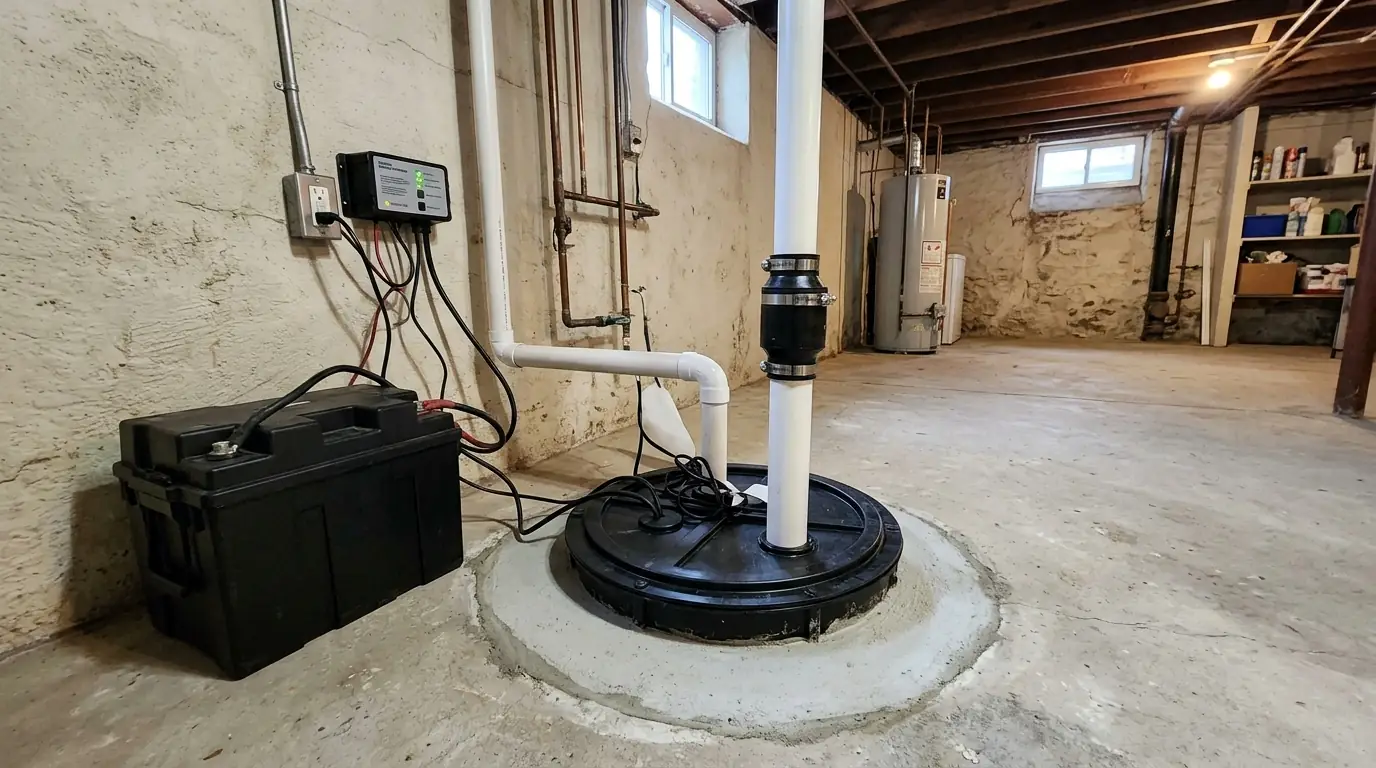
A battery backup is a second pump on its own check valve, wired to a deep-cycle battery and a charger that keeps it topped up. It sits slightly higher in the basin, so it starts only if the main pump fails or loses power, and many units sound an alarm when they kick on. Batteries wear out after a few years and need checking along with the pump. A backup typically runs $1,050 to $2,140 installed, depending on the unit, the battery and how much piping has to change.
How big a pump does a basement need?
Sizing comes down to how much water reaches the basin in the worst storms, how high the pump has to lift it and how far it has to push it. Many homes run a pump in the one-third to one-half horsepower range, but horsepower alone isn't the answer. A pump that's too small falls behind in heavy rain, while one that's too big empties a small basin in seconds and short-cycles. Basin size, the lift to the outlet and the length of pipe matter as much as the motor.
On a basement with heavy groundwater, such as a rowhouse on filled ground downtown, we watch how fast the existing basin refills during rain before choosing a pump. Sometimes a larger basin or a second pump is the better answer. Starting from scratch, sump pump installation typically lands between $1,190 and $2,780. If the basement also needs drainage feeding the pit, our interior versus exterior waterproofing guide lays out the options. We answer (201) 578-5199 day and night, storm or no storm.
Owner Guides Editor at Waterproofing Services Carteret. Writes the owner guides from the questions our crews hear in Jersey City basements and on its roofs every week.