Foundation Crack Repair
A single crack running down a poured basement wall can soak a corner of the floor every time it rains.
DetailsHudson County town
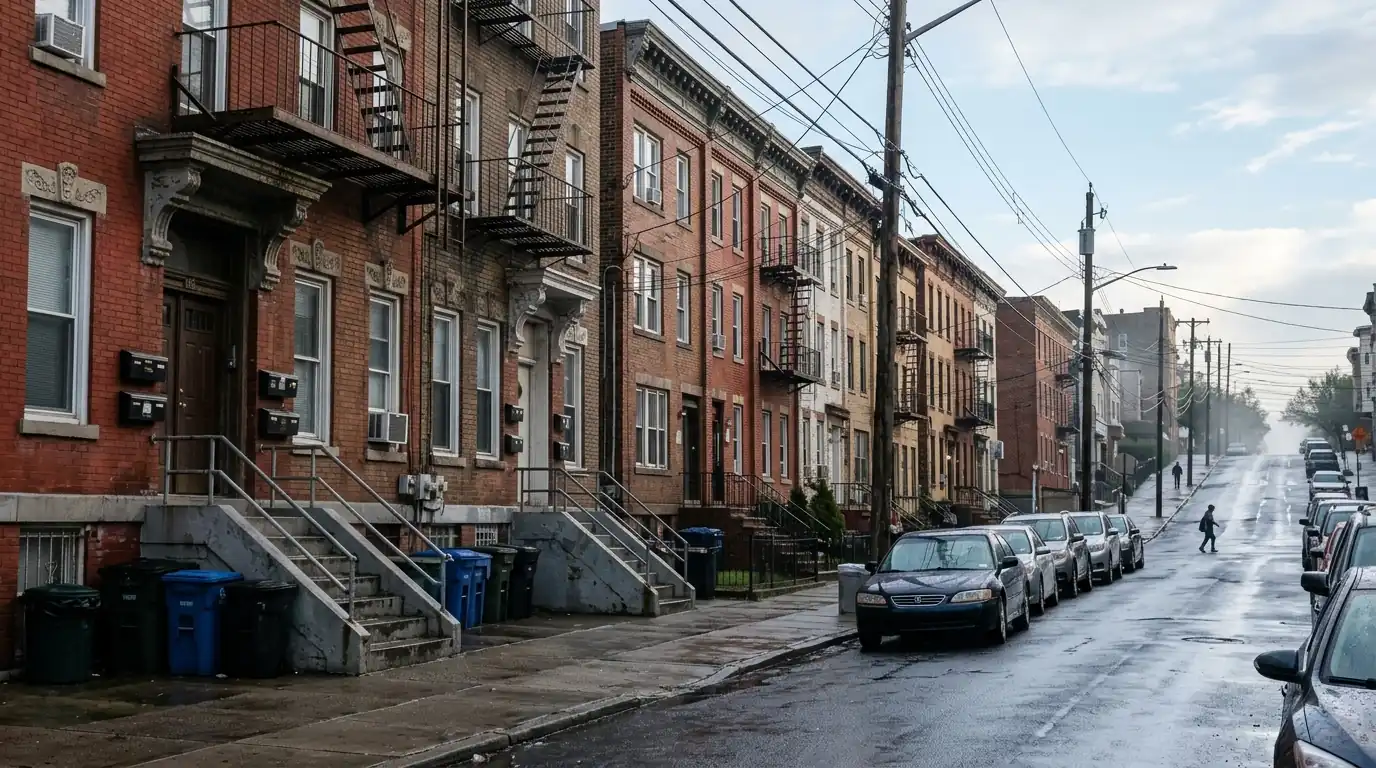
Union City crowds attached two- and three-family houses and walk-ups onto the Palisades ridge, where rock sits just below the soil. Water slides along that rock and slips through foundation cracks, and that is where we stop it.
If water is seeping through a crack or along the base of a wall in Union City, call (201) 578-5199 around the clock. Our technicians work out of the Jersey City office and find where water is traveling along the rock and entering the wall. Most cracks are sealed with polyurethane or epoxy injection from inside, and steady seepage at the floor line goes to an interior drain and sump.
Union City is one of the most densely populated cities in the country, and almost all of it sits on the Palisades ridge. That matters for basements. Instead of a high water table rising from below, foundations here usually deal with water that runs downhill along the rock just under the soil. When that water meets a basement wall, it hunts for the easiest opening: a shrinkage crack, a tie-rod hole in poured concrete, or the seam where the wall meets the slab. You'll see it as a wet stripe down one wall or a puddle along one side of the floor.
The attached houses and walk-ups off Bergenline Avenue make the pattern trickier. Rows share foundation walls, and a crack on your side may carry water that started under the building uphill. Some cellars were cut partly into the ridge, so one wall is rough ledge with water weeping across its face after every storm. We don't treat that as something to hide behind paint. Rock seepage needs to be collected and carried to a pump, while a true crack in a concrete or block wall can usually be sealed shut right where it is.
For a single crack in a poured wall, injection crack repair is usually the cleanest answer. We clean the crack, set ports along its length, and pump in expanding polyurethane for an actively leaking crack or structural epoxy where the wall also needs bonding. The work happens entirely from inside, which suits Union City because there is rarely room outside to dig: houses touch, stoops meet the sidewalk, and alternate-side parking leaves little space to stage equipment. Most single-crack repairs wrap up in one visit without opening the floor.
Ledge and rubble walls call for a different plan. We cut a narrow channel in the slab along the wet wall, set a perforated pipe in clean stone, and hang a dimple membrane against the rock face so seepage runs down behind it into the channel and over to a sump basin. That approach, an interior drain system, accepts that the rock will keep weeping and simply gives the water a route out. In a walk-up, we coordinate access with the owner or superintendent so tenants on the lower floor know when the slab saw will be running.
Based on the buildings here, these are the calls we expect from Union City. Every other service on our list is available too.
A single crack running down a poured basement wall can soak a corner of the floor every time it rains.
DetailsWhen groundwater keeps finding its way in at the base of your walls, coating the inside won't hold it back.
DetailsA thin line of water creeping out where the floor meets the wall after a downpour is a cove joint leak.
DetailsIf water keeps showing up in the same corner of your basement after every heavy rain, a properly placed sump pump gives it somewhere to go.
DetailsIn New Jersey, downspouts are called leaders, and most of them empty right beside the house.
DetailsA basement can be free of leaks and still smell musty, sweat on the pipes and grow mildew on stored boxes.
DetailsOn a ridge, the slope of the street decides a lot. A house on the downhill side of a block gathers not just its own roof water but runoff from the lots above it, and a leader that empties onto a shared alley adds even more. Before we price interior work, we walk the outside to see where gutters discharge and which way the sidewalk pitches. Sometimes routing a downspout into an underground leader drain takes enough load off the wall that a crack repair holds for good instead of becoming one of several leaks in a row.
Freeze-thaw winters add their own pressure. Water trapped in a hairline crack freezes, expands and opens the crack a little wider each season, which is why a damp line you ignored for years can suddenly run during a March thaw. Catching cracks early keeps injection repairs small next to the price of a full perimeter system. If you're not sure how big the problem really is, our guide to typical waterproofing prices lays out the ranges, and a technician can tell you which repair your wall actually needs after looking at it.

Most vertical and diagonal hairline cracks in poured walls are shrinkage cracks that leak but don't threaten the structure. Warning signs are cracks wider at one end, horizontal cracks, or a wall that bows inward. We measure and look at the pattern. Leaking shrinkage cracks get polyurethane injection; cracks with movement may need epoxy, wall anchors or carbon fiber straps, and we explain which before work starts.
Sealing bare rock rarely works for long, because water moving along the ledge will push out somewhere else. The reliable fix is to manage it: a membrane against the rock face, a drain channel at the base, and a sump to carry the water out. The wall stays damp behind the membrane, but your floor and storage stay dry.
Yes. Injection and interior drain work happen from inside the basement, so tenants upstairs are rarely affected beyond some noise while the slab is cut. We set the schedule with the owner or super, keep dust contained, and leave hallways clear. Most single-crack repairs take part of a day; a drain along one wall takes longer, and we give you a realistic window up front.
Call (201) 578-5199 any time. Tell us the address and what you're seeing, and we'll take it from there.