Underground Leader Drains
In New Jersey, downspouts are called leaders, and most of them empty right beside the house.
DetailsUnion County town
Rahway mixes older frame houses on quiet streets with new apartments near the train station, and the older homes in particular tend to leak where clogged leader lines and tired foundation joints meet.
Around Rahway, we repair buried leader drains, seal foundation cracks and cove joints, and set sump pumps for houses near the Rahway River. Newer apartment buildings near the station call us for elevator pit and below-grade leaks. Phone (201) 578-5199 any time, day or night, and our technicians will explain what they'd check first and what a visit involves.
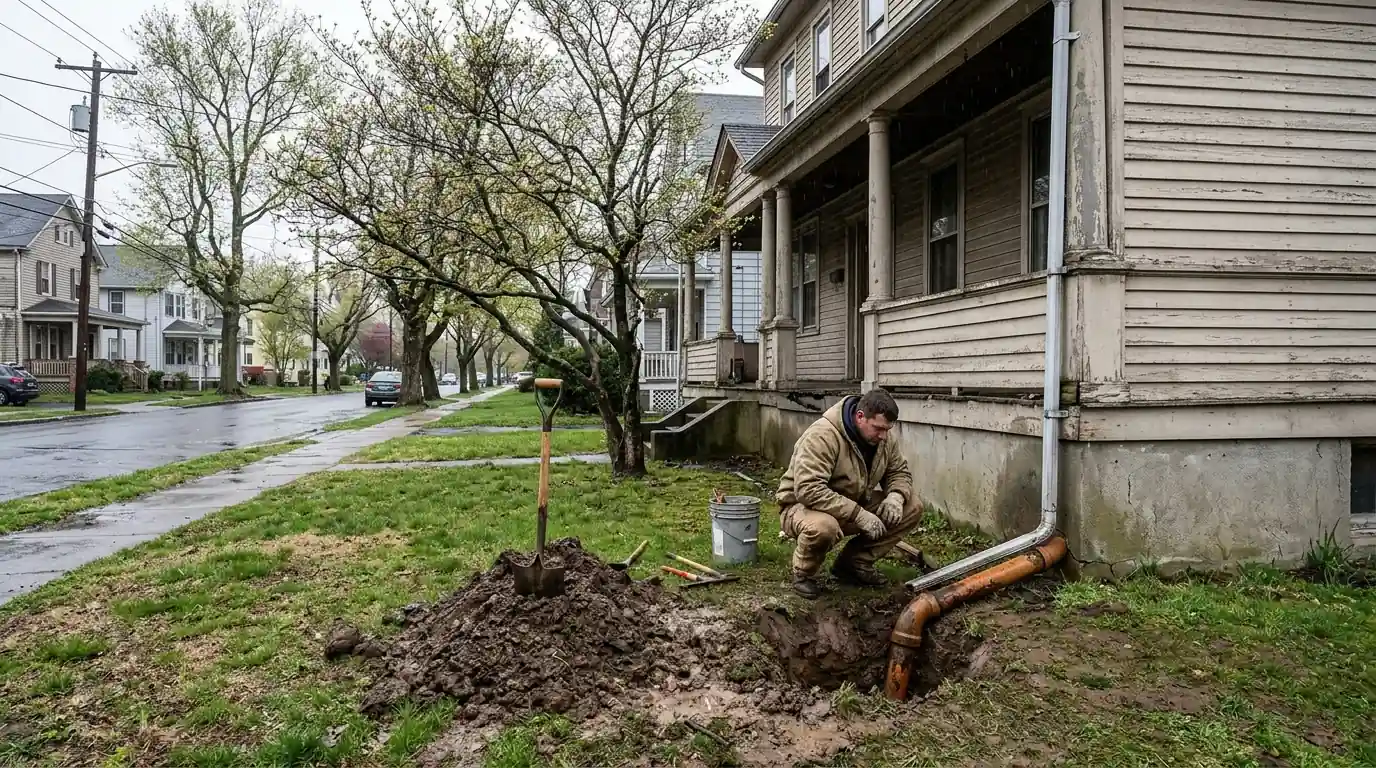
Rahway's older frame houses were built with gutters and leaders that drop into buried pipes, often clay or early plastic, running under the lawn toward the curb or a dry well. Decades later, many of those lines are packed with roots, sand and leaves. When a buried leader stops flowing, roof water backs up and spills out at the base of the house, the worst place it could go. Foundations under these homes are commonly block or poured concrete, and the water finds the cove joint, mortar seams and any vertical crack. Stains on the wall usually line up right under the leader that stopped draining.
Near the train station, newer apartment buildings bring a different set of conditions. They have poured foundations, below-grade utility rooms and elevator pits, and those spaces can take groundwater through tie-rod holes and joints in the concrete. The pits are the lowest point in the building, so a small leak shows up there first as standing water. We handle both ends of town, from a single sump in a frame house basement to sealing a leaking elevator pit for a property manager who needs the car back in service. Those jobs get a written scope so the manager can plan around residents.
When an owner calls about one wet basement wall, our first stop is usually the leader directly above it. We run water from a hose into the downspout and watch. If it gurgles back out at the boot, or the ground beside the house turns soggy, the buried line is blocked or broken. Sometimes the line can be cleared; often it has collapsed in a few places and needs to be replaced. We dig, lay new solid pipe with proper slope, and carry the water to a safe outlet away from the house. We also check the gutters above, since a leader can only move what the gutter delivers.
Inside, we deal with the damage the water has already done. A crack injected with polyurethane or epoxy closes the path through the wall, and a cove joint repair handles seepage at the floor line. If the basement sees water on several walls even with the leaders fixed, an interior drain and sump become the next conversation. We keep the outdoor and indoor work in that order on purpose: the cheapest gallon to deal with is the one that never reaches your foundation in the first place. We say plainly when the leader fix alone should be enough, and we check the walls again after the next real storm.
Based on the buildings here, these are the calls we expect from Rahway. Every other service on our list is available too.
In New Jersey, downspouts are called leaders, and most of them empty right beside the house.
DetailsA single crack running down a poured basement wall can soak a corner of the floor every time it rains.
DetailsA thin line of water creeping out where the floor meets the wall after a downpour is a cove joint leak.
DetailsIf water keeps showing up in the same corner of your basement after every heavy rain, a properly placed sump pump gives it somewhere to go.
DetailsWater on the basement floor after every hard rain usually means pressure from outside the wall, not a plumbing leak.
DetailsWater in an elevator pit is more than a nuisance: it rusts equipment, can take a car out of service and tends to show up on inspection reports.
DetailsRahway River Park and the river itself are part of what makes the town pleasant, but low ground near a river tends to carry a higher water table. Houses on those lower streets can take water from below during a long wet stretch, even with every leader working. The slab feels damp, the joint at the base of the wall darkens, and puddles appear in the same corners each spring. That pattern points to groundwater pressure rather than surface runoff, and it calls for a different fix than a leader repair. Owners on higher streets nearby may never see it at all.
For those homes, we usually recommend a sump pump with a sealed basin, a check valve and a battery backup, fed by an interior drain along the affected walls. The discharge runs far enough from the foundation that it does not cycle back. Flood insurance and flood zone questions belong with your own agent, and we leave those to them. Our guide on why basements leak covers the difference between groundwater and runoff in more detail, and the same physics applies to Rahway houses. A dehumidifier often follows, because a basement that has been wet for years holds moisture in its walls for a while.
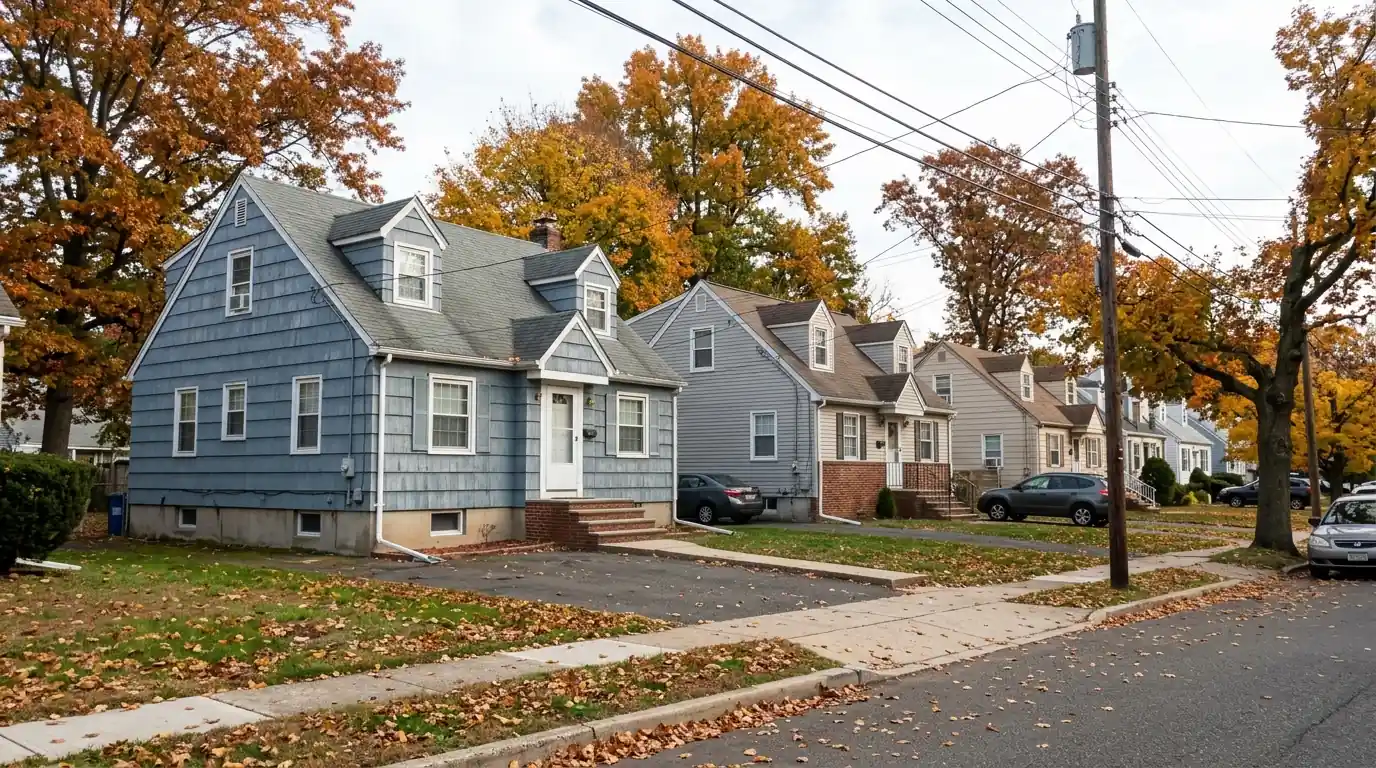
Run a garden hose into the downspout for a few minutes. If water bubbles back out at the top of the buried pipe, pools at the base of the wall, or the lawn beside the house turns soft, the line is likely blocked or broken. A wet basement wall directly below that leader is another strong clue. We confirm it with a flow test and a short dig.
Low ground near a river often has a higher water table, and after a long wet stretch the groundwater can stay high for days. That water pushes up under the slab and through the cove joint without any rain falling. An interior drain feeding a sump pump with a battery backup is the usual fix for that kind of pressure.
Yes. Elevator pits sit at the lowest point of a building and collect groundwater through joints, tie-rod holes and cracks. We pump the pit dry, inject the active leaks, and apply a crystalline treatment to the concrete so it resists further seepage. We work with property managers to schedule around the elevator contractor and building residents.
Call (201) 578-5199 any time. Tell us the address and what you're seeing, and we'll take it from there.