Before buying
You're buying an older home, a rowhouse or a condo and want to know about water problems before closing.
Commercial & inspections · Jersey City, NJ
Water stains rarely show you where water actually enters a building. Our inspection follows water from the roof down to the basement floor and gives you a written report on what's wrong, what's fine and what can wait.
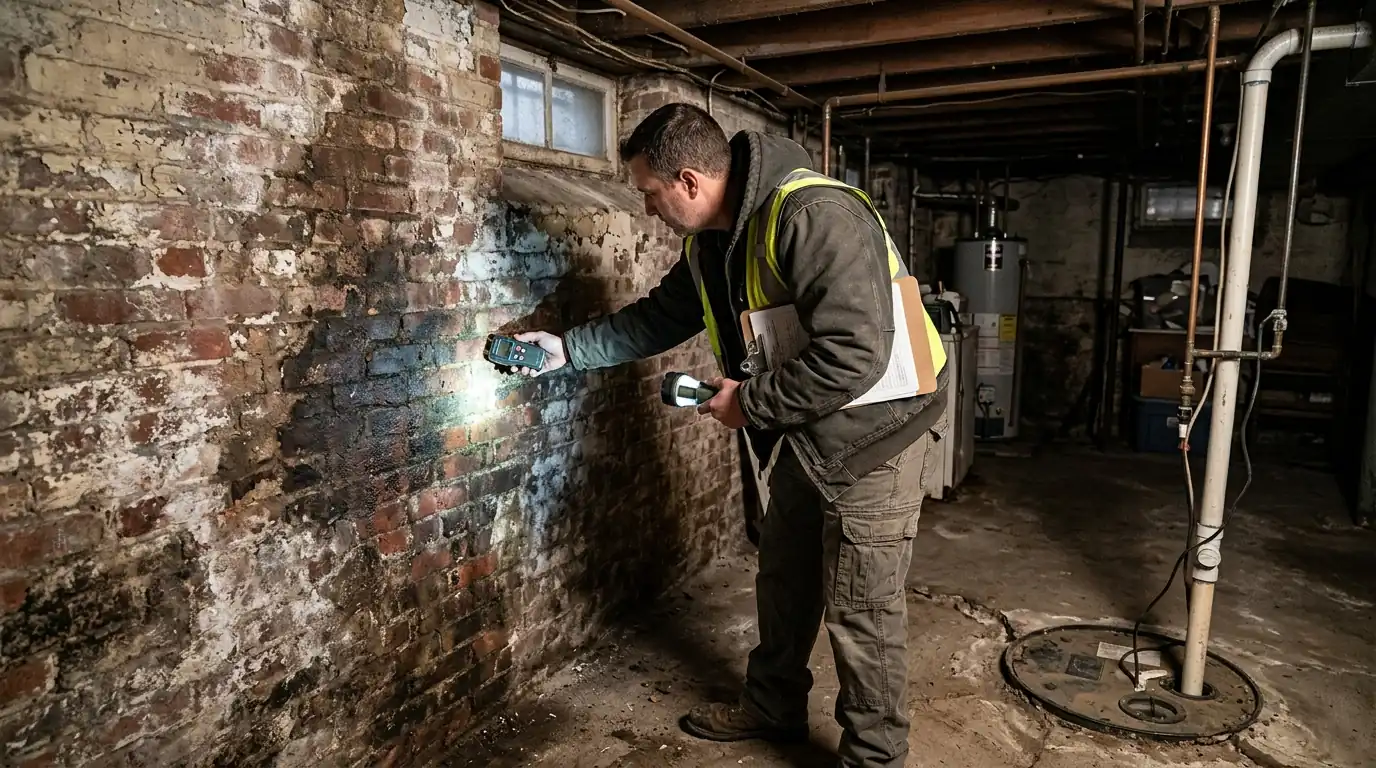
We inspect Jersey City homes, rowhouses, condo units and whole buildings for water problems from the basement to the roof. Our technician takes moisture readings, checks foundation walls, sump and drains, masonry, windows, terraces and the roof, then gives you photos and a written report with priorities. It's useful before buying, after a leak, or for a condo board. Call (201) 578-5199.
Water travels. A stain on a third-floor ceiling can start at a parapet, a chimney or a window above it. A damp basement corner can come from a downspout dumping at the foundation, from groundwater, or from a sewer line backing up through a floor drain. When each leak is fixed in isolation, owners often pay to repair one entry point while the real source keeps working. An inspection that follows water through the whole building avoids that.
We start at the top or the bottom depending on the complaint, but we always check both. On a downtown rowhouse that means the flat roof, parapets and cornice, the brick facade, windows, the front areaway and the cellar. On a frame house in the Heights, it means the roof, siding and trim, the foundation, any crawl space and the yard drainage. The goal is one clear picture of how water moves through your building.
Timing matters too. Some problems only show during or after rain, so we ask when the leak appears, what the weather was and how long it lasts. A stain that grows during a nor'easter but stays dry in summer thunderstorms points to wind-driven rain at walls and windows. A basement that floods within hours of a cloudburst, as many did after the remnants of Ida, points toward drains, window wells and sewer backup more than slow groundwater seepage.
We ask about past leaks, repairs and when problems show up. That tells us where to look hardest.
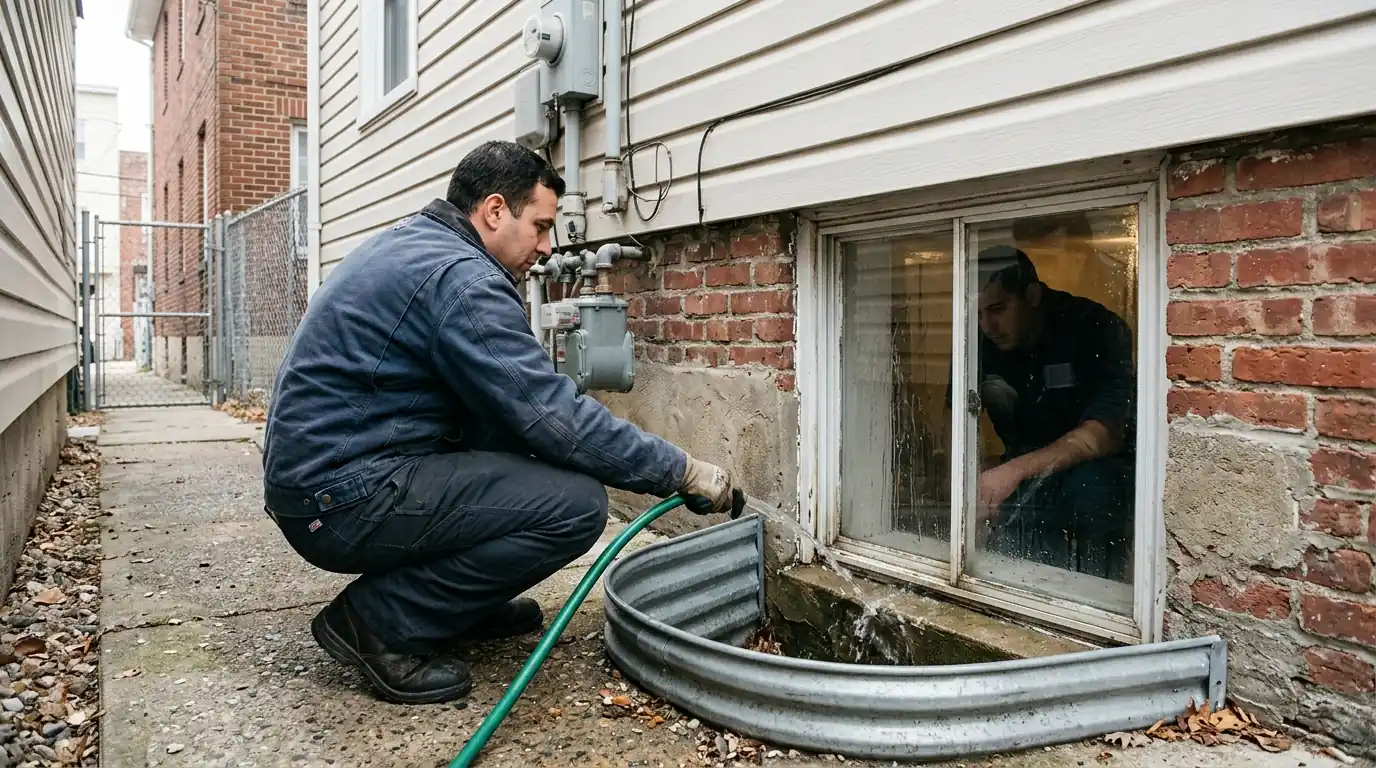
We check walls, cove joints, floor drains, the sump system and moisture levels. Outside, we look at grading, window wells, areaways and downspouts.
We check brick and mortar, sealant at windows and doors, lintels and sills. Moisture readings on inside walls help pinpoint entry points.
We inspect balcony and terrace membranes, roof decks, flashing, parapets, drains and skylights. Ponding and failed seams get photographed.
You get a report with photos, causes, recommendations and typical cost ranges. Findings are ranked by urgency.
We go over the report with you by phone or on site. You decide what to do and when; there's no pressure to book repairs.
Below grade, we look at foundation walls for cracks, tie-rod holes, efflorescence and failed mortar on brick or stone. We check the cove joint where walls meet the floor, test the sump pump, check valve and discharge, and look for a backwater valve where the building ties into the combined sewer. Areaway drains, window wells and the grading outside all get a look, along with where downspouts empty. Moisture readings and humidity levels go into the report.
Above grade, we look at brick joints, sealant around windows and doors, lintels and sills, and the condition of any balcony, terrace or roof deck membrane. On the roof, we check flashing at walls and chimneys, parapet copings, drains and scuppers, skylights, and signs of ponding water. Where something needs repair, the report says so and explains why.
Tools help, but they don't replace judgment. A moisture meter tells us a wall is wet; it doesn't say why. We combine readings with what the building shows: efflorescence lines, rust trails, staining patterns and the condition of joints and seals. That's how a report can say not just that a wall is damp, but where the water is coming from and what will actually stop it.
A general home inspection covers a lot of ground but rarely goes deep on water. If you're buying an older rowhouse downtown, a frame house in Greenville or a condo in a building with a history of leaks, a dedicated water inspection fills that gap. We tell you where the property is taking on water now, where it's likely to in the next few years, and what typical repairs cost, using our published ranges. Buyers use that to negotiate or plan a budget.
For a condo, we inspect the unit and the parts of the building that affect it: walls, windows, terraces and, with access arranged through management, the roof or garage. Sellers and agents can arrange access; we work around their schedule. If you'd like to read more first, our guide on why Jersey City basements leak covers the most common causes, and the waterproofing cost guide shows typical repair ranges.
Boards and managers often inherit leak complaints without a clear history. A whole-building inspection gives them a baseline: every water entry point found, photographed and ranked by urgency. It separates problems that need work this season from those that can go into next year's budget. For larger buildings, it also covers below-grade areas such as garage decks and elevator pits, plus terraces, facades and the roof.
We write reports so board members without a construction background can follow them. Each finding has a photo, a short description of the cause, a recommendation and a typical cost range. If the board decides to go ahead with repairs, the report becomes the scope. Larger building programs fit into our commercial waterproofing work, and on homes the most common next step is basement waterproofing or a targeted repair from the list.
You're buying an older home, a rowhouse or a condo and want to know about water problems before closing.
A stain or damp area keeps coming back and earlier repairs haven't stopped it.
The basement smells damp or musty even without visible water.
A condo board needs to know what to fix first and what to budget for.
After a nor'easter or a flash flood, you want to know what got in and where.
You plan to finish a basement and want to make sure it will stay dry.
$195 to $450
per inspection, typical range
Most waterproofing inspections land between $195 and $450. That range covers typical homes and condos; larger buildings are priced once we know the scope.
Not listed? See every area we serve or call (201) 578-5199.
Membranes, sealers, pumps and dehumidifiers we work with come from makers such as
Yes. A general home inspection covers the whole house in limited depth. Our inspection focuses only on water: where it gets in, how it moves through the building, and what it's doing to walls, floors and structure. We take moisture readings, test the sump and drains and check terraces and the roof in detail. Many buyers get both.
If the building is older, sits in a low area near the waterfront, or has a history of leaks, it's worth considering. We look at the unit and, with access arranged through management, the building parts that affect it, such as walls, windows, terraces and the roof. The report gives you a clear picture before closing.
Each finding comes with a photo, its location, the likely cause and a recommended repair with a typical cost range. Findings are ranked by urgency, so you know what to fix now and what can wait. Moisture readings and notes on the sump, drains and roof are included. Boards often use the report as the scope for repair work.
Often, yes. Moisture readings, staining patterns and the condition of joints, flashing and sealant usually point to the source even on a dry day. If the leak is still unclear, we can run a controlled water test on the suspected area to recreate the storm conditions. That confirms the entry point before anyone spends money on repairs.
Call (201) 578-5199 to set up a visit. We'll photograph what we find and tell you what can wait and what can't.