Stone & Brick Foundation Waterproofing
The rubble-stone and brick walls under 19th-century rowhouses weep differently from poured concrete.
DetailsJersey City neighborhood
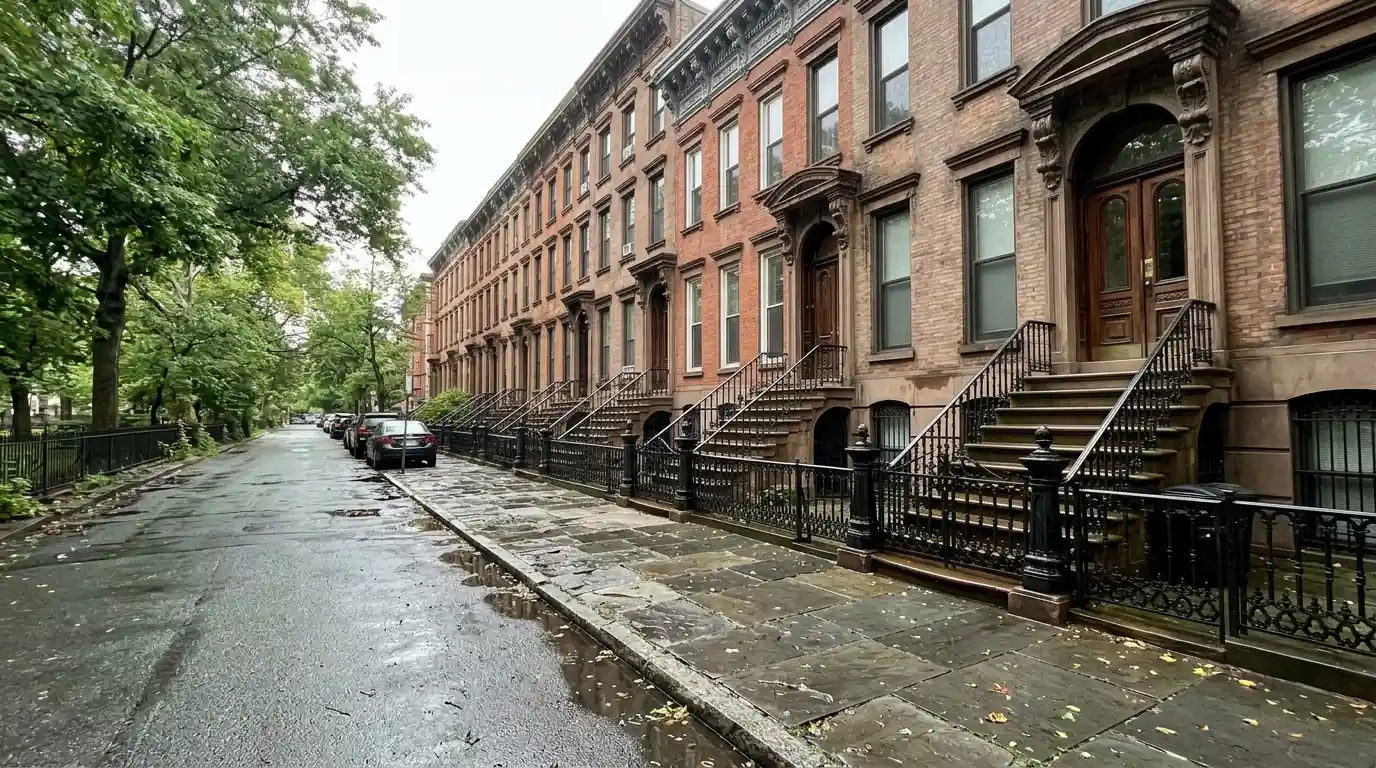
The brownstones and brick rowhouses around Hamilton Park stand on rubble-stone and brick foundations bedded in lime mortar. After more than a century, that mortar has washed out, and the walls let water through wherever it pushes hardest.
Waterproofing for stone and brick foundations, areaways and parapets in Hamilton Park is what we do from our downtown office on Newark Avenue. Call (201) 578-5199, day or night. We inspect the old foundation from inside, check the areaway drain and the roof above, then explain a repair that suits lime-mortar masonry, with the typical cost range, before work starts.
Foundations under Hamilton Park rowhouses were laid as rough stone or brick, set in soft lime mortar that was meant to flex and breathe. It worked for decades, but water moving through the wall slowly carries the lime away. Today you see sandy mortar on the basement floor, white efflorescence on the stone, and damp patches that come and go with the weather. Sealing these walls with a hard cement coating usually traps moisture and makes the problem worse, which is why our stone foundation waterproofing starts with repointing and drainage instead.
Up top, these houses have flat roofs hidden behind a parapet and an ornate metal cornice. When the parapet coping cracks or the cornice seams open, water runs down inside the front wall and can show up anywhere from the parlor ceiling to the basement. So a damp basement front wall in Hamilton Park is not always a foundation problem. We check the parapet and coping whenever the front wall is wet from top to bottom, and we look at the roof drain and leader that carry water from the back of the roof down to the yard.
Hamilton Park is a designated historic district, and exterior work here can go before the city's Historic Preservation Commission. We tell you early when a job will likely need that step, for example new exterior drainage at the front of the house, changes to the stoop, or visible work on the cornice. Most basement waterproofing happens inside the foundation and does not change the street face of the building. When it does touch the exterior, we plan materials and colors to match the original masonry so the work reads as maintenance rather than alteration. When a filing is needed, we describe the materials and method for the review.
Access around the park is the usual downtown puzzle: permit parking, shared party walls and basements reached through the front areaway under the stoop. We carry tools down by hand, protect the stoop and railings, and keep the sidewalk passable while we work. Inside, many basements still have the original stone walls exposed on three sides, which makes inspection straightforward. We map damp areas with a moisture meter, mark the worst joints and show you photos, so you can see where the water enters before we propose anything on paper. That record helps later, when checking a repair.
Based on the buildings here, these are the calls we expect from Hamilton Park. Every other service on our list is available too.
The rubble-stone and brick walls under 19th-century rowhouses weep differently from poured concrete.
DetailsIf water pools in the sunken entry under your front stoop and slides under the basement door, the areaway drain or the stoop above it has failed.
DetailsRain driven sideways by a nor'easter finds every open mortar joint on a brick wall, then shows up as stained plaster, peeling paint or a damp closet.
DetailsWater is reaching the top-floor walls, or even a floor or two lower, while the roof surface looks fine.
DetailsWhen groundwater keeps finding its way in at the base of your walls, coating the inside won't hold it back.
DetailsWater dripping from the ceiling of the vault under your sidewalk or stoop usually comes through the slab overhead, an old coal-chute opening or the.
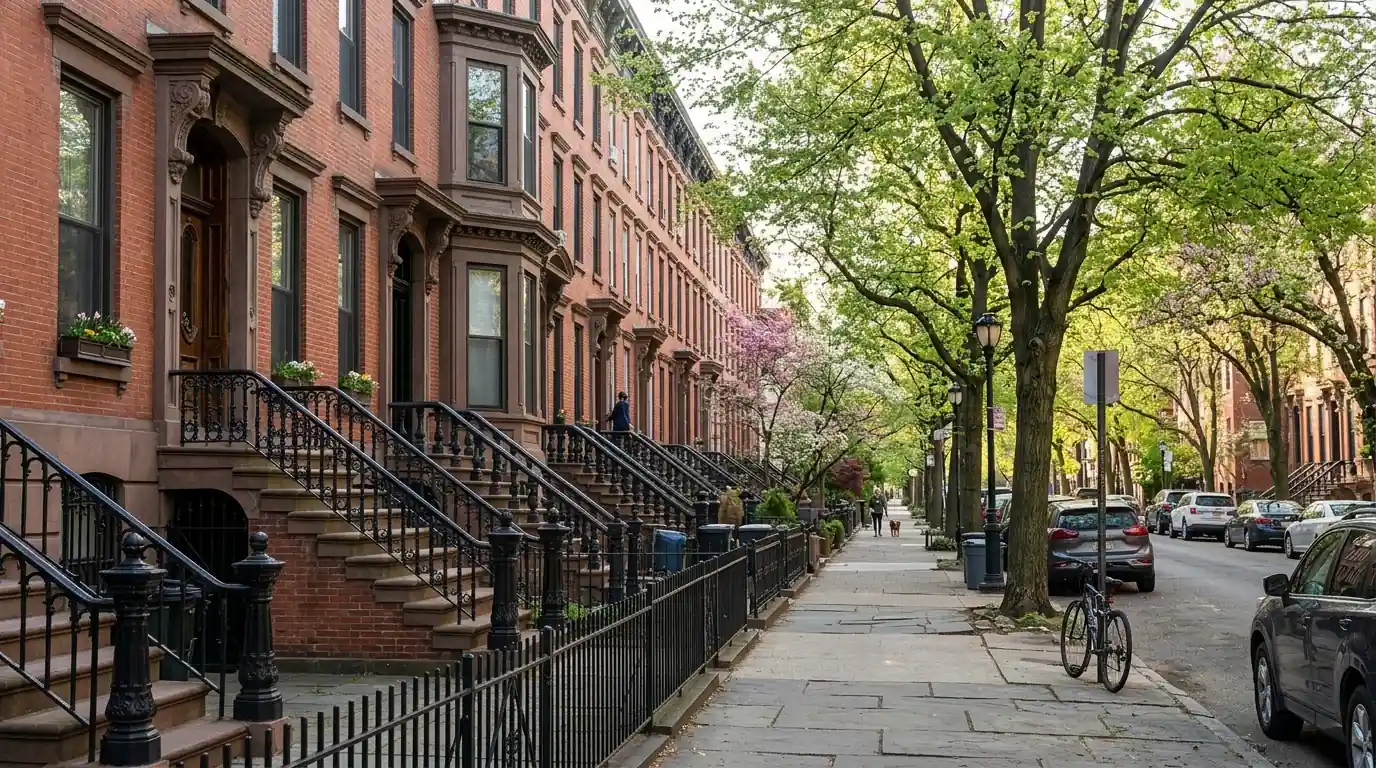
DetailsAlmost every rowhouse facing the park has a sunken front areaway with a small drain at its lowest point. When that drain clogs with leaves or the old pipe collapses, a summer thunderstorm fills the areaway like a bathtub, and water pours under the basement door or through the wall below the stoop. Some houses also have a vault under the stoop or sidewalk, and those leak at the ceiling joint. Clearing and rebuilding the areaway drain is one of the cheapest repairs we do here, and it often fixes the worst flooding on its own.
Where the areaway drain is sound but the wall still seeps, we combine repointing with an interior drain along the front foundation, carrying water to a sump. In very damp basements we add a dehumidifier set to roughly 45 to 55 percent humidity to keep the musty smell down. Our areaway and stoop waterproofing page covers that work in more detail. Neighbors in Harsimus Cove and Van Vorst Park live with the same old foundations, so many of our repairs here follow the same pattern.
Usually not. Rubble-stone and brick foundations laid in lime mortar need to release moisture, and a hard cement coating traps it, which pushes water into the joints and the brick above. We prefer repointing with a compatible mortar, managing water with an interior drain and sump, and fixing the areaway and leaders that feed the wall.
Interior basement waterproofing usually does not change the outside of the building. Exterior work, such as front drainage, stoop changes or visible cornice and parapet repairs, may go before the commission. We tell you when a job will likely need that step before we schedule anything, so there are no surprises halfway through.
The most common cause is a clogged or collapsed areaway drain. In a heavy thunderstorm the sunken entry fills faster than the drain can empty it, and the water finds the door threshold. We clear or rebuild the drain, check its line to the sewer, and seal the threshold so the next storm drains away.
Call (201) 578-5199 any time. Tell us the address and what you're seeing, and we'll take it from there.