Drips from the ceiling
Water dripping or running from the vault ceiling during and after rain points to the sidewalk or stoop slab above.
Basement & foundation · Jersey City, NJ
Water dripping from the ceiling of the vault under your sidewalk or stoop usually comes through the slab overhead, an old coal-chute opening or the joint where the vault meets your house. We find which one it is and seal it.
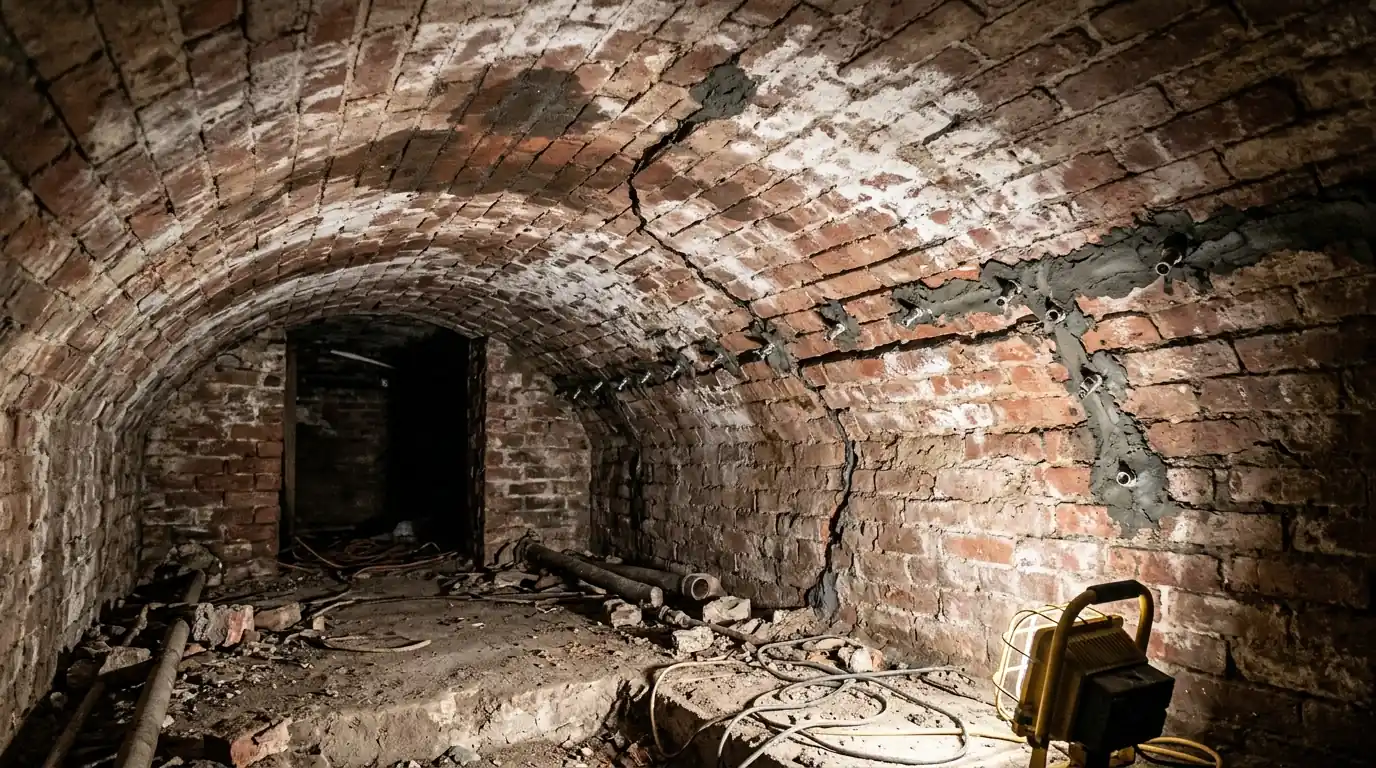
To stop a leaking sidewalk or stoop vault in Jersey City, call (201) 578-5199. We trace the water to the slab overhead, a coal-chute or utility opening, the areaway wall or the joint against the house foundation. Then we seal the ceiling from above where the paving can be lifted, inject and repoint from inside where it stays put, and give the vault floor a way to drain.
Walk to the front of the basement in many downtown Jersey City and Hoboken rowhouses and you'll find a low room running out under the stoop, or past the property line beneath the sidewalk. These vaults once held coal, ash cans and storage. Their walls are brick or rubble stone laid in lime mortar, and the ceiling is usually a shallow brick arch or stone slabs resting on iron beams, with the sidewalk paving sitting right on top.
That ceiling is the main problem. A sidewalk slab takes rain, snowmelt, de-icing salt and every freeze-thaw cycle of a New Jersey winter, and the paving above a vault was never built to work as a roof. Joints open, flags settle, and water runs straight down into the brick below. The round coal-chute opening, usually capped with a cast-iron cover, leaks around its rim, and old pipe and conduit holes through the vault wall let water track in beside them.
The third leak point is the joint where the vault meets the house foundation. The vault and the house were often built at different times and settle at different rates, so a crack opens along that line. Water following the slab or the areaway wall finds the crack and runs down into your front basement wall. On low blocks near the old Hudson marsh, groundwater can also press in through the lower courses of the vault after long rains.
Water dripping or running from the vault ceiling during and after rain points to the sidewalk or stoop slab above.
Rust streaks or wet brick around the old coal-chute opening mean the rim of the cast-iron cover is letting water through.
A vertical crack or wet line where the vault meets your front foundation wall, often with water running down it.
Efflorescence, the white salt crust water leaves as it evaporates, spreading across the brick arch or stone ceiling.
Mortar sand piling up under the vault walls shows the lime joints are washing out.
Iron beams under the ceiling that flake, swell or bleed rust onto the brick below them.
Damp patches on the basement wall nearest the street, even when the rest of the basement stays dry.
The surest fix for a leaking vault ceiling is stopping water before it ever reaches the masonry. Where the paving can be lifted, our crew takes up the sidewalk flags or breaks out the slab over the vault, cleans the top of the arch or deck, and resets loose brick. Then we apply a sheet or liquid-applied membrane across the whole vault roof, lap it up the house wall and over the vault edges, and lay a protection board before the new paving goes down.
The coal-chute opening gets the same attention. We either reset the cast-iron cover on a new frame with a flashed, sealed rim, or close the opening beneath the cover with masonry and membrane so the cover stays in the sidewalk as part of the streetscape. Opening a public sidewalk usually involves the city, so we tell you up front when we expect a permit. On historic blocks we also tell you when the work will likely go through Historic Preservation Commission review.
Staging matters on these jobs. Rowhouse blocks downtown have narrow sidewalks, steady foot traffic and permit parking at the curb, so we plan barriers, a protected walkway past the work and a place for debris before the first flag comes up. Most topside jobs open only the part of the sidewalk over the vault, and the new paving is finished to sit flush with the slabs on either side so nobody trips on the seam.
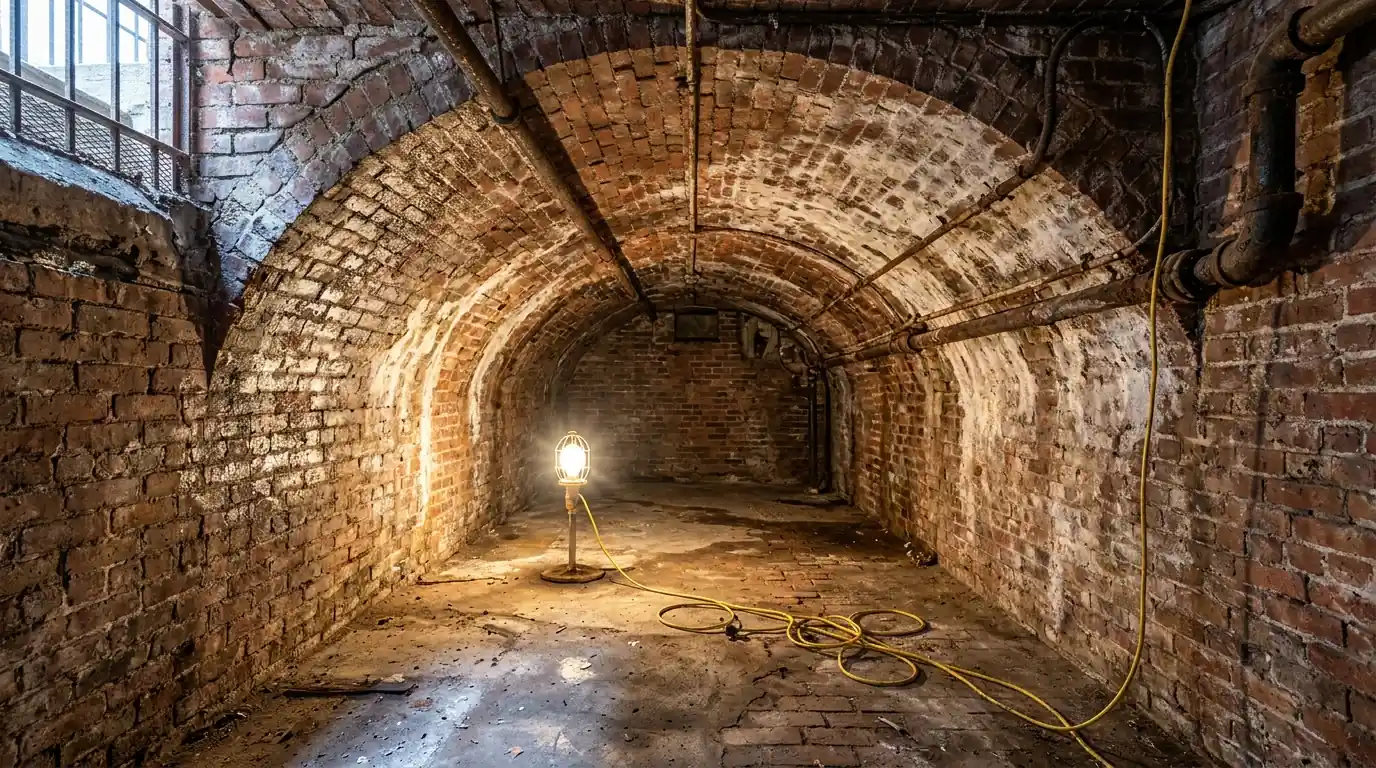
We inspect the vault during or soon after rain and mark every drip, stain and crack. We also check the sidewalk, the coal-chute cover and the areaway from outside.
We look at the arch, slabs and beams for rust, sag and loose masonry. If anything looks structural, we recommend an engineer before going further.
We explain whether the slab should be opened from above, treated from inside, or both. You get the reasoning and a typical cost before work starts.
Coal-chute openings, pipe holes and the house joint get sealed first. They are the most common entry points and the quickest wins.
Our crew installs the topside membrane or injects the ceiling from below. Sidewalk protection and staging are planned around foot traffic on the block.
We pitch the floor to a drain or sump and protect any sewer connection. Then we check the vault again after the next hard rain.
Sometimes the sidewalk can't reasonably be opened, or the leak is small enough that it isn't worth it. From inside the vault we work on the masonry directly. Active cracks and joints in the ceiling get polyurethane injection, which expands and seals even while water is still coming through. Where the whole ceiling seeps, curtain injection pumps grout through the masonry into the soil and paving bed above, building a water-blocking layer on the outer face of the vault.
Washed-out lime mortar in the vault walls is raked and repointed with a lime-based mortar, the same approach we use on stone and brick foundations. Pipe and conduit penetrations are sealed with hydraulic cement or a compression seal. At the joint against the house, we inject the crack and, where it keeps moving with the seasons, finish it with a flexible sealant that stretches with the two structures instead of reopening.
Every vault also needs somewhere for water to go. If the floor is dirt or broken brick, we pitch a new floor toward a small drain or a sump. Where that drain ties into the building's sewer line, a backwater valve keeps combined sewer water from rising up through it in a storm. A vault that drains dries out between rains, which also slows the rust on any iron beams overhead.
Many vault ceilings rest on iron or steel beams, and a century of dripping water can rust them badly. Rust swells as it builds up, which pushes brick out of the arch and opens more paths for water. When we find beams with heavy section loss, a sagging arch or loose stone slabs, we have a structural engineer look at the vault before sealing anything, and we build the waterproofing around the repair they specify.
A vault rarely leaks alone. The sunken areaway in front of the basement door shares walls with it, and the same stoop sheds water onto both. We often seal the areaway walls and clear its drain on the same visit as part of areaway and stoop waterproofing. If water also shows up along the rest of the front foundation, our guide to why Jersey City basements leak walks through the other usual suspects.
| Approach | Best for | Trade-offs |
|---|---|---|
| Topside membrane | Vaults where the sidewalk or stoop slab can be lifted and replaced | Longest-lasting fix for the ceiling; involves new paving and usually the city |
| Interior injection and repointing | Vaults whose sidewalk should stay in place, leaks at cracks and joints | No outdoor excavation; may need touch-ups as the old masonry ages |
| Drain and manage | Storage vaults where a little seepage is acceptable | Lowest cost; some water still enters but leaves through a drain or sump |
$3,200 to $12,600
per vault, typical range
Most vault jobs land between $3,200 and $12,600 per vault. That is a typical range, not a quote, and the figure for yours comes after we see the vault and the sidewalk above it.
Not listed? See every area we serve or call (201) 578-5199.
Membranes, sealers, pumps and dehumidifiers we work with come from makers such as
Often, yes. Polyurethane injection seals active cracks in the ceiling, curtain injection builds a barrier on the outer face of the masonry, and lime repointing closes washed-out wall joints, all from inside the vault. It's a good fit when the paving is sound or opening it would be difficult. Where the slab itself is broken up, a topside membrane lasts longer, and we explain that trade-off before you decide.
If you no longer use it, closing the opening below the cast-iron cover is usually the simplest way to end that leak. The cover can stay in the sidewalk so the block keeps its look, while masonry and membrane underneath stop the water. If you'd rather keep the opening usable, we reset the cover on a new frame and seal the rim instead.
The vault and the house usually settled at different rates over the years, which opens a crack along the joint between them. Water that gets into the slab or the areaway wall follows that crack straight down into your front basement wall. We inject the crack and, where it still moves with the seasons, cap it with a flexible sealant that can stretch instead of reopening.
Light surface rust is common and mostly tells you water has been getting in. Heavy flaking, beams that look swollen, brick pushed out of the arch or a visible sag are different, and we recommend a structural engineer look before any waterproofing goes on. Stopping the drip is what slows the rust, so sealing the vault protects the beams as well.
In most cases, yes. A sealed vault with a drained floor stays dry enough for garden tools, bikes and bins kept up on shelving. Old masonry always holds some moisture, so paper, fabric and anything that mildews belong elsewhere in the house. If you want the vault drier than that, a small dehumidifier draining to the vault's floor drain makes a real difference.
Call (201) 578-5199 and tell us what you're seeing. We'll set up a visit and give you a typical range before any work starts.