Basement Waterproofing
Water on the basement floor after every hard rain usually means pressure from outside the wall, not a plumbing leak.
DetailsWaterproofing services
Basements and foundations, sump pumps and drainage, brick walls and windows, terraces and roof decks, and roof waterproofing. Pick the closest match below, or just call and describe what you're seeing.
Most of the water we trace in Jersey City doesn't come in where it shows up. Groundwater pushes through a cove joint or an old stone wall, sewer water rises through a floor drain, rain drives through brick mortar or a failed window seal, and roof water runs off a parapet or out of a leader dumped beside the foundation. That's why our list follows the water from the ground to the top of the building.
If you're not sure which service fits, that's normal. Call (201) 578-5199, tell us what you see, and we'll work out where it starts.

Wet basements, foundation cracks, old stone walls, crawl spaces and flooded basements.
Water on the basement floor after every hard rain usually means pressure from outside the wall, not a plumbing leak.
DetailsWhen groundwater keeps finding its way in at the base of your walls, coating the inside won't hold it back.
DetailsIf you want water stopped at the outside face of the wall, before it ever touches the masonry, the wall has to be dug out.
DetailsA single crack running down a poured basement wall can soak a corner of the floor every time it rains.
DetailsA thin line of water creeping out where the floor meets the wall after a downpour is a cove joint leak.
DetailsThe rubble-stone and brick walls under 19th-century rowhouses weep differently from poured concrete.
DetailsA horizontal crack or a wall leaning into your basement means soil and water are pushing harder than the wall can hold.
DetailsIf the room over your rear addition smells musty or the floor feels cold all winter, the crawl space underneath is probably damp and open to outside.
DetailsWhen a window well fills in a storm, the basement window becomes the side of a bucket, and water finds the frame.
DetailsIf water pools in the sunken entry under your front stoop and slides under the basement door, the areaway drain or the stoop above it has failed.
DetailsWater dripping from the ceiling of the vault under your sidewalk or stoop usually comes through the slab overhead, an old coal-chute opening or the.
DetailsA basement can be free of leaks and still smell musty, sweat on the pipes and grow mildew on stored boxes.
DetailsIf your basement is under water after a storm or a sewer backup, the first job is keeping everyone safe and the second is getting the water out.
Details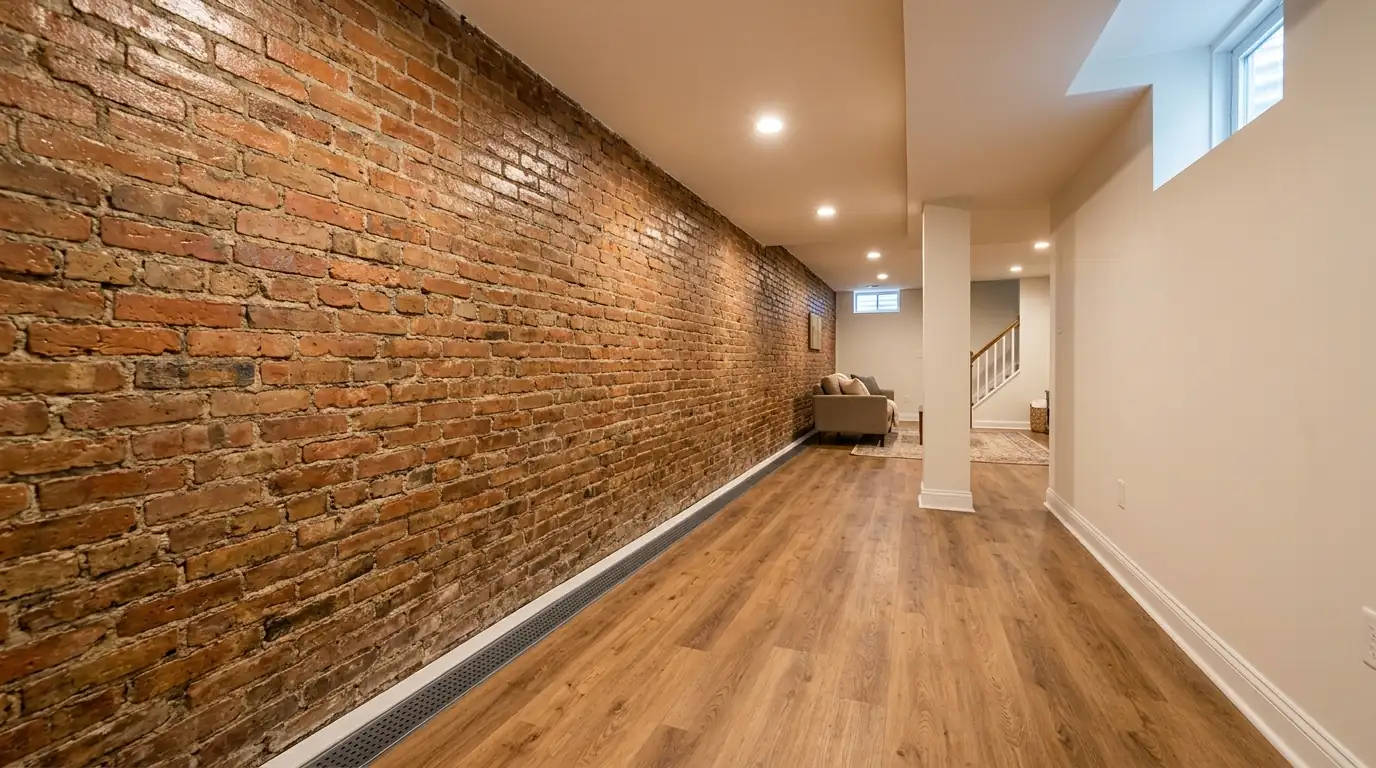
Sump pumps, backups, backwater valves and drains that move water away from the house.
If water keeps showing up in the same corner of your basement after every heavy rain, a properly placed sump pump gives it somewhere to go.
DetailsIf your sump pump is humming without moving water, cycling every few seconds or sitting silent while the pit fills, call us now.
DetailsWhen a heavy storm sends dark, foul water up through your basement floor drain, the problem is the sewer, not groundwater.
DetailsIf part of your yard stays soggy for days after rain, or water runs down a narrow side yard toward your foundation, an exterior French drain.
DetailsIf your building sits on low ground downtown, in Hoboken or in Secaucus, the next big storm can push water through doors, areaways and window wells.
DetailsWhen your patio, driveway or lawn tilts toward the house, every storm sends water straight at the foundation.
DetailsIn New Jersey, downspouts are called leaders, and most of them empty right beside the house.
Details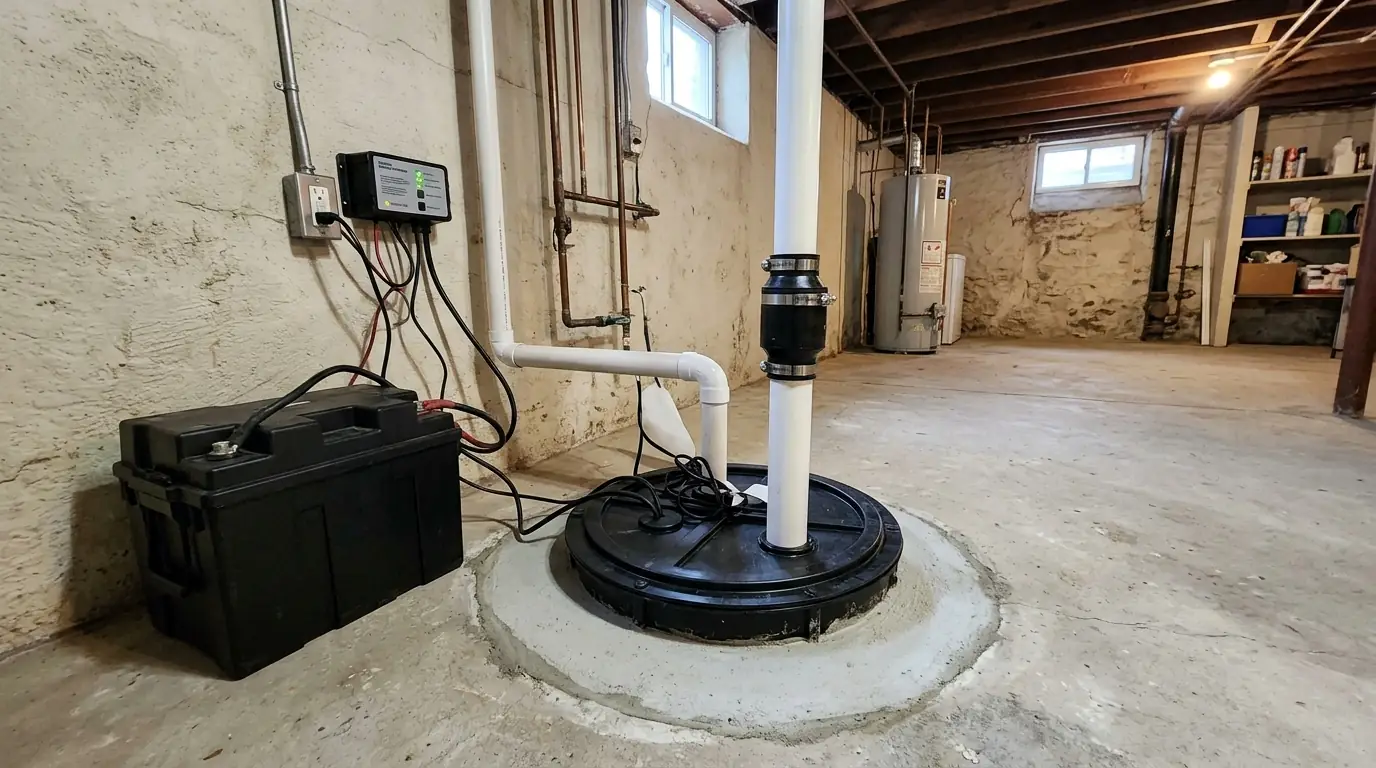
Masonry walls, windows, balconies, terraces, roof decks and parapets kept watertight.
Rain is getting through the brick on an upper floor, usually after a storm with strong wind behind it.
DetailsRain driven sideways by a nor'easter finds every open mortar joint on a brick wall, then shows up as stained plaster, peeling paint or a damp closet.
DetailsParging that has cracked, gone hollow or fallen off in sheets leaves the foundation face open to rain, splash and frost.
DetailsWhen the wall below a window stays damp after storms, the sealant joint around the frame has usually let go, and rain is running behind the trim.
DetailsWater from a terrace or balcony is showing up in the unit below, at the door frame, or as rust stains on the concrete.
DetailsWater is coming through the ceiling under your rooftop deck, and nobody can see the membrane because the deck sits on top of it.
DetailsWater is reaching the top-floor walls, or even a floor or two lower, while the roof surface looks fine.
Details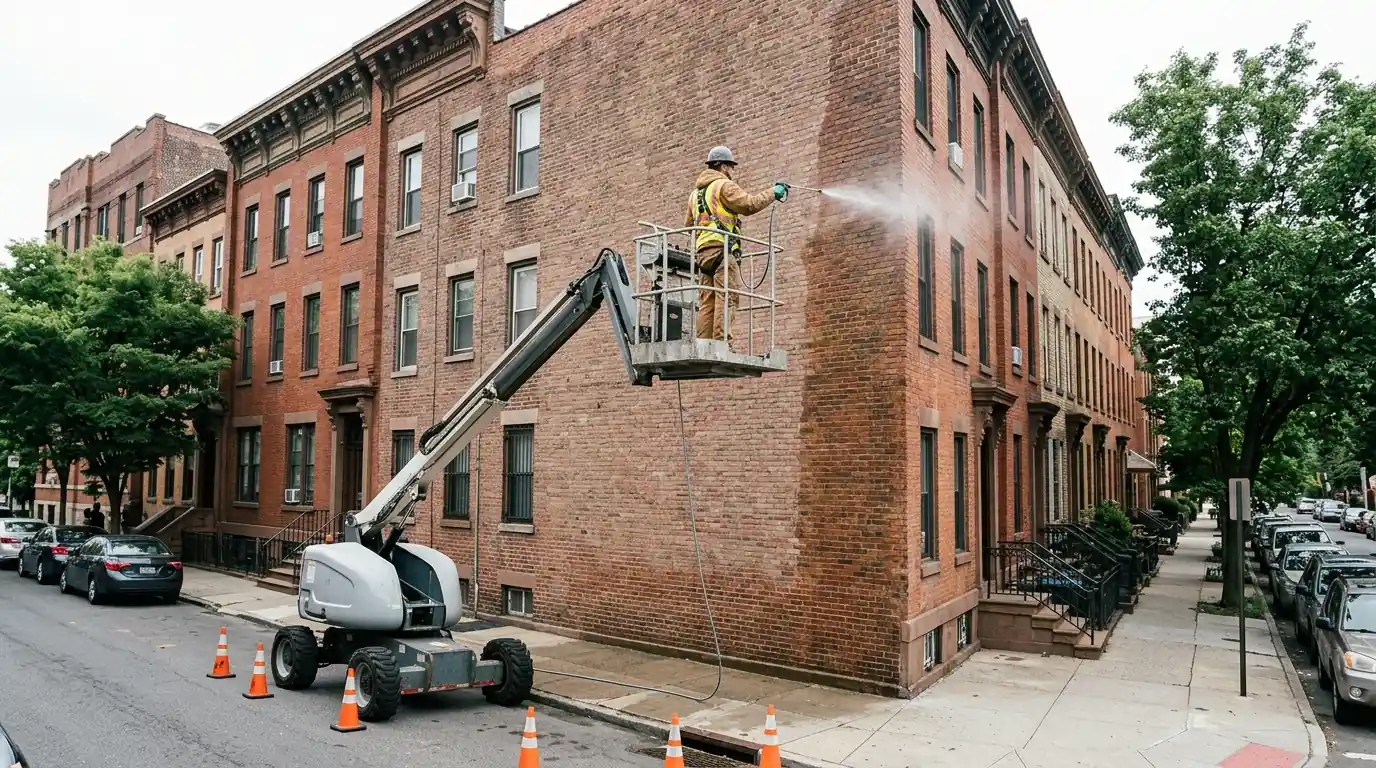
Coatings, flat-roof leak repair, ponding, flashing, skylights and chimneys.
Your flat roof keeps leaking in a new spot after every patch, because the field, the edges and the penetrations were never sealed together.
DetailsYour flat roof is chalky, crazed on the surface and baking the top floor every summer, but it isn't leaking yet.
DetailsWater is coming through the top-floor ceiling from a flat roof leaking at a seam, a blister, a parapet base or a clogged drain.
DetailsTwo days after the rain stopped, there's still a puddle on your flat roof.
DetailsWater is running down the wall beside the chimney or staining the ceiling around it.
Details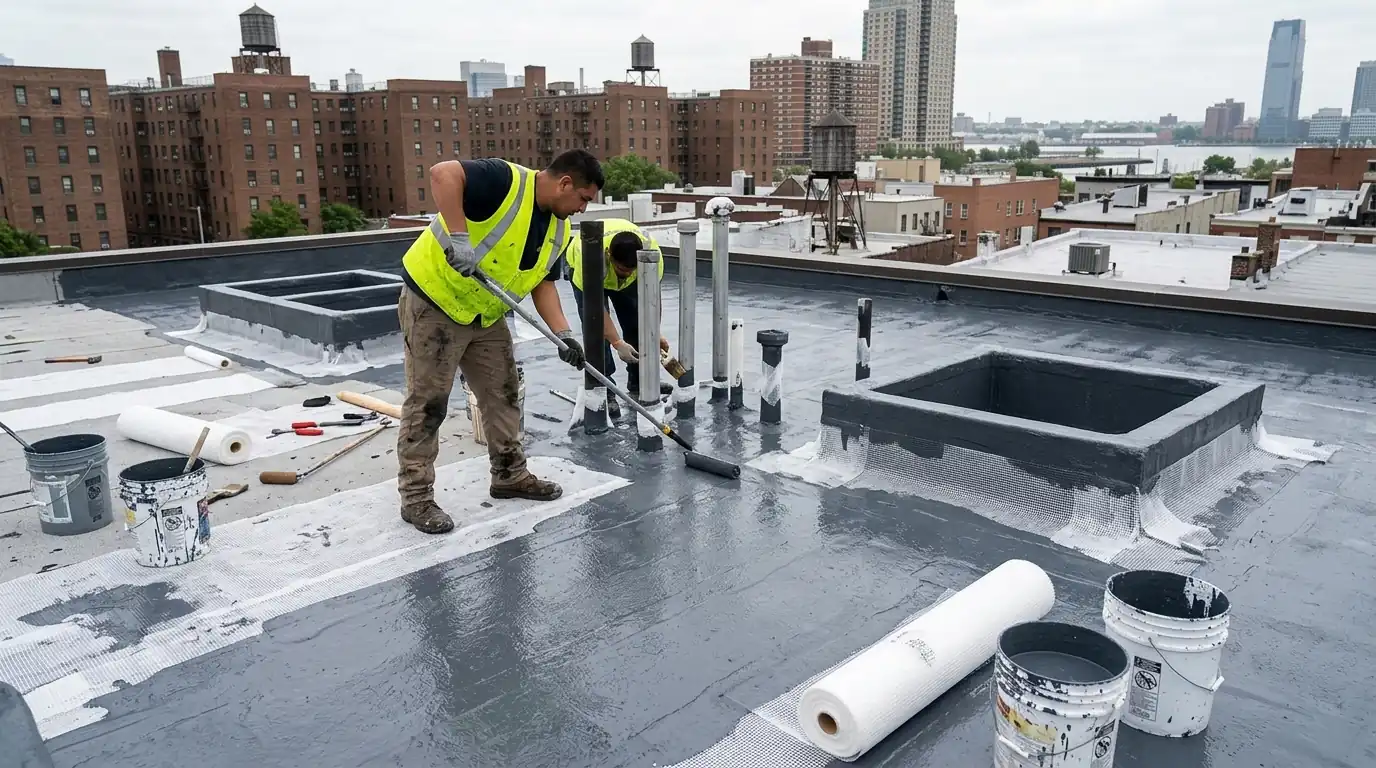
Garages, elevator pits, new construction and whole-building water inspections.
A leak in a commercial building costs more than the repair: damaged stock, closed storefronts, unhappy tenants and an anxious board.
DetailsDrips onto parked cars, rust stains on the ceiling and water reaching the storage rooms or shops below a garage deck all mean water is getting.
DetailsWater in an elevator pit is more than a nuisance: it rusts equipment, can take a car out of service and tends to show up on inspection reports.
DetailsThe cheapest moment to keep a basement dry is before the soil goes back against the wall.
Details
Just call and describe where the water shows up and when. If the source isn't obvious, we start with a waterproofing inspection and the fix follows from what we find. You don't need to know the trade term for it.
Because water moves between them. A failed parapet can wet a wall two floors down, leaders can dump the whole roof's water at the foundation, and a terrace leak can look like a plumbing problem. Treating the building as one system is how the leak actually stops.
We do. Commercial waterproofing, garage decks and elevator pits get scheduling around tenants and residents, plus photo reports for managers and boards.
Each service page lists a typical range, and the waterproofing cost guide puts all of them in one table you can filter and sort. Every range is for planning; access, foundation type and how far the water travels decide the real number.
Call (201) 578-5199 and describe the problem. We'll tell you where to start.