Foundation Crack Repair
A single crack running down a poured basement wall can soak a corner of the floor every time it rains.
DetailsJersey City neighborhood
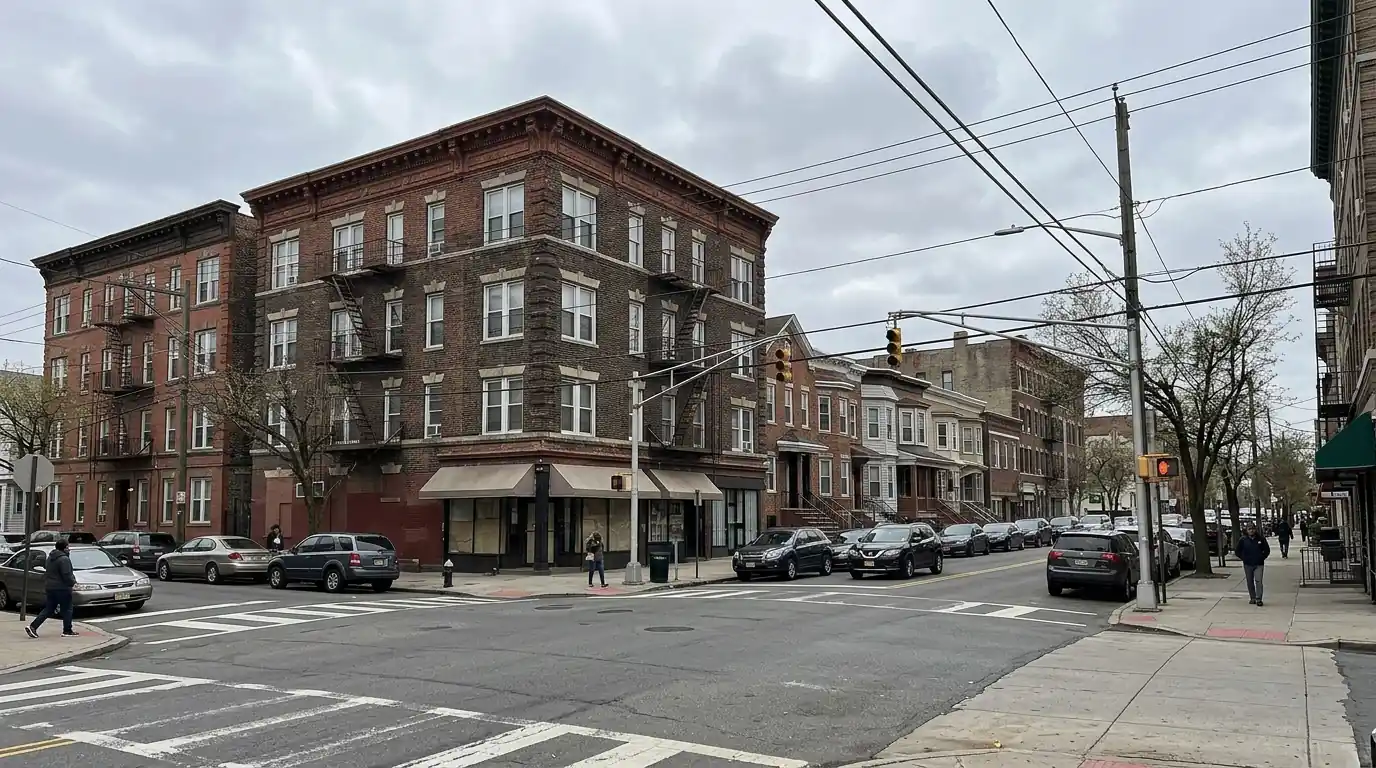
Around Montgomery Street and Bergen Avenue, pre-war apartment buildings and two-family houses leak through cracked walls, tie-rod holes and old drains. Many of these leaks are narrow, specific and well suited to injection.
For cracked, leaking basement walls in McGinley Square apartment buildings and two-family houses, call (201) 578-5199, which is answered around the clock. Our technicians inspect the crack, choose polyurethane or epoxy injection, seal it from inside and test it. The typical cost range is explained before the work starts, and most single cracks are done in a day.
McGinley Square buildings span a long stretch of construction history. Pre-war apartment buildings have brick or block foundations, two-family houses have mixed foundations, and later additions often have poured concrete walls with tie-rod holes left by the concrete formwork. Each type cracks differently. Poured walls show thin vertical shrinkage cracks, block walls crack along mortar joints, and brick walls lose mortar. When groundwater or roof runoff reaches those openings, water follows the crack and leaves a stain shaped like a river delta on the wall. Saint Peter's University sits close by, and the side streets around it have a long run of these mixed buildings.
Crack leaks are often the easiest leaks to fix, as long as the crack is the actual entry and not just where the water appears. We check above and around it: is a leader dumping right outside, is the soil sloping toward the wall, is the stain spreading from a tie-rod hole instead? When the crack is the true path, foundation crack repair by injection seals it from inside without excavating the yard, which matters a lot on blocks where the yard is tiny or shared. If roof water is the real cause, we reroute it first.
Injection is quiet, compact work, which suits occupied buildings. We clean the crack, set small ports along it, seal the surface and pump material in from the bottom up until it fills the crack through the full wall thickness. Polyurethane foam reacts with water and expands, so it suits wet, active cracks. Epoxy cures hard and bonds the concrete, so it suits dry cracks where we want structural strength. Tie-rod holes get the same treatment with a single port or a hydraulic plug. After it cures we trim the ports flush and check the crack again in the next heavy rain to confirm it is dry.
For apartment buildings we schedule with the owner or super, work in the boiler room or storage areas during the day and leave the basement clean each night. Parking around the Montgomery Street and Bergen Avenue junction is tight, but injection gear fits in a few cases, so we carry it in without staging a big truck. If a crack keeps widening, injection alone is not the answer, and we explain why. Cracks that grow, especially horizontal ones, may point to a bowing wall that needs anchors or bracing. We would rather tell you that up front than sell you an injection that fails within a year.
Based on the buildings here, these are the calls we expect from McGinley Square. Every other service on our list is available too.
A single crack running down a poured basement wall can soak a corner of the floor every time it rains.
DetailsA thin line of water creeping out where the floor meets the wall after a downpour is a cove joint leak.
DetailsA horizontal crack or a wall leaning into your basement means soil and water are pushing harder than the wall can hold.
DetailsWhen a heavy storm sends dark, foul water up through your basement floor drain, the problem is the sewer, not groundwater.
DetailsWhen groundwater keeps finding its way in at the base of your walls, coating the inside won't hold it back.
DetailsWater on the basement floor after every hard rain usually means pressure from outside the wall, not a plumbing leak.
DetailsSometimes the crack is only the place the water chose. If a basement wall leaks at several cracks, the cove joint and the floor, the real problem is groundwater pressure under the whole basement, and sealing one crack only moves the water to the next weak spot. In that case we talk about an interior drain and sump. Horizontal cracks in block walls with a visible lean point to soil pressure, and those get bowing basement wall repair with anchors or carbon fiber straps rather than injection.
Sewer backups are part of the picture too. Pre-war buildings here sit on the combined sewer, so a basement can stay dry through every rain and then flood from the floor drain in one big storm. A backwater valve on the main line deals with that. For buildings that already see seepage at the cove, our cove joint leak repair seals the joint between floor and wall. Owners in nearby Journal Square and the West Side see the same mix.

It depends on the crack. Polyurethane suits wet, actively leaking cracks because it reacts with water and expands to fill the path. Epoxy suits dry cracks where we also want to bond the concrete back together. We look at the crack, whether it leaks now and whether it is moving, then pick the material.
Yes. Tie-rod holes left by the concrete formwork are one of the most common leaks in poured walls. We seal them from inside with injection or a hydraulic plug, then check the area during the next rain. It is a small repair, often done in an hour or two per hole.
Horizontal cracks, cracks that keep widening, and walls that lean inward point to soil pressure rather than a simple leak. Those walls need bracing with anchors or carbon fiber straps before any sealing. We measure and photograph the crack, check for lean, and explain which repair it needs.
Call (201) 578-5199 any time. Tell us the address and what you're seeing, and we'll take it from there.