Key points
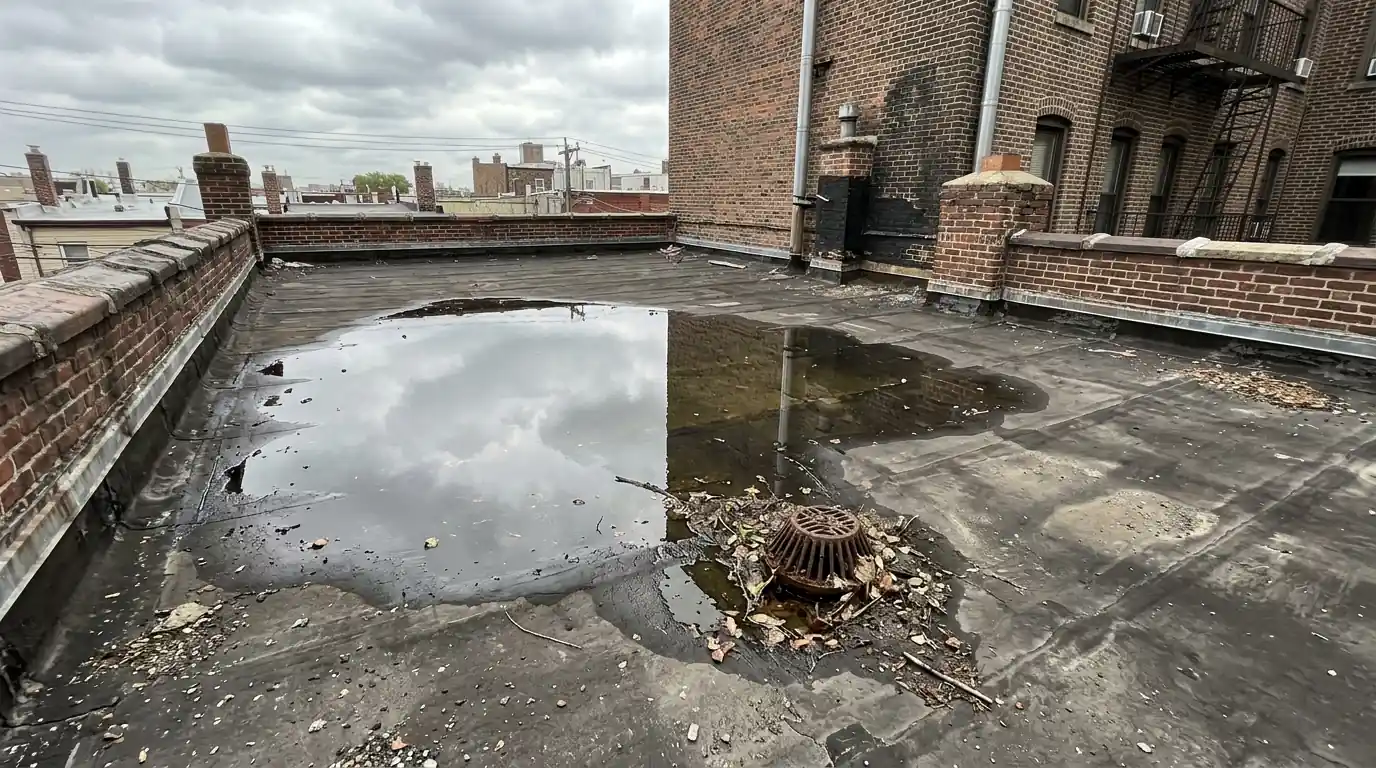
- The usual rule of thumb: water still standing 48 hours after rain is ponding, not drainage.
- One inch of standing water weighs about 5.2 pounds per square foot.
- Clogged or high drains, sagging decks and missing crickets cause most ponding.
- Most ponding can be corrected without replacing the whole roof.
Puddle or ponding? The 48-hour rule of thumb
Flat roofs aren't truly flat. They're built with a slight slope toward drains, scuppers or gutters, and after a heavy storm almost every one holds a few shallow puddles for a while. That's normal. The common rule of thumb in the trade is that water still standing about 48 hours after the rain stops, in reasonable drying weather, counts as ponding. At that point the roof isn't draining the way it should, and the water is doing slow damage.
The 48-hour mark isn't magic, and it shifts with the season. In cool, damp November weather a thin film can linger longer without signaling a problem. In July, if a puddle is still there two days later, something is holding it. The pattern matters more than any single day: the same spots, after every storm, getting a little wider and deeper over time. A puddle that grows from the size of a dinner plate to the size of a bathtub across a couple of seasons is telling you the roof below it is sinking.
The weight math: what standing water puts on your roof
Water is heavier than most people think. One inch of standing water weighs about 5.2 pounds per square foot. A ponded area 10 by 12 feet, which is 120 square feet, holding just one inch of water adds about 624 pounds to that part of the roof. At two inches deep it's about 1,248 pounds, concentrated over a few joists. On an old rowhouse with framing that has already seen a leak or two, that's a real load sitting in one place.
Rain volume tells the same story from the other side. One inch of rain falling on 1,000 square feet of roof is about 623 gallons of water. A two-inch summer downpour on a 900 square foot rowhouse roof sends roughly 1,120 gallons toward the drains. If the only drain is half clogged, a lot of that stays put. When the remnants of Ida swept through in 2021, drains across north Jersey were overwhelmed, and plenty of flat roofs held water far longer than usual.
Weight also feeds on itself. Water sits in a low spot, the extra load bends the deck a little more, the low spot deepens, and it holds more water the next time it rains. On older wood-framed roofs that cycle can run for years before anyone notices. Snow piled on a ponded area adds more. That's why a slowly growing puddle deserves attention long before anything looks dramatic from the hatch.
Why standing water wears a membrane out early
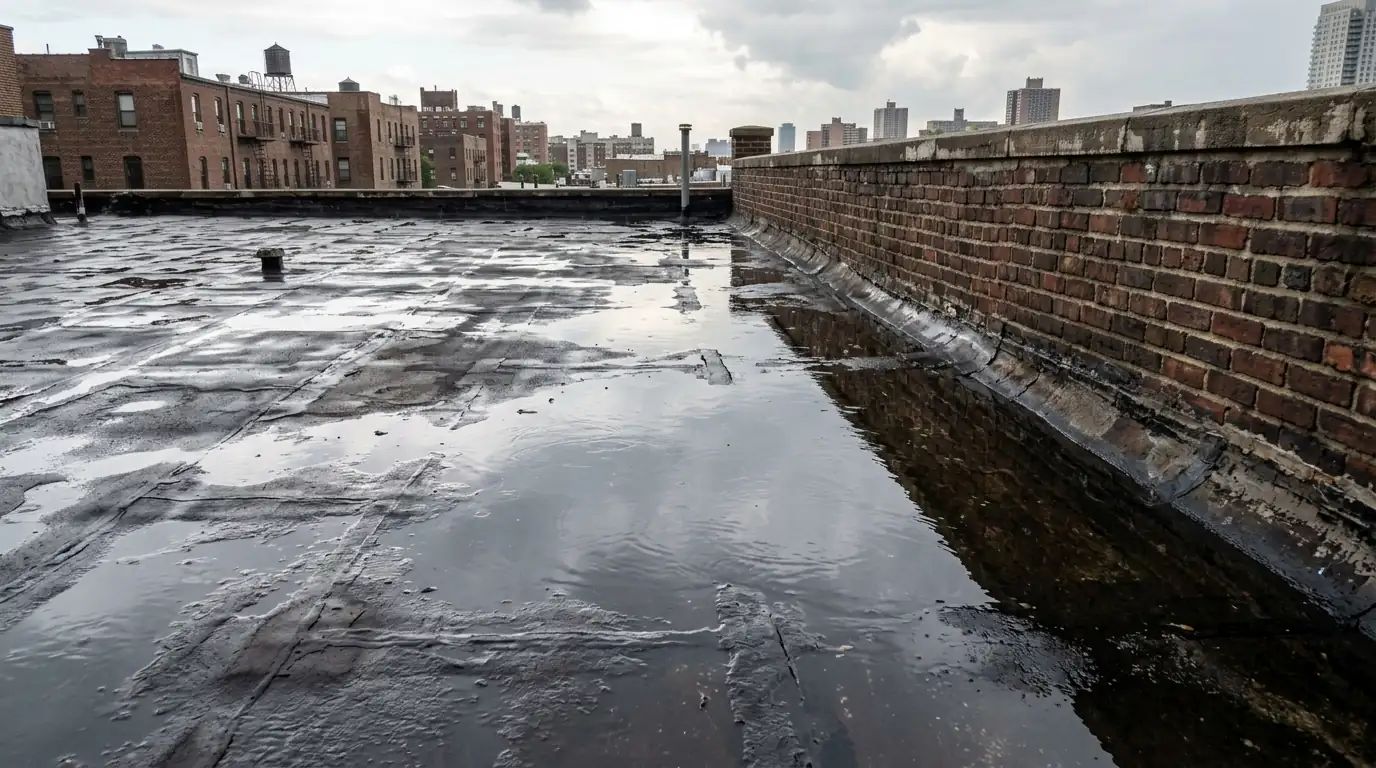
Roof membranes are designed to shed water, not to live under it. Standing water keeps the surface wet, and on asphalt-based roofs like built-up and modified bitumen it slowly softens the top layer and washes away the protective granules. Dirt settles in the puddle and leaves a film that holds even more moisture. In summer, the edge of the puddle heats and cools differently from the wet center, which stresses the surface along that line until it cracks.
Seams take the brunt. Any lap sitting under water is being tested constantly, and a small opening that would never leak on a draining roof lets water through when it's submerged for days. In winter, ponded water freezes, expands and pries at seams and flashing. Silt in long-standing puddles even lets weeds and moss take root, and their roots work into the same seams. A membrane that might have lasted many more years in the dry areas often fails first right where the water sits.
What usually causes ponding on Jersey City roofs
Ponding almost always comes down to water having nowhere to go, or a roof surface that has changed shape. On rowhouses and walk-ups across Journal Square, the Heights and downtown, the same handful of causes turn up again and again. Often two or three of them work together on one roof, which is why the fix has to address the cause and not only the puddle:
Re-roofing history matters a lot here. When a new layer goes on over an old one without adjusting the drains, the drain bowl ends up sitting slightly above the surrounding surface, and water collects in a ring around it. That's one of the most common causes we find and one of the most fixable. We also see roofs where a deck or a mechanical unit was added later and blocks the path water used to take to the drain.
- Clogged drains and strainers, packed with leaves, grit or debris from a deck
- Drains left too high after a re-roof added layers around them
- Sagging joists or a deflected deck from age, old leaks or added weight
- No crickets behind chimneys, hatches or bulkheads, so water dams uphill of them
- Insulation that got wet or crushed and settled into a low spot
- Scuppers and leaders that are undersized, blocked or iced over in winter
Fixes, from the simplest to the biggest
The simplest fix is cleaning. A clogged drain can be cleared, the strainer replaced, and the line tested with water to confirm it flows. Sometimes that ends the ponding entirely, and a yearly check of the strainer keeps it from coming back. Next comes resetting a drain that sits too high, by lowering the bowl, building a sump around it or fitting an insert that brings the drain down to the roof surface. Our flat roof leak repair work often starts at the drain for exactly this reason.
When the problem is the shape of the roof, the fix is to give water a slope. A cricket, a small sloped saddle built behind a chimney or hatch, splits water around the obstacle. Tapered insulation, cut in panels that slope toward the drains, can be built up over the low section and covered with membrane tied into the existing roof. Where the structure itself has sagged, the joists may need attention from inside before the roof surface can be brought back to a working slope.
Ponding water repair typically runs $690 to $4,280, depending on how large the ponded area is, whether drains need resetting or new ones added, how much tapered insulation or cricket work is involved, and the condition of the membrane where the water sat. If the surface around the ponded area is weathered but still sound, correcting the slope and then applying roof waterproofing over the whole surface can extend its life without tearing anything off.
What you can safely check from the hatch
You don't need to walk out onto the roof to keep an eye on ponding. Standing on the hatch ladder with your shoulders above the opening gives a good view of most rowhouse roofs. Pick a dry day about 48 hours after a solid rain, and take photos from the same spot each time so you can compare them across seasons. A few things to note while you're up there:
Please don't step into a ponded area or onto a roof you aren't sure of. Wet membrane is slippery, and a sagging section may be weaker than it looks. If what you see from the hatch worries you, send it our way. We answer (201) 578-5199 day and night, and our technicians can measure the low spots, test the drains and tell you whether it's a cleaning job or a slope problem. For roofs with a deck on top, see our guide to roof decks and the membrane underneath.
- Where water is still standing, and roughly how wide each area is
- Whether the drain strainer is clear or buried under debris
- Dark rings or dirt lines that mark where puddles usually sit
- Any weeds or moss growing on the roof surface
- Ice sitting in the same spots through the winter
Owner Guides Editor at Waterproofing Services Carteret. Writes the owner guides from the questions our crews hear in Jersey City basements and on its roofs every week.